Now more than ever, customers are looking for ways to prolong the results of their pavement maintenance. If you're looking for durability in pavement marking, thermoplastic can fill the need.
The Material
Thermoplastic is a plastic material made of binder, pigments, filler, and glass beads. The pigment creates the color, glass beads increase retroreflectivity, and the filler adds bulk. The binder is what makes the material tough, flexible, and creates the bond strength to adhere to the pavement surface while holding the other components together. Thermoplastic material comes in a solid block or bags of granular material, says M-B Companies Inc. Design Engineer Brian Hendrickson. The material needs to be heated to 400°F or higher before application in a molten state.
Often, the packaging material is designed to be part of the thermoplastic system and can be melted along with the thermoplastic, says Tom McSwain of Ennis Traffic Safety Solutions. This helps minimize waste when using thermoplastic for pavement markings.
The liquid thermoplastic is then applied to the asphalt or concrete surface and the resins in the thermoplastic bond or "burn in" to the pavement surface. The material dries and cools quickly, allowing roads and parking lots to be open to traffic sooner. "As you're putting it down you have to keep people from driving across the line and tracking it as you're applying it," Hendrickson says. "With thermoplastic usually that's about 100 yards behind the striper where as with other durable markings you might have to go as far as a mile."
Thermoplastic is also designed to be applied thicker than paint - usually from 30 to 120 mils - which is why it typically lasts longer, says Crown Technology LLC Sales Manager Matt Nall.
Durability is possibly thermoplastic's biggest advantage over paint. Manufacturers agree that thermoplastics will last longer than paint, depending on certain factors. Nall says the combination of mil thickness and the hot application increase thermoplastic's durability.
Thermoplastic tends to be used more in the warmer environments. In areas where snow plows work, the plows can scrap the thermoplastic material right off the pavement, decreasing the marking's longevity. The amount of traffic traveling over a thermoplastic application may also decrease its longevity, says MRL Equipment Company Equipment Sales and Specialist Cody Irons.
There are three types of resins in thermoplastic material: alkyd, hydrocarbon, and acrylic modified alkyd. Alkyd is made from natural wood-derived resins which are more resistant to oil on the pavement surface, according to Scott Shannon with Pervo Paint Co. Hydrocarbon is an oil-based resin. The third type is acrylic modified alkyd, which is a wood-derived and Methyl Methacrylate resin that is also resistant to oil.
While the specific type of resin is usually specified in the contract, Hendrickson says the contractor should handle them the same. But he cautions never to mix alkyd and hydrocarbon together, and make sure the pre-melting kettle is cleaned before switching to a different resin type. A reaction between the two resins will cause them to foam and increase the amount of material in the kettle.
Like paint, thermoplastic material also needs increased retroreflectivity properties, which is often achieved through the application of glass beads to the thermoplastic marking. Most thermoplastic also has glass beads intermixed in the material, Nall says. "As the line wears down over time the intermixed beads will become exposed to still give you bright, reflective lines," he adds.
The Application
Irons says the learning curve with thermoplastic is fairly easy, especially if a contractor is already in the pavement marking business. The material must reach the proper heat before application. But contractors also need to consider the surface temperature of the pavement.
Tim Wehner, worldwide business development manager with Graco Inc., says thermoplastic should only be applied once the surface temperature is above 50°F. If applied below 50°F the bond will be weak and will not last. The pavement surface must also be clean, dry and free of debris, other markings, and curing compounds, McSwain says.
There are three methods for thermoplastic application: spray, ribbon, and extrude. With an extrude application, the application equipment is in direct contact with the pavement surface when applying the material. Because of this, the application equipment must be driven at slow speeds, Hendrickson says.
In a ribbon application the material is applied with a ribbon gun that is elevated off the ground about 1 to 1½ in., Hendrickson says. The gun lays down a ribbon of thermoplastic material on the pavement surface. Since the gun is not in direct contact with the pavement surface, application equipment can travel a little bit faster than when applying an extruded line.
Thermoplastic can also be spray applied. The spray gun is about 4 to 5 in. off the surface, Hendrickson says. The spray gun uses atomized air to apply the thermoplastic material to the pavement surface. This application process can allow equipment to travel faster than both ribbon and extruded applications.
A successful application will hinge on the temperature of the material, Nall says. If the thermoplastic material is not heated to the proper temperature it will not bond with the surface. If you're adding fresh material into a pre-melting kettle that is already heating material, pay particular attention to the temperature of the material when it is applied. The fresh material is at a lower temperature and will drop the temperature of the material it is added to, Nall adds.
Moisture on pavement surfaces and/or cold temperatures will result in a poor bond with the thermoplastic material. The condition of the surface will also affect the bond of the material. Material manufacturers suggest using a primer prior to thermoplastic applications on concrete or older asphalt surfaces. Wehner suggests using a primer when the surface adhesion is in question to assure superior results.
The Equipment
The biggest investment when getting into thermoplastic pavement marking is the equipment. And what equipment a contractor should purchase depends on the size of the company and the type and size of the jobs the contractor will be doing.
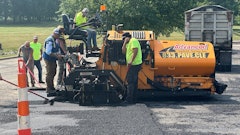
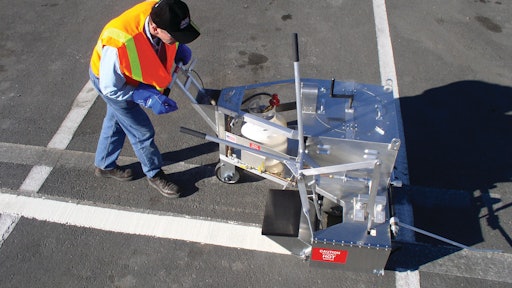
For contractors doing mostly intersections, parking lots or smaller jobs, a handliner will be the equipment choice. Handliners are preferred for jobs requiring detail work where a larger, less-mobile truck will not work. Most are walk-behind units but some have a ride-on attachment option available for increased productivity, Wehner says.
Contractors should try to avoid using their handliners to heat the thermoplastic material. "Handliners are made for applying the material. They can't melt it fast enough. And if you're waiting for the material to melt then the crew isn't working," Irons adds.
If a contractor will be installing long lines, it is probably best to invest in long-line equipment. Smaller equipment - the 1,000- to 1,500-lb. capacity units - is good for lines up to 1½ miles, Hendrickson says. But if you'll be doing lines of one mile or more, the larger long-line trucks are the way to go. Often these trucks have the ability to stripe off both sides as well as apply thermoplastic in all three application methods.
But the most essential piece of equipment is a pre-melting kettle. The pre-melting kettle is used to heat the thermoplastic material to the required temperature before application. Some long-line trucks have an integrated pre-melting kettle. But Hendrickson suggests investing in additional pre-melters to melt the material prior to adding it to a truck's pre-melter kettle. This helps keep the crew and the equipment running at a high production level, he says.
Keep the die system - the container the thermoplastic material flows through to reach the pavement surface - in mind as well. Different sizes of dies are available depending on the mil thickness of the material being applied. Know which size you'll need so you're not purchasing more than necessary or the wrong size. Wehner suggests finding a fully adjustable die that can adjust to multiple mil thicknesses.
He also encourages contractors to shop around before investing in thermoplastic equipment. "Check and see all the different types of equipment available. And ask for a demonstration prior to buying so you fully understand what it is capable of doing," he says.
Safety
When contractors are used to working only with paint, they need to be prepared for the new safety aspects and requirements of dealing with thermoplastic. The most important safety concern is the temperature of the thermoplastic material. Contractors and crew members working with hot applied thermoplastic material should wear proper eye protection and cover all exposed skin. Heat-resistant gloves are also necessary. Melting thermoplastic may also give off an odor, in which case crew members should wear respirators as well. And always make sure to read the material safety data sheet, Diana Reyes of Pervo Paint says.
And be careful around the equipment, especially the heating equipment which may have an open flame. Be aware of any possible plugs in the hoses or application guns. Keep equipment maintained and take care of any issues right away. While working on or near the equipment, make sure another crew member is aware of your location and keeps an eye on you to make sure no one turns on equipment when they shouldn't or sprays hot thermoplastic in your direction, Hendrickson adds.
Some equipment and material manufacturers offer thermoplastic training. Pervo Paint, for example, offers two-day training that covers safety and handling of the product and how to apply it properly. Equipment manufacturers like MRL also offer on-site training on how to use thermoplastic application equipment and how to properly apply the material on the job.
Tips
Before jumping into thermoplastic application make sure you're well educated on the product and the market. Know the acceptable application methods in your area, Irons says. Understand who your competition is. And make sure to purchase material, supplies, and equipment from a reputable manufacturer. "Understand the material and its limitations, application, the road surface - all the variables," Irons says. If you're new to thermoplastic, take the time to practice and get the feel for it.
Thermoplastic material requires both a start up and a cool down time. Hendrickson suggests allowing for two hours of start up time at the beginning of the day to get the equipment ready and the thermoplastic material heated and melted. At the end of the day, the material needs to be cooled down and agitated as it cools to make sure the integrated glass beads do not settle on the bottom of the kettle, he adds.
"You don't want to heat the material up more than about three or four times because it distills the oils and the resins out of it," Hendrickson says. As the oils are removed it changes the material viscosity and alters the material from its original specifications.
Bidding and pricing thermoplastic jobs can be challenging, Wehner says. "The general rule of thumb is it's worth four to five times more than paint." But Wehner cautions, "Make sure you fully understand what the market will bear."
The use of thermoplastics has increased in the last couple of years. But contractors may still find paint the better option for some jobs. For example, paint may be a better option for temporary markings that are not required to last more than a year, Hendrickson says. Other customers, like airports, are investing in thermoplastic markings to decrease the frequency of remarking the pavement.