First came National Pavement Maintenance Expo in February 1986; the first issue of Pavement Maintenance and Management, "The International Journal of the Asphalt Aftermarket" followed in October. Since then, through ownership (and title) changes the goal of the magazine, National Pavement Expo, and NPE West has been to help contractors improve their business through improved production, better management, and most appropriate and effective selection and application of equipment.
Throughout 2010 in the magazine and on our website (www.pavementonline.com) we will be documenting and discussing some of the changes the industry has experienced in the last 25 years - with an eye toward what those changes might mean for the future. As always we will be assisted with insights from many of the manufacturers, contractors, and consultants who have helped us over this quarter century. We will also go out on a limb a little bit and take a look at what the future might hold for paving & pavement maintenance contractors.
So to start, we take a look back at the industry as a whole: at the market itself, the contractors, and their customers. Not surprisingly many changes the industry has undergone are connected, or perhaps a better word is intertwined, because changes in the way contractors approached their business resulted in changes in the way customers made buying decisions, and those changes in buying habits resulted in more contractors changing the way they approached their market and sold their services.
Starting with Contractors
Contractors are the focus of this magazine and NPE's conference program, the focus of all the manufacturers who produce equipment and materials, and the driving force in the industry. In the early days, well before this magazine's first issue, paving and pavement maintenance businesses were started by people, usually men, who were adept in the field and who had learned their skills while working on someone else's crew. Eventually many of these people decided to use their technical knowledge to start their own company.
Sealcoating, striping, sweeping, repair, and even paving generally were generally sold by price and bought by price on an as-needed basis. Bids were often scrawled on a piece of paper, if they were written down at all, and jobs were just as likely to be completed by contractors who were, if not a fly-by-night business, at least a business not in it for the long haul. Job quality, customer satisfaction, and professionalism were not the basis for selling or buying.
Once a company reached a certain level - and it's a level that varies from contractor to contractor and service to service - many owners realized they needed to do something if they were going to continue to grow their contracting business - or if they were even going to survive. So they began to look away from the technical, how-to-get-the-job-done side of the business to the management side.
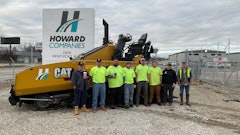
Marketing was often the first step they took, which often resulted in development of logos, brochures, advertising, and even changes as simple as having a crew wear the same color and style of shirts and painting the trucks the same color. (In fact for years the best-attended seminar at National Pavement Expo was the Basic Marketing session.) The overall impact is that as contractors began to pursue marketing, many contractors looked more professional and more reliable, and even if the job quality hadn't changed the image of the contractor (and the industry) had. Suddenly those companies had raised the standard for what it meant to be a contractor in the paving and pavement maintenance industry; paving and pavement maintenance had become a business, and those who did the work were increasingly looked at as professionals.
"More and more people in this industry view themselves as professionals, and I don't know that was always the case," says Brad Humphrey, Pinnacle Development Group. "Years ago a lot of people figured if they had enough money to buy a bass boat or a new hunting rifle at the end of the year then it was a good year. I don't think the contractors running these businesses view things in those terms anymore.
"Many of these folks are now interested in improving their business skills, whether it's marketing or leadership or job costing or sales," says Humphrey, who has been a contractor and a consultant to the industry since 1988. "Of course the technical aspect of doing a quality job is always there and will always be there, but there's no question there's been an increased interest in and awareness of the management side of the business, and I think National Pavement Expo and Pavement magazine have definitely helped breed that."
By appearing more professional and by running a more respectable-looking operation these contractors often were able to command higher prices. Professionalism, respectability, reliability, and job quality helped differentiate some contractors from others, so contractors essentially created a tiered system in which some contractors appeared to be better, more professional, and more reliable than others.
This is not to say that contractors who didn't (or don't) follow that business approach are not reliable or that they don't do quality work. But it does say that all of a sudden price was not the only selling point. And when price becomes only one of several factors in the buying decision, the other factors -- professionalism, image, references, relationships, repeat customers, participation in local and national organizations, among others - became increasingly important to contractors and their customers. That made marketing an even more important aspect of running a paving and pavement maintenance business.
Humphrey points out that "professionalism" means different things to different people, but the overall impact is that contractors are thinking about it and trying to make the effort to make their own company more professional - whatever that means for them.
"I really enjoy speaking with contractors at the NPE shows because I get an opportunity to talk with contractors who take all different kinds of approaches to their business," Humphrey says. "Some are small companies, some are large and fairly sophisticated operations, and some are the mom-and-pop type businesses. But they all are trying to figure out how to solve a problem or how to do things better - how to become more professional.
"Professionalism is probably the umbrella under which all of this falls," Humphrey says. "The contractors as a group seem to take more pride in what they do, and that reflects into just about every aspect of their business - and the industry."
Image Becomes Important
As contractors began to develop the management side they began to market the company and to define the company as different from their competition. "Over the years there has been a much more coordinated marketing effort on the part of many contractors," Humphrey says. This lead directly to an increased importance on establishing a cohesive brand image for each contractor.
"Twenty-five years ago you'd say 'branding' to most of these people and they'd look at you like a deer caught in the headlights, but branding is now an accepted part of running a contracting business," Humphrey says. "It was probably inevitable that this was going to happen - these are bright guys after all. But branding means more than just getting a logo. You brand yourself by everything you do, by the quality of work you do, by your reputation, and I'm not sure that part of branding has gotten through."
Many contractors pursue this on their own, developing great logos and marketing pieces built around a corporate or even annual "theme."
But some contractors who don't feel they have the expertise or the time for such marketing are turning to other "branding" approaches and recent years have seen a boom in that area. Vanity phone numbers such as 1-800-PAVEMENT and 1-800-ASPHALT offer contractors an easy-to-remember brand complete with contact information (along with marketing support), and many contractors have found success with this approach. Other organizations such as Black Dawg (and its new pooch Yellow Dawg), National Paving, and the Pavement Network - while different business models from one another - offer structured opportunities that help contractors brand their company within a specific framework.
Jeff Stokes, Next Level Contractor System, who with Humphrey had been a contractor and also a consultant to contractors since 1988, has both witnessed some changes and prodded contractors to make them, and his take on branding is insightful.
"Brand may build awareness, but 'top of mind' brings the buyer to call. And it's the customer's experience with the contractor that will ultimately determine whether the customer comes back," Stokes says. "While brand image is still important, contractors need to spend more time on becoming 'top of mind' and on improving the overall buying experience."
Educating the Consumer
But another factor was at work here, and its ramifications can't be underestimated: As contractors began to market in ways other than price, they began to educate their customers and prospects about their pavements.
"Education of the customer continues growing big time," says Humphrey, who often hosts what he terms "lunch and learns" for contractors who bring in their customers and prospects. This is not to say that contractors 25 years ago didn't make an effort to educate their customers; some certainly did but most did not. As contractors began to market, as they began to differentiate themselves from competitors, and as they began to understand what a customer needed to hear, contractors began to explain why the work needed to be done. Contractors began to sell longevity of a pavement, not just looks, and property managers and homeowners have largely come around to the "pay me now or pay me more later" idea.
"Consumers are buried today in a mountain of information but still feel helpless when it comes to understanding pavement and pavement maintenance," Stokes says. He adds that as customers learned more they wanted repair and maintenance options. "This has required contractors to offer different types of services as opposed to only 'their preferred way.' Contractors who can listen, educate, and present solutions are winning. Those that try hard to steer toward only their preferred products or services are losing," Stokes says.
Plus, by teaching customers how a pavement works and how and why it deteriorates, contractors were able to help their customers get more bang out of their pavement buck. This educating the customer did more than help property managers, homeowners, and condo associations justify the pavement maintenance expense; these educational efforts lent credibility to an industry that at one time was considered almost an industry of charlatans.
Research over the years, and particularly the results of the Strategic Highway Research Project (SHRP), demonstrated among other things that proper and timely maintenance of an asphalt pavement will extend the life of that pavement, thus reducing the life-cycle cost of the pavement. Contractors grasped this idea and pushed it home, and their customers realized it made sense.
Today contractors cold calling a job don't have to explain what pavement maintenance is, or what sealcoating is - the customers already know and many know it's something they need to do. In fact most property managers have line items in their budgets for annual pavement maintenance expenses - another reason establishing long-term relationships has become important. (This becomes a huge factor in recent years as contractors look to become a service provider to national accounts, and as national accounts seek a single service provider for all their pavement maintenance needs.)
Humphrey says that there is a downside to educating the customer, and that is the customer now asks tougher questions, which can make the sales job more difficult. So Humphrey says contractors now need better sales skills than they needed 25 years ago, and they'll need even better sales skills in the future.
"Contractors have created a smarter and more sophisticated customer, so they'd better learn how to sell better," he says. "The customer has a better understanding so he (or she) has better questions and tougher questions - to say nothing of higher expectations - so salespeople have to know how to talk the talk along with them and be able to overcome objections. The guys that can sell that are the guys that have done their homework."