Want to extend the useful life of your vocational truck fleet without dramatically increasing downtime or maintenance costs? It is possible, but it may require a change in the way you manage and maintain your trucks.
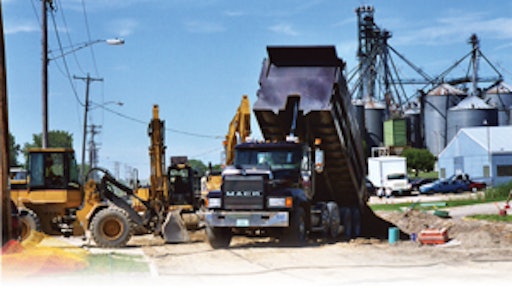
Vocational trucks used in off-road applications are subject to different types of wear and stresses compared to their over-the-road counterparts. "Failure points depend on type of equipment, operating environment, duty and drive cycles and overall quality of maintenance," says Bob Johnson, director of fleet relations at the National Truck Equipment Association (NTEA). "However, electrical system problems seem to top many maintenance analysis studies, followed by brake, suspension and steering issues, which often result when vehicles are overloaded."
Failures can also occur when strict adherence to suggested maintenance intervals is not followed. There are many maintenance items that tend to get neglected on the typical vocational truck. Steve Ginter, vocational truck manager, Mack Trucks, lists tire pressure, suspension components and engine valve clearance as examples. You should re-torque suspension components, grease bronze trunnion bushings and front king pins and adjust valve lash roughly every two years or 250,000 miles.
In addition, you need to tailor your maintenance practices to match how the vehicle is actually used. "For those that do a lot of idling, one of the most neglected area's that we see is with oil changes," says Jim Michon, truck fleet marketing manager, Ford Motor Co. "For vocations that do a significant amount of idling, they should base the frequency of oil changes on engine hours instead of miles. In general, one hour of idling is equivalent to 30 to 50 miles of driving."
Yet, failure points on these vehicles commonly have little to do with the chassis. "Buy a Mack chassis and most of the failures will be on the tarp system or tailgate," notes Ginter. "All OEMs work to reduce component failures and extend service intervals."
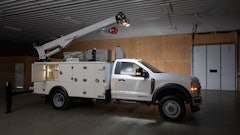
"In general, the most neglected items on vocational trucks are the work equipment installed to adapt the vehicle for a specific job," agrees Johnson. "In far too many cases, equipment maintenance, if performed at all, is limited to servicing easily visible or accessible grease fittings."
Such equipment should be regularly inspected and tested for proper operation. "In many cases, such as cranes and aerial devices, these inspections are mandated by OSHA," notes Johnson. "Failure to inspect the unit and document inspection results may place the owner in violation of federal regulations."
Cost control
Extending useful vehicle service life doesn't have to be complicated. According to Ginter, reducing owning and operating costs can be as simple as proper cleaning and comprehensive daily driver inspection reporting using a checklist.
In the case of Mack Trucks, the driver can take note of any error codes on a regular basis. "Utilize On-board Diagnostics (OBD)," says Ginter, "and monitor both active and in-active fault recording on a regular basis available from the VMAC IV software system."
It doesn't hurt to give drivers a vested interest in cost control. "Operating costs can be reduced by giving incentives [such as providing] drivers with fuel economy targets and rewarding success," says Ginter. "Driving for maximum fuel economy saves fuel and reduces wear and tear, as the truck is being driven well below the extreme capabilities built into it."
But you can't truly control costs until they are first understood. "When seeking ways to reduce operating costs, first perform a detailed analysis of these costs and identify the top two or three items to focus on," says Johnson. He notes it's likely that labor, fuel or both will make the list. "This analysis should be very detailed in order to be effective. For example, don't list maintenance as a single item - break it down into specific categories, such as electrical repair, brakes and tires."
Preventive maintenance
Everyone should have a preventive maintenance (PM) plan in place, even if you own a single truck.
"Every vocational fleet (even one vehicle) should be covered by a scheduled PM program," Johnson asserts. "In fact, vehicle availability is more critical in smaller fleets. If your only truck is broken down, you are out of business. Small fleets may not have or need an extensive maintenance data system, but they can easily set up an effective PM and demand repair database using a homemade spreadsheet program."
When setting up the PM program, use manufacturer recommendations as a guideline. "The customer does need to tailor the maintenance practices to the requirements from the OEM," says Ginter. "We require Mack products to be serviced and periodically inspected exactly how they are described in our Maintenance and Lubrication Manual... You need to visibly inspect the chassis as is called out in the daily checklist to prevent unplanned downtime due to a failure of a component."
It's important to get driver participation, as well. "Beyond the normal maintenance items specified by the manufacturer, a daily or weekly visual inspection of fluid levels, belts, lines, hoses, tire air pressure and base functional items would be recommended," says Michon. "However, the extent and scope is dependent upon the vocation and vehicle usage."
Tracking historical data can also provide useful insight. "Keep following the Maintenance and Lubrication manual as the truck ages," says Ginter. "Add notes on any discovered idiosyncrasies presented by the application and the body chassis interface learned in practice as the truck ages. Certainly, using multiple identical chassis and sharing the fault information is a given to head off problems."
A key part of a PM program involves maintaining detailed records of all work performed on a vehicle. "Records should include service intervals; type of work done; defects identified and repaired; parts used (including manufacturer and part number); vehicle mileage; and potential future problems," notes Johnson. The manufacturer of repaired parts should be tracked, since the mean time before failure (MTBF) of an otherwise identical part can vary from manufacturer to manufacturer.
"Detailed records of in-service failures/demand repairs, vehicle mileage, engine hours and idling/PTO time should also be maintained," Johnson continues. "This information can then be used to establish a predictive maintenance program."
This really takes PM to a higher level, as it offers a great opportunity to reduce your overall operating costs. "The timely replacement of a component before it fails will save expenses related to vehicle downtime, as well as potential wrecker or emergency on-road repair costs," says Johnson. "By using detailed maintenance records, you can predict MTBF for maintenance items such as tires, suspension and steering components, starters, water pumps, alternators, batteries and more. You can then schedule these items for replacement during the PM, which occurs just before the MTBF point. In most cases, it's not cost effective to try to eliminate 100% of failures."
Oil analysis adds another dimension to the program. "An oil analysis and filter inspection program will also help in scheduling major component (engine, transmission, differential, etc.) rebuilds or replacements as part of your predictive maintenance program," Johnson points out.
Stick with your PM program as your fleet ages. "Avoid the tendency to skimp on maintenance as the vehicle ages, since this normally results in demand failures that are frequently expensive to repair," Johnson advises.
Vehicles age in two ways: usage (miles/engine hours) and physical years. Some types of failures are associated more with one than the other. "When dealing with low-mileage trucks, remember that many components will suffer more from corrosion and oxidation than actual use," Johnson explains. "This means parts such as rubber suspension bushings, exhaust systems and steering components may wear out earlier than if based on usage alone. This is why it's important to separate low- and high-usage vehicles when setting up a PM program."
Be realistic about the expectations placed on older equipment. "Whenever possible, assign older vehicles to less demanding tasks," says Johnson. "If you don't load a truck as heavily or run it for as many extended periods at highway speeds, it will be less likely to break down."
The driver's role
A key component of any vocational truck is the person behind the wheel. "You cannot underestimate the value and significance of the driver," says Ginter. "The driver is a key decision maker that determines hauling loads and speed over the terrain."
The driver plays a strong role in vehicle life expectancy, agrees Michon. "This is both in how they use the truck and how rigorous they are in following the daily or weekly preventive maintenance items," he states.
Driver experience is another factor, as is overall satisfaction with the vehicle. "I have seen the highest cost vehicles in a fleet become the lowest cost simply because they were assigned to new drivers," says Johnson. "If a driver abuses a vehicle - such as overloading or failing to perform daily inspections and fluid checks - it will become a high-cost unit.
"If a driver does not like a vehicle," he continues, "chances of abuse increase. Therefore, consider adding driver comfort and convenience items when spec'ing a truck and the equipment mounted on it."
The useful life of a truck is hard to define; there are numerous variables - many of which are under your control. Establishing a good PM program, and working with your drivers, can go a long way toward extending the service life of all the vehicles in your fleet.