
As you know, it's a tough market out there. Unless you're in a very special niche, you're likely experiencing a very active bidding process for every bid you submit. Unfortunately, many contractors, in an attempt to get work, price themselves right out of business. How does this happen? Because they end up being awarded the work at a level that produces negative cash flow. In short, they bid the job to get the work, but don't adjust their cost structure to produce positive cash flow.
To gain better insight into this problem, I contacted our friend Ken Hedlund of Somerset CPAs. Ken is a CPA and consultant who spends all of his time in the construction industry. As you would expect, he and his team have been very busy educating contractors on how to become or stay profitable in this market environment.
I asked Ken the following questions: what options do contractors have to select from; how can they achieve or maintain profitability; and how can they adjust to the market?
Ken believes you have three options:
1. Keep your price stable, reduce overhead where changes are obvious and make the same or more money, knowing you will likely have less volume/revenue.
2. Go with the flow and reduce margins to get the work.
3. Raise prices and get whatever work you can, knowing it will be profitable. (Due to increased competition, this is not likely a viable option in the current market.)
Each option calls for proactive overhead adjustments. The initial step is to right-size your business for overhead based on the revenue and gross margins anticipated. This involves initial cutting of easy to identify, wasteful overhead spending that has occurred over the years, plus subsequent, more painful cuts of costs and personnel as needed.
The impact of adjusting margins
If you're going to play the margin game, keep in mind that cost adjustments are a part of it.
For example, if you do $10 million in billing at a 30% margin, you generate $3 million to cover overhead and administration expenses. Cut that back to 20% and you lose $1 million of margin; you would have to increase billing by 50% to $15 million in order to earn the same $3 million. If increasing billings is out of the question, then $1 million in cuts are required to earn the same bottom line. Of course, to weather the economic "storm," most contractors will be satisfied with a reduced profit, so you need to consider that in the equation.
Managing margins means knowing your overhead and cost structure, so you know when and where you can cut costs. This requires being able to predict profits and cash flow for different levels of business and margins. If you cannot manage and predict cash flows to produce a reliable result, the chance of making it through these bidding wars intact is doubtful.
This process also requires an assessment of your risk tolerance, because there are jobs out there you should stay away from. They may be too big, require working capital you don't have or require skills out of your comfort zone. It just doesn't pay to take on a job that could put you out of business.
Current financial markets also add to your problems. A lack of borrowing power or financing means a lack of working capital and higher equity requirements to run and finance your business properly.
Making the adjustments
There is no doubt profit is very important. However, it's only half of the equation, because maintaining adequate working capital, equity and cash flow are also critical. This being the case, it is imperative to have meaningful 30-, 60- and 90-day cash flow estimates, along with a plan to keep cash flow positive.
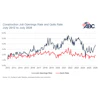
The current market environment produces less work and more competition, which translates into lower gross profits, as well as patterns of slower pay. In addition, backlogs are decreasing, which means annual revenues will decrease and cost reductions are necessary to maintain cash flow. This same scenario applies to any contractors you work for and those working for you, making it your business to perform the due diligence to ensure they can complete their assigned tasks.
The questions now are "can you do this" and "can you make adjustments as required?" If not, you may need a guy like Ken to help you out. Considering what's at stake, it may not be a bad idea.
According to Ken's list of priorities, you should do the obvious cuts first. Then, based on conservative 30-, 60- and 90-day cash flow projections, proactively review each administrative expense and further reduce the cost; eliminate non-performers next; proceed to cuts in pay, benefits and/or hours; and keep adjusting until your projections show positive cash flow.
Assess pricing risks
Of course, ideally, you want to sell your ability to get the job done on time; your expertise; your office and field management team; and your equipment fleet that is ready and available to start work immediately. Overall, you want to show off the value-added component you bring with your proposal. This value added could make a difference.
Consequently, you may decide to keep pricing at your standard rates, knowing the result will generate less revenue. You will make a decent profit on the work, but have to cut overhead to push the profits through to the bottom line. If you have the ability to manage your expenses in this fashion, your can reach your goal knowing you can always bring price cuts into the equation.
Your ability to manage your finances is key to being able to aggressively price jobs to get work. Risk has to be assessed. Financial ability has to be reviewed. And a thorough understanding of your cost structure is a must to keep cash flow positive.
I thank Ken Hedlund for his input for this column. You can reach Ken at (800) 469-7206 or [email protected]. He can help you no matter where you do business.