When about a week passes and a customer still hasn't returned the weed cutter he said he would only need for four hours, you can assume something is wrong. Maybe you assume your equipment has been stolen. But that's not the worst assumption you can make.
Dan Gray, a 20-year veteran of the rental industry, was working as a rental store manager when a customer injured himself on a weed cutter - after attaching a saw blade to cut down saplings. The injury occurred when the customer turned the weed cutter off, set it down and stepped in front of the free-spinning blade, which sliced him from his little toe to his ankle. More than 165 stitches later, he learned a lesson in safety: putting a saw blade on a weed cutter isn't a good idea.
Whether they know it or not, customers sometimes rent the wrong equipment. When that happens, danger can follow. To prevent customers from making mistakes that can cause very serious injuries, you need to ask them why they are looking to rent equipment. Only then can you help them determine the best equipment for the job, says Gray, who today is the rental manager for Billy Goat Industries Inc., a U.S. distributor of lawn and garden equipment for renovation, mowing and debris management projects.
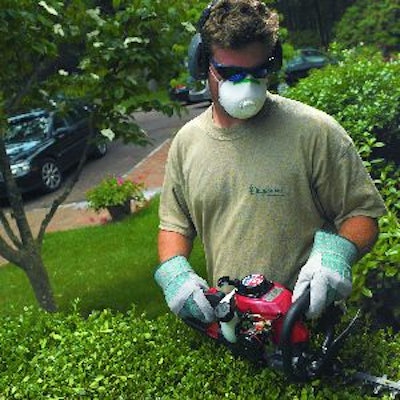
While safety is everyone's business, rental shops bear a large responsibility for making sure their lawn and grounds equipment is operated safely - and with the proper personal protective equipment (PPE).
"Safety is far more important than making a dollar at rental," says Gray, who started his career in the shop and worked as a general manager for various independents and nationals. "No one needs the extra expense of injuries, insurance, lost work time, or pain and suffering."
Lawn and grounds equipment can be heavy, have sharp blades and/or contain a fuel engine. All these things have the potential to cause serious bodily harm, reminds Rose Mary Becker, rental sales manager for Schiller-Pfeiffer Inc., manufacturer of Classen, Little Wonder & Mantis brand equipment including core aerators, sod cutters, lawn dethatchers, turf seeders, blowers, debris and leaf vacs and mini-tillers.
Not only does operating equipment incorrectly pose a danger to the person renting it, Becker adds, but improper use can also damage the product - resulting in downtime, lost rentals and decreased ROI.
Following good safety procedures is not only a moral responsibility, and in some cases it's a legal responsibility, it's a way to avoid unnecessary expenses, encourage repeat business and add profit through PPE sales.
Don't ask, just show
If you ask customers if they know how to operate a piece of equipment, chances are they'll say yes, even if the answer is no - so don't ask them, suggests Gray. Don't put customers on the defensive. Instead, he advises employees to say, "I know you know how to operate this, but let me show you just one or two features and benefits."
Demonstrating basic equipment operation and introducing a couple new or advanced features doesn't take long, he says. (But don't forget to have your employees wear protective equipment when they're demonstrating equipment, reminds Jackie Barker, vice president of sales for ERB Safety.)
Are employees 'in the know'?
Do your employees know how to safely demonstrate the equipment they're renting?
Schiller-Pfeiffer's General Power Equipment Rental Procedures state it's important the entire staff review the safety features and owner's manual supplied by the manufacturer.
How do you know if your employees know how to safely operate the rental equipment in your store? Manufacturers provided training when they delivered the new equipment but did all employees receive this training? If they did, did they understand what they were taught?
In the ideal world, any time knowledge and understanding is critical, employees should be tested. Online computer testing could make the process easy, but time and money might stand in the way of implementing the latest technology. And, Gray points out, you need to have someone who has the desire and ability to manage the computer training.
In today's economy, money spent on pizzas and 2-liters of soda will be a good investment. Gray explains food and drinks can help motivate employees to attend a 30-minute training session held after the store closes.
Equip everyone with safety
When Gray was a general manager, he would include PPE with every two-cycle gas rental. He told his customers he was "required" to do so. Safety glasses, gloves and earplugs were individually sealed in plastic bags. If a bag was open - or wasn't returned when the equipment was brought back - Gray charged the customer for its contents. If a bag was returned unopened, there was no charge. About 50 percent of the time, he estimates his customers kept and paid for the PPE, even if they didn't use it.
The practice of providing safety equipment not only protects the customer, it helps protect the business, he says. If, for example, a customer received an injury that could have been prevented by wearing safety glasses and he files a lawsuit, the business can say protective eyewear is always issued.
Another way to add profit is displaying PPE on or near the sales counter. Gloves, for example, are often an impulse buy, reports Ryan Malone, general manager of Youngstown Glove Co. "You would be amazed at how many gloves sell just because they are near the counter where the orders are written," he says.
Manufacturers often will include a display for free when a store buys a certain volume of PPE or spends a specific dollar amount. Just by keeping a glove display stocked, Malone predicts gloves will sell. Rental stores have told him that glove sales can net $500 to $2,000 in a year.
The biggest value in PPE sales, however, is raising safety awareness, he says. When someone is renting a hedge trimmer and a rental store employee suggests a pair of cut-resistant gloves, he says that's not an up-sell.
"That's a safety sell," he says. "At the end of the day, we all want to be safe. You're telling your customer that you are concerned with their safety, reminding them they should use all equipment with great caution and giving them the things they need to protect themselves." ?
Just Wear It
In some respects, PPE seems obvious: If you're using power equipment, wear gloves, protective eyewear and hearing protection. But PPE is often overlooked. Rose Mary Becker with Schiller-Pfieffer says when it comes to safety, that's probably the most common mistake made by rental customers.
To ensure adequate protection, a needs assessment should be done, says Becker. Most power equipment manufacturers recommend specific safety products that should be worn when using their equipment.
Customers then need to understand the value of wearing PPE.ANSI Z87.1
Customers might think their sunglasses provide adequate protection during power equipment use, but sunglasses aren't usually treated to prevent cracking. Customers need to wear safety glasses stamped saying they meet ANSI Z87.1 requirements.
Saying safety glasses aren't fashionable isn't a good excuse for not wearing them because it's not true. Today's protective eyewear is fashionable and comes in a variety of different frame and lens colors. Some safety glasses have side shields, some do not. A snug fit might provide adequate eye protection, depending on the application and whether or not a customer is behind a face shield.
Hearing protection for the future
The value of hearing protection also can be misunderstood. "Sometimes people are not aware that the longer you go without hearing protection when you're around noise, the more likely you are to suffer from noise-induced hearing loss," says Renee Bessette, marketing manager for Howard Leight/Sperian Hearing Protection. "People also need to realize hearing loss is permanent. You can't fix it. Hearing aids will only restore hearing to a certain degree. Hearing protection is not just about protecting yourself from immediate noise, it's an investment in your future and your productivity."
Several options are available. Earplugs are an inexpensive way to provide hearing protection but they need to be inserted into the ear canal properly. Banded earplugs, often used by airport workers, are good for going in and out of noisy conditions. Earmuffs provide rental customers more durability and, like banded earplugs, they are easy to take on and off and there's no fussing with fit.
Defense against hand injuries
Traditionally, gloves were hot and didn't offer good dexterity, says Ryan Malone with Youngstown Glove, but that's not the case with today's high performance gloves that offer greater dexterity and breathability so gloves can be worn longer and safer.
To provide defense against cuts and hand injuries, gloves require a good fit, which means they are snug but not too tight between your thumb and index finger.