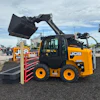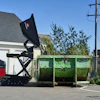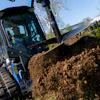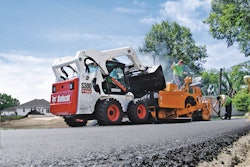
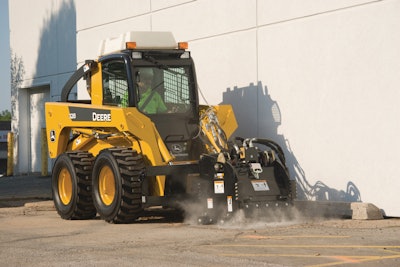
A skid-steer loader is truly a "jack-of-all-trades." With their various attachment options, these units can be found performing many tasks on different types of jobsites. From earthmoving on a building site to landscaping a park to cleaning stalls in a barn, skid-steers can be found helping operators get the job done.
While skid steers can be used in many different ways, size does matter. A smaller skid steer wouldn't be the best choice for a roadbuilding crew that needs to mill a few inches of asphalt off a road and a full-size skid steer wouldn't be the best option for a homeowner to use for his backyard garden.
Skid-steer loaders are typically rated by their rated operating capacity (ROC). Below are the size classes listed by AEM (Associated Equipment Manufacturers):
- Zero to 1,251 lbs.
- 1,251 to 1,350 lbs.
- 1,351 to 1,600 lbs.
- 1,601 to 1,750 lbs.
- 1,751 to 2,200 lbs.
- 2,201 to 2,700 lbs.
- 2,701 lbs. and above
"The most popular size in the construction industry is the 1,751- to 2,200-lb. ROC machines," says Greg Rostberg with Bobcat Co. "As the ROC increases between machines, so too does the horsepower of the engine."
Gregg Zupancic, product marketing manager for skid steers and compact track loaders at John Deere, notes that size and horsepower of the skid steer usually falls into one of three categories:
- Small frame = 1,750 lbs., under 50 hp
- Medium frame = 1,750-2,200 lbs., 50-70 hp
- Large frame = Over 2,200 lbs., over 70 hp
Each size and type has its own strengths and weaknesses. So, how do you know which size is best for the application?
Ask the right questions
What's the best way to match a skid steer to your customer's task? In order to find out exactly what it is the customer wants to do with the machine, you need to ask some questions.
"Find out as much as you can about the job the skid steer is being put to," says Zupancic. "Get an idea of the dimensions of the site - especially the minimum dimensions. The worst thing for a contractor is to feel his rental provider hasn't given his business enough thought and has recommended a machine that won't fit within the most vital dimensions of the jobsite."
Jobsite dimensions are one of the greatest factors to know to fit the skid steer to the job. "Understanding physical limitations of the work area often dictates the class that may be used in the application," says Dennis Turney, Hyundai Construction Equipment. "The next consideration would be the lifting height or dumping height requirement, along with the capacity of the job. Finally, hydraulic capacity needs to known in order to operate any hydraulic attachments.
In addition to jobsite dimensions, knowing which tasks need to be completed is a must.
"Knowing the specific applications the customer would like to perform will help a rental business determine the size and power of machine needed to most efficiently complete the tasks," says Rostberg. "Asking questions and getting to the core of the customer's work will help determine this. Also, while inquiring about the customer's needs, a rental business might discover opportunities to rent attachments that will help the customer more quickly and efficiently complete their job."
As a rental business operator, it's also imperative that you understand what the different sizes in your fleet can do.
The size of things
"All skid-steer loaders share a variety of characteristics that make them suitable for a range of applications," says Rostberg. "Skid-steer loaders are maneuverable, due to their ability to turn in their own tracks; compact, allowing them access to areas larger equipment can not go; and versatile, with the ability to use dozens of attachments."
This being said, each class of skid steer fills its own niche. Small-frame skid steers, for example, are ideal for landscaping, building and site development and underground construction, because of their compact size.
"Interior demolition is a good example where these machines excel, as the machine is small enough to access the inside of a building, yet powerful enough to use a hydraulic breaker attachment to demolish concrete and then switch to a grapple to remove the debris," says Rostberg. "Accessing in-between houses built closely together or through backyard gates and fences is another prime example of the usefulness of this size machine."
Medium-size machines comprise the "lion's share of the market," says Turney with Hyundai. Because of their "excellent engine power, balance and hydraulics, these machines are suited for a wide variety of attachments and applications," he explains.
Zupancic says it's all about the size of the site and the use the skid steer is put to. "These construction and jobsite applications require a little more power and bucket size, but are still in a confined enough space that contractors cannot bring in the big machines," he explains. "Sometimes the operator doesn't need the extra muscle of a larger skid-steer loader and finds it more economical to have a 50- to 70-hp machine."
Larger loaders have the power and ability to tackle larger construction site jobs, from grading and excavating to roadbuilding and heavy lifting applications.
This machine size's ROC allows it to lift the heaviest loads, such as moving pallets of brick or dumping loads of dirt into the back of trucks. "These machines also have the horsepower and hydraulic flow to tackle tough jobs and attachments," says Rostberg. "Attachments that perform best with a high-flow machine, such as a wheel saw or planer for road construction or a forestry cutter for site preparation, work best with these machines."
Applications that require the extra horsepower, such as dozing work, are also a good fit for large skid-steer loaders. "Basically, the large-frame skid steers are going to do the heavy lifting for a contractor," says Zupancic. "When they need a big machine to do the hard work on a big site, but they still need maximum manueverablity and versatility, they'll turn to a large skid steer."
When a skid-steer loader isn't the best option
Skid steers are incredibly versatile machines, especially when you take advantage of the host of attachments available for them. However, they might not be the best choice for some applications. In some instances, a mini track or compact track loader might be the better option.
For example, a homeowner or contractor working on an established lawn might be best served with a tracked machine that will cause less damage - and less rework - to the lawn, saving time and money. Or, much like the small skid-steer loaders, a mini track loader is an excellent way to access narrow or tight areas, such as through a backyard gate or in between buildings built closely together.
A contractor who needs to work in mud or softer soils may be better matched with a compact track loader to keep them working more efficiently and effectively. Or, if a contractor needs the extra pushing power of a compact track loader, such as for dozing work, it would be a better choice versus a skid-steer loader.
Information provided by Greg Rostberg, Bobcat Co.