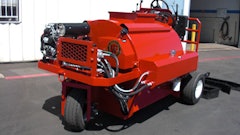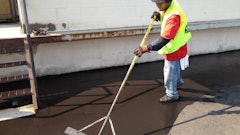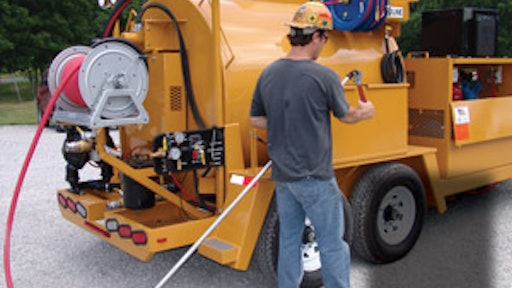
Sealcoating equipment maintenance is an important concern for this time of year whether you are preparing to wrap up your season or you are only halfway through. And after working your machines long hours out in the sun for months some maintenance issues may arise. It is important to know what may need attention on your machines, how you can be aware of possible problems while out in the field, and what you can do to keep things running effectively.
Parts to check
After several months of hard work you will need to check multiple parts for signs of wear. The spray wand hose is the first thing to show wear, says Brent Loutzenhiser, CEO and owner of Seal-Rite. "You would want to watch your hose for frayed areas and to make sure that you don't have any bad spots in the hose where your hose could blow and make a mess," he says.
Loutzenhiser says he has heard of occasions where a hose has blown and sealer sprayed all over cars and on buildings. His advice is when in doubt, change your hose. However, a complete hose change may not always be necessary. Loutzenhiser points out that most hose wear is up near the spray wand. Instead of completely replacing the hose, Loutzenhiser suggests a little trick. "Pull your hose off and swap ends, putting the spray wand end at the reel end and vice versa. That way, you've kind of doubled the life of your hose."
Another important part that needs regular attention is the spray tip on the hose. Gordon Rayner of RaynGuard says spray tips wear out from the friction abrasive materials (such as sand or minerals) cause when moving through the tips. "These [sand and minerals] act like sandpaper and will cause spray tips to wear more quickly," he says. Like fraying on the hose, spray tip problems can be seen by an operator out in the field. Rayner says loss or degradation of the spray pattern the tip produces is a sign that the spray tip is worn out.
Loutzenhiser says other clues an operator can look for include "streaming on the edges of the spray pattern, more pressure needed than before, more material on the ground, or if he couldn't get a nice spray pattern." His best advice here is not to be afraid to throw away spray tips that are not performing like they should.
The piston pump, which pumps material from the tank to the spray wand, is another area of concern for contractors, says Eric Humphries, sales manager from Neal Manufacturing. He suggests making sure there is enough oil in the top of the pump to help keep the pump's leathers lubricated. He says if you can look in and see the top of the pump then you should add more oil and repeat this routine at least once a week.
The spray system might be the most obvious aspect to wear down with use, but other elements also will wear out and need to be properly maintained.
- Belts. Belts on the compressor should be replaced every two or three years.
- Bearings. The bearings on the end of the tank that hold the agitator shaft can start leaking. Loutzenhiser says the maintenance for these bearings could be as easy as tightening a few nuts, depending on the age of the unit. When in doubt, replacement is a good maintenance project to do in the off season when the tank is not needed.
- Rubber wipers. Some sealcoating equipment uses rubber wipers inside the tank on the agitator paddles to scrape material from the tank sides and bottom. Loutzenhiser says these wipers can wear down or soften within five years. If the wipers no longer touch the sides of the tank or the sealer is not being scraped off the sides then it is time to replace the wipers.
- Pump diaphragm. Often people don't realize these need to be replaced. Most 2-in. air-diaphragm pumps can pump 300,000 to 500,000 gallons before replacement is necessary, according to Loutzenhiser. The amount of sand per gallon you are running in your mix is an important factor determining how quickly your pump wears out, too.
- Brakes. While some sealcoating units don't have brake systems others are built with long-lasting brakes. If the machine does have brakes, be aware that they may wear down.
- Engine. The engine is an important component on all equipment so maintenance here is essential. Keep an eye on the oil and change the filters regularly to keep it running efficiently.
Stop, what's that sound?
In an ideal world, all maintenance issues would occur before an operator starts a job in the field or after the machine is brought home for the day. But this is not an ideal world. However, operators are not left clueless when it comes to noticing if a piece of equipment is not functioning properly. There are some things operators can look or listen for while on the job to indicate a piece of equipment is not performing correctly. "The first thing they should be looking for is something out of the norm," Loutzenhiser says. "That means just kind of keep your eyes and ears open to your whole unit."
For example, if you see that you are running a higher than normal psi with your pump and spray tip, and your mix design hasn't changed, that may suggest that you should clean out your valves, he says. Also, if you aren't getting constant strokes from your air diaphragm pump it may not be running efficiently.
Humphries says a drop in the pressure of the spray is another sign of an improperly working machine. He points out three likely causes to this drop:
- The filter basket. "The material in the filter basket is dried sealer that fell off the insides of the tank or even small stones that are actually balls of additive that wasn't added properly or didn't mix properly," Humphries says. "The material is deposited in the basket under pressure and has a clay-like consistency that sticks to the side of the basket, so you can't just pull it out with your hands." He suggests shutting off the main valve and running the pump for a few seconds to release pressure. Then open and remove the filter basket. Use a screwdriver to clean out any built-up material, then dump the material into a bucket.
- Plumbing clog. A second cause of a pressure drop could be a clog. Check if the sealer is recirculating back into the tank, Humphries says. This will help a contractor locate the clog. If sealer is recirculating, the clog is in the wand or the hose. To remove the clog, he says to insert the wand into the tank and spray into it.
- Bottom ball. A third possible cause of a drop in pressure can come from the bottom ball in the pump. The 2-in.-diameter ball can get stuck, causing the pressure not to build up. "After a time, because it's working in such an abrasive environment (with all the sand in the sealer), it will wear down to 11/2-in. diameter and will get stuck in the bottom of the pump," Humphries says. When this happens, the ball needs to be replaced.
Although there are many different areas where a sealcoating machine can break or wear down, a do-it-yourself fix is still possible. And if a piece of equipment does show signs of break down or wear while in the field it isn't hopeless. "With the right person, with the right skill level, and the right tools," Loutzenhiser says, "the maintenance can be done on the job."
Prevention is key
Waiting to do maintenance until a piece of equipment shows signs of breakdown, or even worse does break down, is not the ideal way to take care of your machine. At this point in the season, there is certain maintenance that should be done to keep your sealcoating units working effectively and to prevent issues while in the field. Several of these maintenance fixes can also be done in the field if need be.
Some of the issues mentioned earlier, such as loose bearings, can easily be fixed by tightening some nuts. Other issues are a matter of a regular checkup. Checking the fluids on your unit as well as the air filters is very important, Loutzenhiser says. How often you check the air filters depends on how often the equipment is used. If you use the equipment a lot, and in dirty conditions, you are going to want to check them more often.
"That's really something it doesn't hurt to go overboard on, changing your lubricants and changing your air filters, because it's so quick and simple and cheap," he says. "It's a lot better than the alternative."
Checking the brakes regularly is also essential. "A neat trick is to jack all four tires up, then spin them and check to make sure each individual brake is functioning properly," Loutzenhiser says. That way you will know if only three wheels are working instead of four. Another good preventative measure is cleaning the filter pot every morning.
Humphries says another way to keep your equipment working properly late into the season is to check the hydraulic oil both pre- and mid-season. If the oil wasn't replaced before the season started it should be replaced at the mid-season check, he says. Humphries also suggests rebuilding the pump before the season starts.
Say good-bye
Even if you take good care of your unit and perform proper maintenance routinely, you eventually will need to replace equipment. But how do you know when it is time to replace? "I would say the most obvious sign, and it's kind of like with a car or anything else, is once it starts giving you a lot of trouble," Loutzenhiser says.
Rayner agrees. "Machines, unlike humans, cannot regenerate or repair their internal workings. Eventually they just wear out." If you fix one problem and just move onto another, replacement may be the best course of action.
Maintenance Checklist Daily:
Monthly:
Other Suggestions:
|

















![Screen Shot 2023 01 04 At 5 23 30 Pm[35]](https://img.forconstructionpros.com/files/base/acbm/fcp/image/2023/01/Screen_Shot_2023_01_04_at_5.23.30_PM_35_.63bc42696de27.png?auto=format%2Ccompress&fit=crop&h=135&q=70&w=240)