
As manufacturers have made infrared equipment more mobile and versatile, contractors have taken infrared use in new directions." I look at the American contractor as one of the most inventive and innovative people around because contractors have to find ways to do things more quickly and more profitably and better than they were done before," says Dave Strassman, Asphalt Reheat Systems."That's one of the things we see happening in infrared use." While each of the following jobs was explained by a particular manufacturer, all infrared equipment can perform these and other types of work.
Installing thermoplastic crosswalks at the University of Wisconsin
Not everything involved with the infrared process has to be a pavement repair, and a recent thermoplastic crosswalk installation on the University of Wisconsin-Madison campus is a perfect example.
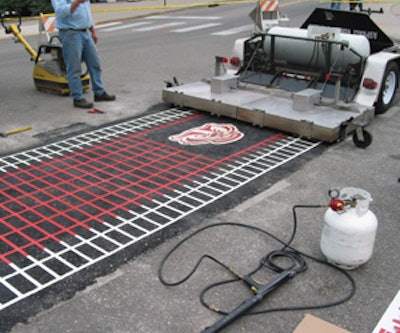
Dave Strassman, development officer at Asphalt Reheat Systems, says the company not only applied thermoplastic (in the university's red and white school colors and with reflective glass beads) to a crosswalk, but they also used infrared process to install a Bucky Badger mascot logo to the middle of the crosswalk.
"It was an older intersection, about six to eight years old, Strassman says." It had been striped before with some thermoplastic, some epoxy, and some paint so the first thing we had to do was remove the old markings."
Using their Manta Ray infrared unit, ARS heated the pavement to between 300 and 325 degrees F, just enough to soften the markings. Then they used a rake to pull off the epoxy and paint. To remove the heated thermoplastic ARS attached a bucket razor to a Bobcat skid steer and peeled the marking right off the surface.
At that point ARS had the crosswalk area, which measured 45 feet long and 6 feet wide, back to its original fresh asphalt surface. Strassman says they used the self-propelled Manta Ray unit to reheat the crosswalk area.
"The self-propelled unit is helpful in instances like this because we can place it within inches of where we need the heat. It's easily operated by one person and can maneuver over the precise area within inches ," Strassman says."That's one of the big advantages of the newer infrared units: They are much more maneuverable."
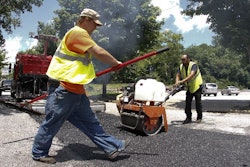
Following standard infrared processes, ARS heated the area, then placed a plastic-and-rubber crosswalk template on the surface. Using a plate compactor they stamped the template 1/8 inch deep into the hot asphalt surface. Once the template was removed there was an indented crosswalk remaining in the pavement. Using red and white thermoplastic ARS completed the job. Thermoplastic was placed in the indentations, then the Manta Ray was used to heat it to between 250 and 275 degrees F, until the material starts to melt.
"The Manta Ray has a timer on the outside and we can monitor the heat that way,"Strassman says. "We know it takes about two minutes to bring the temperature to between 250 and 275 degrees F."
He says they also used a temperature gun to monitor the heat.
"You can also simply raise up the heater and visually inspect the thermoplastic as it's heating," he says."Raising it up doesn't affect the process."
Once the material has been heated and then cooled, it's almost flush with the pavement surface.
"We needed it recessed a little bit to prevent damage to the crosswalk from snow plows and heavy traffic," Strassman says.
The same process was used for the Bucky Badger logo.
"We did all this while classes were going on, and this is in a very high-traffic area of campus. There were probably close to 3,000 students walking by us while we were out there working," Strassman says.
Strassman says he expects infrared application of thermoplastic to become widespread for a number of reasons, including the fact that it's easier, faster, and more consistent to do than the traditional approach, which would have heated the material with a hand torch.
"With infrared equipment contractors have the ability to heat up the existing asphalt in a larger area without damaging the pavement," Strassman says."That will enable contractors to do bigger jobs and bigger jobs quicker, which will make it more available to their customers."
He says that advancement in the thermoplastic industry will spur use as well.
"Thermoplastic is not new, but people have been getting more creative with it," Strassman says."Thermoplastic manufacturers can make virtually any color and any design you want now. They can create unique logo systems. People aren't used to seeing a red and white Bucky Badger that lights up in the middle of the road when headlights hit it."
Easy way to install rumble strips
While infrared equipment can be used to repair a variety of pavement defects, such as potholes, alligatored areas and even "bird baths" in new pavement, the equipment also can be used for improvements or additions that are thought of after the pavement has been placed.
Carl Morris, president of Keizer-Morris Inc., Almont, MI, says the infrared process can be very effective when constructing handicap ramps, speed bumps and even rumble strips.
"We were approached by officials of Lapeer County in Michigan who wanted to know if we could use the infrared equipment to add rumble strips before stop signs on a number of low-volume roads," Morris says. "We hadn't tried it or thought of it but we figured it could work."
Morris says the process is similar to the process for pavement imprinting, but the imprints are deeper for the rumble strip. He says they made a homemade template, ripping 3/4-inch plywood into five 3-inch-wide strips. The strips were fastened three inches apart to metal supports on each side, creating a one-piece template 8 feet wide.
Once the template was made and the crew was at the jobsite, they followed a standard infrared repair procedure. Backpack blowers were used to clean the pavement of any debris, foreign objects or standing water.
"That's an important first step because if you don't clean it first, two things happen," Morris says."First, if you leave dirt or water on the asphalt and then you heat it, that dirt or water becomes part of the asphalt, weakening it, and you don't want that. The other thing that happens is dirt or water acts as like an insulator and makes it more difficult to heat and heat evenly."
Next they heated the pavement using a KM4-48 machine, a unit that has four heating zones and offers 15 different heating configurations. For the rumble strip, zones 1 and 3 were used to create a 4 foot x 8 foot heating area horizontally across the pavement. Then the pavement was heated.
"All you're doing is softening the asphalt,"Morris says."It's a very simple and quick process."
After heating the template is placed on the heated area and compacted 3/4 inches deep. Morris says they have used both a walk-behind plate compactor and a one-ton roller to make the impressions.
"You don't have to make much of a distortion in asphalt to get a driver's attention," Morris says.
Morris says that using the infrared process for improvements such as rumble strips can be quick and easy for contractors, enabling them to offer additional services to their customers. He says the entire process, once the crew placed the heater on the surface, was 10 minutes from start to finish.
"When adding things such as handicap ramps or speed bumps the infrared approach has additional benefits," Morris says. "If you construct a speed bump, for example, you are just adding something on to the top of the pavement. But if you use the infrared process to construct the speed bump you heat the surface, score it with a rake, and then build the speed bump on top. The bump then becomes a part of the existing pavement, making it stronger and ensuring it will last longer."
Producing seamless utility cut repairs
Many contractors are in the utility cut repair business, which can be lucrative but can also cause substantial headaches, particularly where call-backs for failing repairs are concerned.
But as Knipfing Asphalt Solutions, the contracting arm of KASI Infrared equipment learned, the infrared process can solve the utility cut problem. In fact, both Public Service Electric & Gas (PSE&G) and New Jersey Natural Gas (NJNG) now rely on the infrared process almost exclusively to repair many of their utility cuts.
"Once they saw how well it worked both organizations embraced it," Knipfing says.
It's easy to see why. Where traditional repair methods always leave cold seams that can allow water to penetrate into the base and subbase, the infrared process essentially results in a seamless pavement repair.
"Infrared repair is the only method currently available that will return the road to its 'as before' condition,"Knipfing says. "Once it's installed properly, it's an integral part of the pavement and fused together with the surrounding pavement."
Knipfing estimates that his four crews have repaired some 20,000 utility openings-including one 1.8-mile long trench-in the eight years his contracting company has been using infrared process. And he says there is no trick to using the infrared process to repair utility cuts.
"It's the typical infrared operation and process—only the application is different," he says.
Once the utility has completed its work, it replaces and properly compacts the fill material. It then places stabilized 3/4-inch base asphalt to grade, and properly compacts it. After 90 days Knipfing Asphalt Solutions goes to the jobsite and conducts the final step in the process.
The crew uses the infrared equipment to heat up both the repair and the surrounding pavement and then removes a percentage of the 3/4-inch base asphalt. They replace what they take out with 3/8 inch wear course asphalt, rake and lute it to grade, then compact the patch, working from the outside edges in toward the center.
"It's important that once the fill and base material is put in place that it is left untouched for 90 days. This allows adequate time for both materials to fully settle and compact," Knipfing says. "The amount of settlement varies. Sometimes it's none and sometimes it's as much as almost two inches. It all depends on how well the compaction was done on both the fill and the asphalt base."
He says that if the final infrared repair is done the same day the utility's work is completed, further settlement will most likely occur, creating a depression in the pavement.
"As the asphalt settles it causes the repair to separate from the surrounding road, enabling water to enter and almost guaranteeing the patch will fail,"Knipfing says. "By waiting 90 days you are virtually eliminating that problem. The 90-day period is key."
Knipfing says the size of the patch determines the amount of hot mix asphalt he has to add during the final repair. A patch can require as little as two shovels full or as much as wheelbarrow full.
"It just depends on the compaction, the settling and the size of the patch," he says.
He says current infrared equipment is ideal for this type of pavement work because most units can be configured in a variety of ways, enabling the contractor to select the configuration that best fits the size of the patch.
"It creates a sound repair far better than any other conventional method," he says.
Knipfing says it's difficult to quantify the costs or even cost savings when comparing infrared repair to standard utility cut repairs because there are so many variables, including size of the repair, to consider. He says the up-front cost of the process is typically more expensive than conventional means," but when you factor in the reduced call-backs it's essentially a wash.
"A significant benefit to the utility company is that the municipality that owns the street is thrilled to have it returned to 'as before' condition. This removes one of the largest headaches faced by underground utility companies 'keeping the municipality happy.'"
Knipfing says the infrared process is equally effective on utility cuts that were previously repaired by conventional methods and have subsequently failed. In the past, failed utility cuts were repaired with skin patches, which didn't last long, or by removing the entire patch and replacing it the same way it was done initially.
"But you can use the infrared process to repair these failed utility cuts. It's kind of like repairing a pothole using infrared," he says. "You follow the same approach."
Putting the finishing touches on new asphalt
Paving contractors work hard to do a perfect job, the right density, the right slope, strong joints. But what can a contractor do when a job doesn't come out as perfect as the paver-or the customer-would like?
One of the newest solutions involves infrared repair equipment, which can be used to fix even newly paved surfaces without wasting new hot mix and without creating joints in the new pavement.
"We're getting more and more calls all the time from paving contractors and other people in this business who have been recognizing that this is the way to go,"says Wes VanVelsor, president, Ray-Tech Infrared.
VanVelsor tells of a recent paving job that used Ray-Tech's mini-TMV unit with a 2-ton reclaimer box and pavement heater on the rear to improve drainage and enable the town of Charlestown, NH, to accept the finished road.
The road was in a new eight-house development. VanVelsor says there was a problem in the initial grading of the project, when the back fill material around the storm drains wasn't compacted enough. Over time the material settled around the storm drain, and as it did the asphalt pavement went with it.
"After about 18 months when the asphalt pavement settled around the drains and other areas they realized they had paved a little flat, "VanVelsor says. "There was some pooling in other areas and there were low spots on either side of every storm drain, nine of them, with 1/2 in to 3/8 inches of standing water around the drains."
The town refused to accept the road because of the standing water, and the contractor began looking for ways to solve the drainage problem.
"This was an ideal job for infrared repair because the process gives you a good bond," VanVelsor says. "The last place you want to have a joint is around a manhole or a drain because a joint just lets more water in. Infrared can fix the job without making any cuts in the pavement while creating a thermal bond with the existing pavement."
In the past contractors would have tried to correct the drainage problem with a skin patch, but the contractor determined a skin patch wouldn't hold.
"Plus, having skin patches all over the newly paved area wouldn't look good, so the town wouldn't accept a skin patch, "VanVelsor says. "Another approach they considered was to cut the low areas out and reconstruct them, but then you would have joints all the way around each drain, around the edge of the patch, which would enable water to get in and create more of a problem."
VanVelsor says the paving contractor and the city turned to infrared contractor Environmental Enterprises, Charlestown, to fix the pavement, and infrared was successful.
"We heated the pavement about 1 1/2 inches deep so it was workable, scarified the area with an asphalt rake, added some material from the reclaimer box, raked and luted it to the proper height, and then compacted it with a 1 1/2 ton vibratory roller," VanVelsor says. "It eliminated the problem."
He said that relative to other repair approaches, the infrared repair was quicker and required the least physical effort.
"Normally it takes about seven minutes or so to heat the pavement to 1 1/2 inches deep, but because this was relatively new asphalt the unit was able to heat it that deep in only five minutes," VanVelsor says.
Once the area was heated the crew used a rake to "picture frame" straight edges within the heated area at least 6 inches in from the edge of the heated area because it provides a "hot shoulder" to work to.
"If you don't do that you'll have a cold shoulder which leads to ravelling," he says. "So we rake it and add any necessary material from the reclaimer, in this case 3/8-inch mix."
He says the amount of material to add varies. "You learn from experience how much to add just by judging it," VanVelsor says.
VanVelsor says one of the low spots extended 12 feet from the drain itself.
"When the drain is only 1/4 inches to 3/8 inches lower than the furthest point of standing water, which is 12 feet away, you must be very careful to maintain a straight, even, elevation between the two points," VanVelsor says. "Any slight dip will hold water. The use of a straight edge or transit will guide you where you want to be.
"In order to solve that we had to taper the pavement from the drain all the way to 12 feet away. The settlement was deeper near the drain and we added more material there to 3/8 inches or so, then ran a straight edge from the drain to the puddle. We kept checking it with a transit to make sure we were running the water in the right direction."
Van Velsor says it took the infrared crew about 45 minutes from start to finish , using only one piece of equipment, to finish this 12-foot job.
"It would have taken a remove-and-replace crew several hours and a lot more equipment (something to cut the pavement, a backhoe to remove material, a dump truck to put it in and haul it away, and a truck bringing the asphalt). And what you're replacing is brand new asphalt itself so it's really a waste," he says.
"With the infrared method, the color difference of the pavement will blend to a point where it will be almost impossible to see that any work had been done in each area."
Preheating cold pavement extends paving season
In many parts of the United States and Canada, cold weather paving has challenged contractors for years. The trick is at least two-fold. First, the contractor needs to keep the mix hot enough to place and compact; second it helps if the base the hot mix is placed on is warm (or at least not as cold as the air temperature) so the mix bonds well and the paving lasts longer.
Bob Kieswetter, owner, Heat Design Equipment, Kitchener, Ontario, says that while infrared units can't do anything about keeping the mix itself warm, the infrared process can improve base bonding.
"One of the main interests we see in infrared is preheating base course asphalt in cold weather paving," Kieswetter says. "There hasn't been a reasonable solution to that until now."
A recent bridge replacement job in Ontario illustrates the point. A winter failure of The Latchford Bridge on Highway 11, the Trans Canada Highway, required construction of a temporary bailey-type bridge detour over the Montreal River to and from the bridge that needed to last until the main bridge could be repaired in the spring. General contractor Aecon Construction Ltd. and paving contractor Miller Paving Ltd. constructed the detour and placed granular base asphalt in–4 degrees F conditions.
"This job is an extreme example of winter pavement construction," Kieswetter says. "It was severe freezing weather but it was an emergency."
In order to apply the surface course, Kieswetter says the municipality in its bid specified that the base had to be preheated to ensure the bond to the base.
"The bond was a concern on the part of the municipality, that because the paving was being done in such cold weather that it wouldn't hold up," he says.
He says in a typical paving spec the ambient air temperature must be 50 degrees F and rising before paving can take place.
"But now we're looking at specs that require preheating of base asphalt," he says.
He says many government bodies are specifying preheating of the asphalt if the base asphalt is below a specific temperature, and most of the specs do not allow open flames.
"This is extreme winter paving," Kieswetter says. "With many contractors now extending their construction schedules into early winter, infrared preheating of pavement can really help."
Kieswetter says that in the past using infrared to preheat a surface in such cold weather would have been more difficult and more expensive. He says some jobs tried hot in-place recycling pre-heaters to get some of the same benefits, but hot in-place recycling often involves a large train, making it hard to move and expensive to mobilize.
"But infrared equipment has developed quite a bit so it's fast enough now and certainly feasible to do this," he says. "Infrared equipment is getting larger and more efficient than older infrared equipment, and it's also much more mobile. So the process is less expensive than it used to be and easier to move the equipment around."
Kieswetter says Infrared Repair Corp., Kitchener, which subcontracted the preheating job from Miller Paving, preheated the base from 15 degrees F to between 68 and 86 degrees F. Miller Paving then placed the surface course asphalt. Infrared Repair Corp. also preheated the surface course to enable line striping to be done in such cold weather.
To preheat the surface Infrared Repair Corp. used a 16 foot x 8 foot Heat Design Equipment HDE 1600 that had been modified for cold weather paving (BTU input of 2.6 million BTU). The unit was placed in front of the paver and towed by a small truck.
"Ideally you want the preheating equipment to move as close as possible to the front of the paver so you don't lose a lot of heat," Kieswetter says.
Kieswetter says the pace of the preheating depends largely on the air temperature but more on the paving speed the contractor wants. He says most preheating work is done at the same rate as the paving, between 15 and 25 feet per minute.
"It also depends on the number of machines,"Kieswetter says."You can get by with one machine but if it's really cold or if the paving contractor wants to move a little faster you can heat with two machines so you can heat farther out."
He says that contractors should not be concerned about heating the pavement too long because the infrared unit keeps moving throughout the paving job.
"You're not heating the surface anywhere near the point where the pavement is workable, you're just preheating the pavement to 68 to 86 degrees F or so, so you don't have to worry about damaging the asphalt."
"Basically what you want to do is make sure the base asphalt is not acting as a heat sink, taking too much heat out of the surface course before you can get in compacted," Kieswetter says.
He says the project was a complete success.
"The surface course asphalt stayed bonded throughout the entire winter until the granular base failed in the spring thaw," he says.
Kieswetter says that using infrared to preheat pavement is "simple to do and easy to learn," and can be even easier and work even better when a material transfer vehicle is used in the paving trains.
"It just requires that the operator have proper preparation and training in propane gas safety," he says. "If he understands that it's pretty simple."
Kasi Infrared Pro Heat 2000
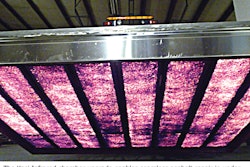
The Kasi Pro Heat 2000 infrared patching system includes a 48-square-foot Ultra glo pavement heater.
Indicate 101 on Inquiry Card
Asphalt Reheat Systems Split Box Infrared Heater
The Split Box infrared heater features chambers for 2x4, or 4x4 heat areas.
Indicate 102 on Inquiry Card
Keizer-Morris 4-48 Infrared Asphalt Recycler
The 4-48 infrared asphalt recycler from Keizer-Morris features a folding trailer design.
Indicate 103 on Inquiry Card
Ray-Tech Infrared Total Maintenance Vehicle
The Total Maintenance Vehicle is designed for making complete, permanent asphalt pavement repairs.
Indicate 104 on Inquiry Card
Marathon HEPR36 Infrared Heater
Marathon Equipment's HEPR36 infrared heater is available in walk-behind or trailer-mounted versions.
Indicate 105 on Inquiry Card
Heat DesignSkid-Steer Attachment
The Heat Design skid-steer attachment offers deck sizes of 8x4, 8x6, 8x8, 8x12, 8x16.
Indicate 106 on Inquiry Card