One topic that continues to keep the attention of those in the sweeping industry is the use of National Service Providers, sometimes termed as aggregators. Essentially, these companies are the middlemen between property managers and contractors.
Through their services, aggregators bid and collect large-scale accounts on a national and regional level, and work for those accounts are given to the contractors who are contracted to provide services to the aggregator.
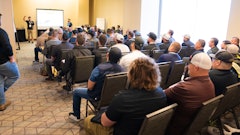
In response to this going trend, WorldSweeper.com hosted a tele-seminar where power sweeping professionals joined together via phone to gain more knowledge and information on working with aggregators.
Richard Arlington, president of Arlington Lawn Care and Rich Arlington & Associates, discussed the best ways to work with these types of firms, stressing that just as there are good and bad contractors in every market there can be both good and bad aggregators to work for. He said contractors who search for them will find them.
Arlington has worked with a variety of contractors offering tips on evaluating and working with third party service providers. In his presentation, he outlined several outcomes of working with aggregators.
Increased Access to Accounts
According to Arlington, several positive results can come from the use of aggregators for both the client and the contractor. "The reason this trend is moving forward at a fast pace is because it streamlines the internal accounts payable and management process as well as the number of checks the property owner has to write," Arlington said. "It streamlines the regional manager involvement allowing them more time to work on the company process instead of dealing with the paperwork of having multiple contractors at multiple sights."
Arlington also said that as more companies go regional or national, the use of aggregators will continue to grow.
He said that as with any business, some aggregators are good companies to work with and some are not - and people most often hear about the bad ones. From contractors' points of view, if they work in a good aggregator relationship they will have many benefits. For example, contractors will have access to accounts that typically don't accept local bids. Arlington also said that working with aggregators fosters a "team" approach, adding that contractors can benefit from working in a team environment.
He said contractors who work with aggregators will be able to make adjustments to their company, which will help their costs and ultimately their bottom line. "You will have no need for a sales staff to go out and try to generate the work from those types of clients because they won't have a relationship on a local level," Arlington said. In addition, because the aggregator will be responsible for managing accounts, contractors might be able to operate with fewer account managers.
Another advantage Arlington sees for contractors working with good aggregators is their budget. "Most of the work will be bid out seasonal, so budgeting becomes easier," he said. "You have a guaranteed set income every month, and you just manage your own expenses."
In addition he said contractors working with aggregators will have free training available, access to free operational or management systems, and have the opportunity to work with business mentors. The combination of positives for the contractor and client can create a win/win relationship for both parties, Arlington said.
Struggles with Control
But Arlington acknowledged that both clients and customers can find many challenges when working with the aggregators.
Clients, for example, can see a lack of control by the site level team. "By lowering prices it requires more oversight on the proprieties if they do not hire good aggregators, and their properties can begin to deteriorate as well as receive fines from the city for trash and debris," Arlington said. "There is also a lack of control by their site level team because the NSP is nonresponsive or the contractor will end up in an area where it is outside the scope of work they agreed to."
As a result, anything that is outside of the contracted scope of work can become greatly overpriced.
Arlington said that of great concern to contractors is price and performance. He said that often quality contractors cannot perform at the price point required by the aggregator, and sometimes the price does not equal the level of performance required in the specs.
He said that in some cases a lower price is often accompanied by additional paperwork on the part of the contractor, resulting in a higher operating cost.
Another problem of working is the push by the aggregator to put all liability on the contractor. When working with aggregators, contractors can also encounter unsatisfied customers as well as technology driven systems they might or might not be able to run under the system. The contracts, scope of work, and relationships can seem to be very one sided, Arlington said.
Over Promising, Under Delivering
He said clients and contractors can face many difficulties when working with aggregators, inhibiting the success of their business. One area that appears to be positive but can have poor end results for clients are reverse auctions in which contractors bid against one another for who will do the job cheapest.
"Reverse auctions drive pricing below the specification thresholds," Arlington said. "It creates a big cost savings for the client, but it is offset by a huge disappoint. There is a high turnover of contractors on the site…there is a high site level of frustration from the client."
Also, clients can experience a lot of "over promising" and "under delivering," Arlington said, because it is the aggregator doing the promising but the local contractor doing the delivering. Add to that the fact that communication is often difficult between the client and the aggregators because the client must go through three or more tiers before getting to the contractor that is performing the work, and the result is frustration - often among all parties.
"Once the client gets to a certain price level it is very hard for them to change back strictly due to the amount of cost savings that was built into the process," Arlington said. "When they have to go back to their board of directors or CEO and talk about 'We need to add 30 percent to our budget for this' it becomes hard to change back."
Arlington said that in many situations, when working with poor aggregators, it will seem to contractors that they are getting pushed around and not getting paid. "In any way, shape or form they can hold up your money," Arlington said. "There are a lot of unethical management teams. There is a high frustration on the contractor side due to the fact that there is a lack of information."
Contractors can also face very high reporting requirements and low overall pricing. They might also encounter cash flow problems due to long, drawn-out pay cycles, Arlington said. As a result, many contractors can no longer afford to operate.
Arlington said it is important for contractors to be aware of specific situations. For example, some aggregators have developed the reputation where they use the contractors' performance against the contractor, Arlington said. "Contractors want to do a good job, and we truly do want to do a good job," Arlington said. "When you get into those ugly relationships or those bad relationships they will use that against you because they know it is your name, your truck, your equipment that's on site and that's being looked at. They will try to use your ego or your reputation to work it against you."
The complete tele-seminar with audio and Power Point is available at www.WorldSweeper.com. The direct link is: http://www.worldsweeper.com/webinar/index.html.
Tips to Ease Working with National Service Providers
Before choosing a National Service Provider there are several things contractors should be aware of in order to ensure a positive working relationship. Richard Arlington, president of Arlington Lawn Care and Rich Arlington & Associates, discussed several tips contractors should follow in a recent tele-seminar on WorldSweeper.com. By following these easy tips, contractors will have greater potential at achieving success.
- Understand reporting requirements. Gain a complete understanding of the reporting requirements prior to taking on the work.
- Understand liability and risk. Be aware of the particulars around liability should your client get fined. If they are fined for something outside the scope of work know the full details because the fine could come back to you.
- Talk with vendor management team. This internal team of the aggregator runs the compliance department that makes sure you receive your check. If you have issues with payment, paperwork or sight level problems, speak with them to make sure you're on the same page.
- Request references of the company. Ask for two contractor references who currently work with the NSP and two contractors that no longer work for the NSP.
- Research the company. Look for information about the company on the Internet by searching blogs and chat rooms. This search could reveal the potential lawsuits the company is involved in.
- Meet with the on-site team from the aggregator. Discuss specs with the on-site team to understand the sight team's expectations.
- Discuss the level of expectations with clients. Be sure to understand what the client expects because it may be different than what the aggregator is presenting to you.
- Do not sign a contract just to get work. If the pricing is too low, don't sign the contract because you will lose money on running your equipment.
- Negotiate everything. It is important to negotiate everything you are uncomfortable with - including pricing. There is always room to negotiate; you may not get to where you want to be, but remember you don't have to settle for what they are offering.
- Do not accept verbal contracts. Make sure everything is in writing or have an e-mail trail. Anything stated verbally can be denied at a later time.