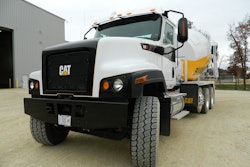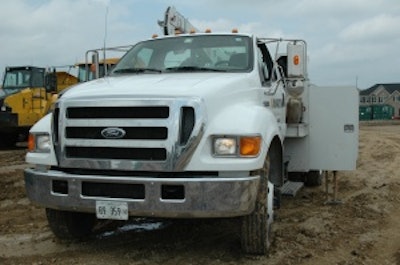
If you're like most fleet managers, you are constantly looking for ways to improve the quality and productivity of your work trucks, while at the same time reducing your maintenance and operating costs. One of the best strategies to accomplish these goals is to improve the equipment specification process. The specifications you provide to the chassis dealer and upfitter(s) that will supply your truck-mounted equipment will ultimately determine how productive and cost-efficient your new work truck will be.
Getting Started
Writing a good specification isn't easy. You need to understand issues such as regulatory compliance; vehicle payload and weight distribution calculations; matching truck bodies and equipment (second unit) to the chassis; and truck powertrain design.
Fortunately, there are a number of resources available to educate fleet managers about these topics. Qualified truck chassis dealers, equipment distributors, and body and equipment companies are willing to help you understand what is needed to get the job done. Another great resource is the National Truck Equipment Association (NTEA). In addition to offering training about developing specifications, the NTEA provides fleet members with basic engineering assistance and guidance through the specification-writing process.
The first step in developing any specification is to research the requirements for the job that the truck and equipment will perform. Your equipment operators can help provide this information based on their daily experience with existing vehicles.
Another important source of information is the maintenance shop. The people who maintain and repair your equipment can give you valuable insights into what typically goes wrong with existing units. This information can help you design your new equipment to avoid those problems. This, in turn, will reduce your maintenance costs and prevent unnecessary downtime.
Once you have done your basic research, it is time to determine if you are going to write the specifications yourself or involve a third party. When making this decision, remember that the hardest part of the entire process is the initial assessment and research. When properly referenced in a purchase order for a new piece of equipment, the specification becomes the controlling document for the entire process. That means that by controlling the development of the specification, you are also controlling the ultimate end product.
More and more fleets rely on third parties, including chassis dealers, equipment distributors, body and equipment companies, and leasing companies, to provide work truck specifications. There are a number of reasons behind this trend, including many fleet managers' increased workloads; lack of knowledge about the functional requirements of the vehicle, limited awareness of the products available to meet those requirements and a simple lack of training in how to develop a quality specification.
Chassis dealers, body and equipment companies, and equipment distributors can be valuable resources in the work truck specification process. Many are factory-trained and can provide recommendations about the best products for your applications based on OEM specifications and their own experience working with organizations similar to your own.
Types of Specifications
There are a number of different types and formats of specifications. The most common types include:
Engineered -- High level of detail to include specific material and dimensional requirements, manufacturing processes, etc.
Functional -- Addresses specific job requirements with minimal other detail.
Performance -- Provides specific performance requirements (cycle times, capacities, etc.), but typically does not address issues such as equipment layout.
Hybrid -- Combines aspects of the other three types as appropriate to fully define a unit without becoming over-involved in detailed engineering requirements.
The most common format of specifications for work truck bodies and equipment is the hybrid. Functional and performance specifications are also useful when issuing requests for proposals (RFP) or requests for information (RFI). Truck chassis specifications are typically a special variation of an engineered specification where the writer calls out specific components and design requirements based on the engineering work that has already been done by the chassis manufacturer.
Beyond the various types of specifications, there are two common formats for writing specs. Using the matrix format, the writer lists a specific item or requirement in one column and then provides a brief description in another column. This format works very well for chassis. Using the narrative format, which is popular for bodies and equipment, is the narrative style, where the writer provides longer, more detailed descriptions for each requirement.
Pitfalls
While a properly written specification can save you money and ensure that the finished product meets your requirements, a poorly written specification can cost you money. If the specification is too loose, the vendor's product may not meet your requirements and you could incur additional expense in the form of change orders, reduced productivity, or higher maintenance costs over the life of the unit. On the other hand, a specification that is written too tightly may force suppliers to make changes to their standard products that serve no real purpose.
When writing specifications, it is critical to strike the appropriate balance between defining exactly what you need and allowing vendors to utilize their standard components to the greatest extent possible.
Learning More
A significant amount of information on truck specifications is available to fleet managers through the National Truck Equipment Association (NTEA). The information is currently posted on the association's website at www.ntea.com.
Several educational sessions on work truck specification development are slated for The Work Truck Show® 2011, which runs March 7-10, 2011, at the Indiana Convention Center in Indianapolis, IN. Topics include: designing work truck bodies and equipment, chassis specification development, powertrain analysis, and truck frame basics. Throughout the year, the NTEA also offers a two-day training seminar on developing and writing work truck specifications. For more information about either opportunity, visit www.ntea.com or call (800) 441-6832.
Robert "Bob" Johnson is a former fleet manager and currently serves as director of fleet relations for the National Truck Equipment Association (NTEA). He will lead three technical sessions on work truck specification at The Work Truck Show® 2011: "Optimizing Work Truck Body and Equipment Specifications," "How to Ensure Your Next Truck Chassis Matches the Job Requirements" and "Spec'ing Your Next Truck Powertrain for Optimum Efficiency & Performance." He is also co-presenting the expanded Fleet Management Symposium on March 7-8.