Regardless of the size of your fleet or the distance you travel to get to jobsites, fuel consumption is a major line item in your operating budget, as well as a thorn in your side if your company has launched a campaign to reduce its carbon footprint. Construction contractors are addressing both problems by using GPS-based fleet tracking technology to put their equipment on a fuel diet. And it's paying off.
New York-based demolition contractor LVI Services, for example, slashed more than $800,000 in diesel expenses for its 400+ heavy construction machines last year by deploying a fleet tracking system to identify fuel-wasting practices such as excessive idling. Equipment utilization data collected by the system also is enabling LVI to improve job billing and bidding accuracy, optimize maintenance schedules and achieve other efficiencies for its nationwide operations.
How It Works
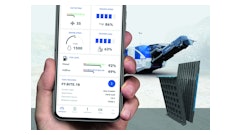
Known as fleet tracking, telematics and wireless fleet management, fleet tracking systems consist of small GPS tracking units installed in each equipment asset plus back-office software used by dispatchers and managers. Each GPS device captures the asset's physical location every few seconds and transmits the data to the software over the cellular network for reporting purposes. GPS units can also be connected via sensors to machine attachments such as buckets, hammers and shears for measuring attachment activity.
At the most basic level, these systems make it possible to view the location of all equipment on a single map in real time. The software also analyzes and correlates the data to produce detailed performance reports on issues ranging from engine hours and idling time for each asset to how many times a crane arm moves up or down.
Solutions such as Navman Wireless' OnlineAVL2 enable both off-road equipment and on-road vehicles to be shown on the same map display, as well as analyzed in reports accessed from the same software application. This strategy eliminates the need to use different systems for different asset types.
Savings #1: Idling Reduction
From a fuel-saving perspective, the ability to measure idling tops the list of fleet tracking's benefits. In the case of LVI Services, the data revealed that one branch alone was wasting $80,000 a month in fuel during the winter because the seven heavy excavators at the site were left running all day. That impacted not only the fuel budget and CO2 emissions, but equipment life and profit margins.
"Idling was adding hours to the machines, and that meant extra wear and tear, as well as a discrepancy in hours estimated versus hours billed," said Gil Gilbert, LVI's corporate equipment manager. "If our estimators say it's going to take 22 hours to tear down a building but the machine logs 35 hours because the operator keeps it running, I have to bill the branch for 35 hours and the profit on that job gets eaten up."
With fleet tracking, the GPS tracking unit can detect a lack of movement as well as whether the ignition is on or off. The system can then link the two data sets to generate reports showing idling time per asset, making it possible to take corrective action.
Savings #2: No Idling Penalties
Reducing idling can also help avoid fines like those imposed by environmental regulators in California, where idling a diesel-powered machine for more than five minutes can cost $300 per occurrence or up to $10,000 for a machine with multiple violations. Nearly 30 states are considering similar laws to reduce the release of carcinogenic diesel exhaust.
Savings #3: Better Equipment Utilization
Fleet tracking also provides real-time visibility into actual equipment utilization, down to the number of times a dump truck tips its bed. By closely monitoring the data, managers can detect signs that work is not being performed at peak efficiency and make adjustments to avoid unnecessary equipment use, associated fuel consumption, and possible cost overruns.
Let's say that a particular job is requiring 12 bucket loads per truck to haul away debris based on real-time data available online via the fleet tracking system's interface, instead of the six loads calculated by the estimator. That information can alert the manager that the job is not going according to plan. Perhaps the operator is not hauling a full bucket, or the transport hauler is supplying a 50-cubic-yard trailer instead of the larger capacity specified on the job order.
Managers can then intervene to get the job back on track and prevent needless machine usage that burns excess fuel. Without fleet tracking, the problem would not be uncovered for at least a few weeks, literally letting gallons of diesel go up in smoke.
Savings #4: Better Routing
Although off-road vehicles technically don't need directions to get where they're going, the heavy haul transport trucks that deliver them from Point A to Point B do. Here again, fleet tracking helps conserve fuel by ensuring that on-road equipment follows the most efficient route. For some systems, that includes the ability to route assets based on weight and height restrictions on particular roads, providing the fringe benefit of eliminating fines for non-compliance with road regulations.
Savings #5: Timely Maintenance
Fleet tracking can also help reduce your environmental footprint, and simultaneously trim costs, by ensuring that preventive maintenance is performed at the proper intervals. Unnecessary expenses for oil, filters, tires and other items can be eliminated, while also keeping those items out of the waste stream, by minimizing premature servicing. Conversely, machine breakdowns and associated downtime can be avoided by minimizing maintenance delays.
This is possible in part because accurate engine hours' information is automatically transmitted from the machine to the fleet tracking system and its built-in maintenance module, which continually updates maintenance schedules to ensure that equipment will be serviced at the appropriate time. There is no longer a need to rely on manual readings or 90- or 120-day maintenance timelines that fail to take actual equipment usage into account.
In addition, anti-idling initiatives enabled by these systems can significantly reduce waste oil by delaying oil changes as well as reducing idling-related soot buildup. If you are on a 250-hour preventive maintenance cycle, cutting 20, 30 or 50 idle hours per month can extend the interval between oil changes for a week or two.
Green Dollar Signs
At the end of the day, the 'green' value of fleet tracking comes not only in the eco-friendly sense but in the ability to monitor every bulldozer, excavator, crane or other machine to be sure that it is pulling its weight financially.
"A 10,000-pound breaker costs $300,000 new. I need to know how much it's utilized, and I don't want to have to rely on the field to tell me. If the operator says he only used a hammer for 10 hours and he actually used it for 100 hours, I'm losing a lot of money," said Gilbert. "Whether it's tracking that usage or equipment idling, the virtue of fleet tracking is that you get true utilization on equipment. It's one of the best tools I've found for getting the most out of our fleet."
Renaat ver Eecke is Vice President and General Manager of Navman Wireless North America, a provider of GPS-based fleet tracking solutions that make it possible to offer on- and off-road vehicle tracking from a single interface. He can be reached at 847-832-2363 or [email protected].