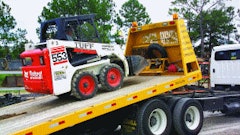
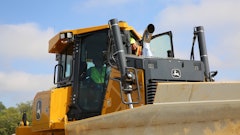
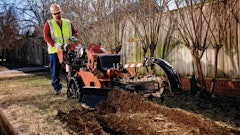
Contractors have been relying more on equipment rental to avoid the cost of owning and operating construction equipment. Rental companies have plenty of equipment to rent at attractive rates. And they have the special equipment you need to get the job done quicker. It's a great deal, and gives you a controllable cost of the job.
Rental is attractive because of current economic conditions and the tight profit margins caused by an industry depression. It provides equipment usage by the day, week or month. Pay the rental fee and you are done with the unit, plus you have the ability to easily compare your cost to your budget.
While rental provides a controllable cost, there are certain procedures to follow to make that rental transaction bulletproof, thus saving both you and the rental company time and money. Just like any financial transaction, you have to pay attention to the details or take the risk of unnecessary cost overruns. And let's face it -- no contractor in this industry needs extra cost charged to a job.
How to avoid billing disputes
Every rental transaction has a beginning, the work period and an end. Each segment of the transaction requires work on the part of the rental company and the contractor to avoid problems.
At the front end of every rental transaction is the need to correctly spec the equipment; set a delivery time; inspect the unit upon delivery to note wear and tear; and agree on a price for the rental period. The work required at this stage of the deal is to confirm all terms of the contract in some form of communication, so there are zero billing issues to deal with. This is the responsibility of both the contractor and the rental company. If you do not receive this type of confirmation, ask for it immediately.
During the work period, you need to properly maintain and control the equipment. You also need to control which employees can use the equipment, and who has the authority to extend the rental period. Controlling the equipment also means keeping other contractors off of it because, as the lessee, you are on the hook for any damage they may do to the unit. When your work with the rental unit is done, someone has to "call off" the unit to stop the rental period. Normally, the caller will receive the call-off number or other communication to support the end of the rental period. Again, you must receive confirmation of the call off in case of a billing dispute. If you don't get it, ask for it. You should also ready the unit for pick-up and comply with other terms of the contract.
Following these simple procedures helps to avoid billing disputes, since both parties have confirmation of the terms of the deal, the date delivered and the call-off date.
Mitigate damage risks
One other issue we need to cover is Loss Damage Waivers. Every rental company will ask you to provide an insurance certificate to cover both liability and the cost of the equipment being rented. If you don't care to provide that certificate, they will bill you a percentage of the rental to cover this risk.
Many contractors think the Loss Damage Waiver provided by the rental company covers all risks to the rental units; in fact, it does not. In most cases, it only covers theft and vandalism, and does not cover damage incurred as part of your work. If that is the case, you are on the hook for any damage to the rental unit, which you can pay, or present to your insurance company with the hope it will pay.
In any event, the rental company will try to recover the cost of repairing the damage, and even continue the rent on your account until the unit is fixed. This scenario probably represents the greatest risk a contractor incurs through a rental contract.
So how do you mitigate this damage risk?
- Make a decision whether to provide the insurance certificate or not.
- Check out the unit on delivery and make note of any existing damage.
- Keep control of the unit in the field, including keeping other contractors off of it.
- If you incur any damage, note it to the driver when the pick-up is made in order to control your risk.
- Try to avoid presenting the claim on your company policy to keep premiums in check.
- Work a deal out with the rental company. Offer them more rentals, pay a little more on future rentals, refer them to other contractors -- anything to spread out the cost of the repair.
If you wish to avoid all this damage risk exposure, there is a new product making its way into the market, whereby the Loss Damage Waiver offered by the rental company now covers damage. Wow -- in about two seconds flat, you just got rid of your damage exposure; no longer have to supply insurance certificates; no longer have to present damage claims to your primary insurance company; and, in general, made your life easier.
The cost of this LDW is a percentage of your rental billing, similar to how rental companies now charge for this service. It may be a little higher than before, but it is still a bargain -- flexible insurance coverage that you pay for when you use it.
If you have questions about this coverage, you can contact Jim Ricker, insurance consultant at J. Griffin Ricker & Associates, and he can help you understand it. His number is (614) 851-9233.
Garry Bartecki is the managing member of GB Financial Services LLP and VP Finance for the Associated Equipment Distributors. He can be reached at (708) 347-9109 or [email protected].