Rent, buy or lease? It can be a tough choice, but never more so than in today's uncertain construction environment.
"Our contractor customers have had to make difficult decisions over the last few years regarding equipment and personnel reductions," comments Keith Rohrbacker, product manager - construction equipment, Kubota Tractor Corp. "I think that there is increased demand for machinery as jobs slowly come back. Still, the days of a job backlog have not resurfaced that might justify equipment purchases."
Evolving emissions regulations aren't helping. "New environmental regulations impact our customers that must use new Tier IV engines," says Rohrbacker. "Should you purchase now or wait until the newly certified models are released?"
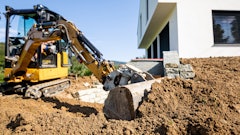
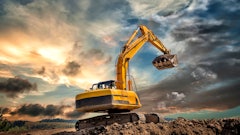
The choice is even more problematic when it involves smaller units such as compact excavators, which have a lower cost of ownership vs. full-size machines, but may also have lower utilization in certain fleets. Weighing all of your options is essential to ensure you get the best value for your particular situation.
When rental is right
"In the current economy, renting has become more prevalent than purchasing because of the uncertainty in the market," says Jay Baudhuin, product manager - compact equipment, Wacker Neuson Corp. "Contractors do not want to buy equipment because they don't know if they will be able to utilize it efficiently."
"If a contractor does not have a steady line of projects, then renting makes sense," agrees Allen Rudd, national marketing manager, Takeuchi. "Renting is convenient without many of the costs associated with ownership, such as transportation, insurance or service technicians. You also don't continue to incur costs on the machine when the economy slows down."
Rental lets you obtain equipment on an as-needed basis. "Usually, a contractor is looking for a piece of equipment for a short-term need," says Kendall Aldridge, national sales manager, IHI/Compact Excavator Sales. "Say he is doing a job where he doesn't have the piece of equipment, and it's going to [last] maybe two, three or four months. Depending on the cost of renting vs. what it takes to purchase, he will typically rent it instead."
"It also makes sense to rent if a job calls for a specific [machine] that the contractor doesn't have in his inventory," says Rudd. "Matching the right machine with the job is more productive and efficient."
Another advantage of rental is reduced maintenance. "Typically, when a contractor rents a piece of equipment, whoever he rents it from is maintaining the equipment," Aldridge points out. "They will come out and service the equipment on a regular basis."
Rental also simplifies the bidding and billing process by establishing a set cost for the machine.
Of course, rental has its downsides, as well. You are not gaining any equity in the machine, and you are at the mercy of the rental center's inventory at any given time. "If you need a certain size or type of machine with a particular attachment on a regular basis, availability of a rental unit may be a concern," says Greg Rostberg, Bobcat Co. "If you are a long distance from the rental source, or if you work in remote locations or require equipment on a moment's notice, delivery time and expense may be a consideration."
Economic conditions have made equipment availability even more uncertain. "When the economy was really bad, rental companies had equipment sitting, and they got rid of a lot of it," Aldridge says. "Now, we're seeing the construction industry starting to come back, and these companies do not have enough pieces of equipment -- the demand is bigger than the supply right now."
As such, if a particular size or configuration of compact excavator is a "must have" on a project, you may want to consider a purchase, lease or long-term rent-to-own agreement to ensure its availability when needed.
When buying may be better
Project duration can affect your decision whether to rent or purchase a compact excavator. "I've always heard the rule of thumb that if it's going to be [rented] more than six months, a contractor should look at purchasing the equipment outright or leasing it," Aldridge says. "If you get six to eight months into a rental, you're probably going to be 15%, sometimes maybe 20%, into the actual purchase price of the machine."
Yet, duration of a job is just one consideration. "Annual usage is the key factor," asserts Rostberg. "Financially speaking, if you're paying more to rent a compact excavator on an annual basis than it would cost to own, then you should think about buying."
"It is not necessarily the duration of the project, but the ability to use the piece of equipment later," adds Baudhuin. "If a contractor has 12 projects lined up and each one takes a month, it may make economical sense to purchase, as opposed to a contractor who has one project that will take four months and then nothing after that."
Calculate how much actual utilization you may need from a particular machine. "If a contractor has a long-term project or steady work lined up where the new equipment will be utilized daily or at least 400+ hours per year, then purchasing makes sense," says Rudd.
In terms of percentages, Rohrbacker adds, "If [the contractor] can maintain a 50% utilization rate, then they should be able to cover payments and earn a profit."
Owning and operating costs must also be added to the equation. "The criteria for making the purchase should be based on a number of things," says Rudd. "Certainly, the utilization and proposed application is important, but you should also consider the cost of ownership."
Such costs include insurance, maintenance/service, taxes, interest, storage, transportation, etc. "Make sure you look at the total cost of ownership," advises Rostberg. "There are a number of rent vs. buy calculators online that can help you with this."
Loan or lease?
Suppliers are offering very attractive rates, plus other incentives, to clear out existing inventory. "There are several manufacturers who have previous model machines available," says Aldridge. "When I say previous model, I mean brand new 2009 and maybe even some 2008 model machines."
"There are large discounts on certain models (aged inventory, old models being moved to allow for new models, etc.) as manufacturers look to reduce dealer inventories of those models," adds Rohrbacker. "Extended warranty is sometimes included free, and there may be generous trade-in allowances. In addition, your favorite or most needed attachments may have discounts."
If you are serious about purchasing a new machine, but paying cash is out of the question, check into available financing options. This can be tricky in today's tight credit market, so it may require you to think outside of traditional financing options or sources.
"There are three key reasons for contractors to use financing," says Baudhuin. "Financing can be an excellent alternative source of capital. Financing is a flexible alternative to cash in the acquisition of business critical equipment. Finally, financing allows a company to procure equipment at a fixed rate, for a fixed period of time without having to purchase the equipment from cash or working capital. Also, some financing is available for 0%."
Rohrbacker advises, "When purchasing a compact excavator, look for manufacturers that offer low-rate financing -- as low as 0% for 48 months and longer. Watch for low rates and short terms, and monitor your payment levels."
Such attractive terms could make a purchase more affordable. For example, a Kubota KX71-3 at 0% down for 48 months would run about $755 a month, says Rohrbacker. "An average of six rental houses across the nation would rent the machine for about $2,000 a month," he asserts.
Leasing is another financing option that offers some added flexibility. Like a loan, the lease establishes a monthly payment for a specified number of months. However, at the end of the lease term, you have the option to:
- purchase the equipment at fair market value or at a fixed or predetermined amount;
- continue leasing the machine;
- lease a different or newer piece of equipment;
- or return the unit and walk away.
Some types of leases may also allow for lower monthly payments during seasonal business fluctuations or as a project is starting up.
"A lease can be a practical alternative to an outright purchase when you are looking for cost control and conserving cash flow," says Rudd. The cost per month is typically lower vs. loan payments. And during the lease term, you have a chance to save for the final payoff without the pressure of added up-front costs.
On the other hand, you may end up paying more for the machine with a lease vs. a traditional loan once any fees, payments and the final payoff are tallied. Some leases also require a hefty down payment.
"Unfortunately, right now, the way the economy is, if a contractor is looking for low-rate financing for a long-term period, they have to have A+ credit. If they don't, they're probably going to be hit with documentation fees right up front, which could be from $100 to $250," says Aldridge. "In some cases, the financial arm that's doing the leasing is going to ask for anywhere from 5%, 10% and, in some cases, 20% down if they have really bad credit."
Still, leasing can be an effective financing option under the right circumstances. "Leasing should be considered if the contractor wants to minimize his monthly payments and would like to own the latest equipment on a regular basis. It may cost less to lease than to rent, but more to lease than to purchase," Rostberg states. "On the other hand, it may be easier to qualify for a lease compared to a loan, and it may be possible to write off the entire amount of lease payments as a business expense.
"However," he cautions, "with a lease, you must commit to a long-term contract, which may be risky depending on business conditions."