
By Don Kafka
ToolWatch
It's doubtful that anyone would disagree that improving profitability is top of mind for most contractors. What's hazy is how to achieve it in today's economy, particularly given rising material costs and increasingly competitive bids from contractors hungry for projects.
Luckily, there may be light at the end of the tunnel from the American Recovery and Reinvestment Act (ARRA). An influx of government spending for construction projects, including highway work, could bring a resurgence in projects for the asphalt industry. At the same time, this means more firms are throwing their hat into the bidding ring than in the past. Does this mean it's necessary to come in with the lowest bid and work for low to zero profit margins? The answer is a resounding "no," if tools and equipment costs are managed effectively.
One area in which savvy asphalt producers and contracting firms can drive bottom-line results is by improving their tool and equipment management. According to a 2007 survey conducted by the National Equipment Registrar, contractors lose $300 million to $1 billion annually because of decreased productivity and business interruptions from lost or stolen construction resources. Effective tool and equipment management with sophisticated technology will help firms keep track of valuable resources and increase profit margins so companies come out ahead during the bidding process.
What can you control?
While certain costs, like steel, oil and concrete, constantly fluctuate, it's still possible to deliver measureable improvements on items that don't swing so much - namely tools and equipment. A serious drain on profits occurs when tools and equipment aren't managed properly.
Here's a case in point. ToolWatch, a technology company providing tool and equipment systems that track and manage resources throughout an entire construction organization, followed the trail of a misplaced $80 grinder. After incorporating time wasted looking for the tool, submitting a request for a new tool and tracking down an unused tool to send to the site, the cost came to a whopping $300 - almost four times the grinder's actual value.
Combine the actual cost of a missing tool with the possibility of increasing a project's timeline and budget, it's easy to see how quickly a low-cost tool takes away from a project's profitability.
Where to begin
While it can seem as if managing construction costs requires a financial degree and access to a crystal ball, it is possible to deliver measureable improvements with an effective tool and equipment management system. By implementing tool tracking technology to collect valuable data, contractors can reduce tool and equipment costs by 50 to 80 percent. An effective tool and equipment management system will:
- Decrease tool and equipment loss - Real-time data on where construction resources are at any given moment increases employee accountability, tool retention and productivity.
- Reduce new tool and equipment purchases - Effectively managing existing resources reduces the need to buy costly new tools and equipment before projects begin.
- Streamline maintenance activities - Automating the maintenance activities required boosts the lifespan on existing tools and equipment, reducing the need to replace them.
- Increase tool and equipment utilization - A systemized approach to managing resources lets managers know where and to whom tools are assigned, which reduces tool loss and hoarding while optimizing materials' mobility.
Steve Sciotto, equipment operations manager for Matrix Service Industrial Contractors, Inc., said that access to real-time tool and equipment data "increases utilization and reduces capital spending."
What types of technology are available?
Software-as-a-Service (SaaS)
SaaS models are becoming ever more popular in manufacturing and contracting sectors, and for good reason. Implementing software from a vendor with the technology already in place, removes the need to license, install and maintain software. When using a SaaS solution, asphalt producers and contractors can track when tools and equipment move from one highway site to the next. In the office, an enterprise-wide, detailed inventory is available on demand of every single tool or piece of equipment.
Access to this kind of data lets contractors make smart decisions about how best to utilize resources on current jobs and calculate what is needed on future jobs, leading to increased project profitability.
Hardware
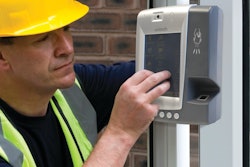
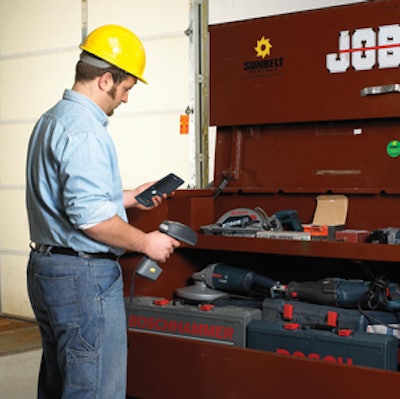
Combing software with hardware technology like radio frequency identification (RFID) and global positioning systems (GPS) ensures comprehensive tracking of tools and equipment. Like bar code labeling, RFID is commonly used by contractors to label smaller tools. An RFID tag is embedded in the item, making it hard to remove. RFID is even more effective when combined with bar code labels, both of which can be read with easy-to-use scanning devices.
GPS has become as common as bar code and RFID technology. GPS works especially well with high-cost, heavy equipment like compactors and trucks, which can disappear easily from project sites - making them easy to locate.
The bottom line
Combining these types of technologies in one comprehensive system gives an enterprise-level view of how to best utilize resources in manufacturing plants or on road projects. Said Sciotto, "Using a tool and equipment system gives us the viability to find unutilized equipment, increase utilization and reduce capital spending."
At the end of the day, production executives and contract firm owners armed with the information they need to maximize profits, improve the bottom line and offer competitive bids will come out ahead.
Don Kafka is the president of Denver, Colorado-based ToolWatch Corporation, a technology company providing tool and equipment systems that track and manage resources throughout an entire construction organization. ToolWatch's Enterprise-wide and software-as-a-service (SaaS) packages offer real-time tracking and management information using the most current and reliable technology. Its applications incorporate technologies including Smart Client deployment, SQL Server Compact Edition and SQL Server 2005 Enterprise. ToolWatch's customers include 30 percent of the top 400 general contractors on the ENR400 list and 28 percent of the top 50 specialty contractors on the ENR600 list. For more information, visit www.toolwatch.com or call 1 (800) 676-4034.