This article provides guidance to help drafters of construction contracts and subcontracts, and construction professionals who sign them structure their projects and minimize disputes. It also provides tips for counsel and their clients when construction disputes arise and the arbitration process will be utilized. Here are some steps to minimize disputes during negotiation: 1. Prepare a CPM. 2. Carefully draft the contract documents. 3. Read the contract documents. 4. Document everything. 5. Choose an arbitrator or panel. 6. Craft a strong detailed pleading. 7. Use your trial preparation skills to prepare. 8. Use demonstrative exhibits. 9. Organize exhibit books to make them easier for the panel to use. 10. Set up early. 11. Behave professionally. 12. Address the panel. 13. Make sure your client remains present throughout the hearing. 14. Make a clear opening statement. 15. Don't risk a poor cross of an expert because it just provides an opportunity for the expert to reinforce the adversary's position.
Humpty Dumpty sat on a wall, Humpty Dumpty had a great fall. All the king's horses, And all the king's men, Couldn't put Humpty together again.
Nothing in the nursery rhyme states that Humpty Dumpty was an egg or that the wall was in danger of collapse.1 If the rhyme were about a construction accident, we would say that this is an example of poor draftsmanship. What caused Humpty's fall? Did the wall collapse? If so, was it defectively constructed or repaired? Who was responsible for constructing or repairing the wall? What did the contract documents say? What should they have provided? Were the sureties notified? What about "the king's men"? Were they incompetent or excused by force majeure?
The only outcome construction professionals could deduce from this situation is that a potentially expensive and lengthy legal battle is likely to ensue. Arbitration would appear to be the superior forum. It is private; it uses a variety of streamlined mechanisms that make it quicker and less expensive than going to court; it is less aggravating and stressful; it gives the parties control over the process; and it allows them to select arbitrators with special construction skills and expertise.2 This removes the irrational jury factor and the possibility of a judge unfamiliar with construction deciding the merits in a bench trial. Arbitrators are more accessible than most judges and they do not make the parties wait months to decide pre-hearing motions. Arbitration is also less expensive because the grounds for challenging arbitration awards are extremely limited. The point to remember is that since arbitration is a private process, construction parties have the power to determine the rules of their arbitration universe.
Despite all the skill and experience of construction professionals, there is no such thing as a perfect construction project. Problems and disputes are inevitable. Most projects encounter delays (which could have unexpected causes, such as a labor strike, bad weather, late delivery of materials, delivery of wrong or defective products, difficulty breaking ground, inadequate performance, change orders, and/or faulty design or workmanship). The tips suggest ways to help construction parties and their counsel protect their situation when problems do arise. They also alert them to certain key elements of the arbitration process and how to approach them with an eye to helping the arbitrators.
Steps to Minimize Disputes During Negotiation
TIP 1: PREPARE A CPM
Project Owners and developers should not build costly projects without a critical path/master schedule (CPM). It schedules all the activities required to complete the project, the duration each activity takes to complete and the relationship between the activities. Since any delay of an activity on the critical path directly impacts the planned completion date for the project, it is necessary to periodically revise the CPM. It would be foolish, if not reckless, to proceed with construction without a CPM. It is a construction industry staple. An owner or developer could not expect to convince a panel of construction arbitrators that a general contractor (GC) or subcontractor was responsible for delay and resulting costs if a CPM was never prepared. They will ask themselves, "How competent could this developer be if it did not use one of the most important tools modern developers have to insure timely progress and efficient completion of a project?"
GCs and subs must have a master schedule to stay on schedule. Owners and developers also need it to measure subcontractor performance, determine whether all the work is completed on time, and make adjustments for the inevitable problems that arise. In sum, critical paths are critical.
TIP 2: CAREFULLY DRAFT THE CONTRACT DOCUMENTS
Clearly Define Scope. The "scope of work" is a vital part of construction contracts. The problem with defining "scope" is that several sections of the contract often deal with it. This can allow contradictory language to insinuate into the deal. To avoid this problem, the drafter should describe in meticulous detail all work expected to be done by the design professionals, the general contractor or subs. The initial effort this takes outweighs the costs of litigation resulting from simplistic summaries of task descriptions or worse, form check lists. So don't summarize or use short cut phrases or technical abbreviations because you think that "everyone in the business knows what it means." Everyone knows until a dispute arises and that crystal clear phrase now has at least two conflicting meanings. So draft in haste, repent in arbitration.
Follow the Money. Make certain the conditions for payment are clear and consistent in all contract provisions relating to the work to be performed and the timing of payments. I can't emphasize enough how often contract language dealing with scope and payments for work are scattered throughout the contract documents resulting in a confusing labyrinth and inevitable disputes as to what was actually agreed upon. Where the agreements provide for payments in more than one section, such as where a GC pays a sub for its primary and secondary work, check every section where payments are referenced and carefully define or reference the work expected. Also scrutinize the schedules and specifications (including the standard "spec" list) for inconsistencies, for it's often in the ancillary documents where conflicts reside.
Don't Overreach. The covenant of good faith and fair dealing will be implied in every construction contract. This covenant is taken seriously by arbitrators when parties draft highly unfair provisions. Given the broad discretion granted to arbitrators in managing arbitration proceedings and deciding arbitrable issues, it is difficult to envision a reviewing court3 overturning an award that finds a party in breach of the implied covenant of good faith and fair dealing.
Here are two examples of overreaching in contract drafting.4 The first involved highly onesided termination provisions in a GC's subcontract form used on an office/residential project. The subcontract provided that the contract could be terminated by the GC with cause, without cause, for any reason, or for no reason. "Cause" covered nearly everything, including the GC's opinion that the sub improperly discharged its obligations, or otherwise failed to properly perform under the contract. Another section stated that upon termination, the sub would be entitled to cost plus up to 10% for overhead and profit regardless of the basis for termination.
The GC terminated the sub without cause after the sub completed nearly all its work. The GC refused to pay the balance of the contract price. The case ended up in arbitration, where the GC maintained that its position was justified because the parties were sophisticated, experienced and fully negotiated the GC's subcontract form.
The arbitrators could not help but focus on the unfairness of the termination provisions, which allowed the GC to escape its obligation to pay the full contract price by terminating the subcontractor at will after completion of substantially all its work. The result might have been different had the GC agreed to pay the balance of the contract price if the arbitrators found that the subcontractor was not in default under the subcontract.
The second example involved a home construction contract that purposely did not contain a closing date. It stated that the closing would be held 30 days after notice from the developer, which could be given any time in the developer's sole discretion. The developer's reason for the absence of a closing date was that "it was not possible to predict when the home would be completed" because the home had a waterfront location and a myriad of special features, raising governmental, construction and logistical issues.
When the project was not completed within four years, the buyer sent a termination notice to the developer. The developer rejected the notice, claiming that the project was nearly finished. It took another year to complete it. At that point, the developer demanded the buyer close. But by this time the buyer had bought another house, the real estate market had declined significantly, and the buyer wanted out.
What the arbitrators saw was an overreaching developer. The panel ruled, in a 40-page award, that under all the circumstances, five years was not a reasonable period in which to complete the home. In addition, it concluded that the developer acted in bad faith by not advising the buyer that this project could take four to five years to complete.
This case may have gone the other way had the developer told the buyer during contract negotiations that completion was years off. True, the developer might have lost the sale. We will never know. What we do know is hiding that fact from the buyer and intentionally omitting the closing date hoisted the developer on his own petard. So be fair and you will fare well.
TIP 3: READ THE CONTRACT DOCUMENTS
Eschew Rote Practices. Many people do not give form contracts an exhaustive read before they sign them, either because they are too busy, or they think it is a standard form document appended to every plumbing, electrical, CM, painting, drywall or other subcontract. Saying to yourself, "I'm too busy to read this whole thing, I know it's been used successfully in the past," is a formula for disaster. The agreement could have been changed by last minute riders and/ or handwritten provisions (both which control over the printed form). The lack of a final eagleeye review could cost developers, contractors and subcontractors greatly.
Carefully Review the Contract for Errors, Ambiguities and Inconsistencies. If another party drafted the contract documents, read them carefully before signing. It may seem like overkill, but it's necessary to read each draft in order to thoroughly understand the give-and-take involved in the negotiations and the final results.
Identify each provision, schedule,5 rider and handwritten change that is ambiguous (meaning it is capable of more than one interpretation) and/or internally inconsistent with another provision. Pay special attention to handwritten additions to the form and any riders because they can lead to ambiguity, or inconsistency or both. Here are two examples of ambiguous language added to the form.
Example 1: The following sentence was hastily added to a rider at the end of a protracted negotiation. "Subcontractor shall provide all field engineering and layout for their work." What does this sentence mean? Read one way it could mean the sub provides field engineering for the entire project and layout just for the sub's work. Alternatively, it could mean the sub provides both field engineering and layout only for their work. Reread the sentence. It's like an optical illusion that appears to be one thing until you focus your eyes differently and then see another. It cost the parties a great deal of time, money and aggravation in a long expensive arbitration.
Example 2. This example involved the collapse of a major thoroughfare overpass and claims of defective materials and workmanship. The surveyor, the architects, the engineer and a municipality were at odds over who was responsible for the design and planning deficiencies. This issue arose because the contracts were ambiguous on critical scope issues as a result of addenda to the printed forms. In this case, a form developed over many years was felled by a few last-minute changes.
I am not recommending this, but if I had a limited time to review a contract, I would first review the scope of work and payment provisions. I would also check the dates on the CPM, and the detailed construction schedule. Then, I'd review everything but the printed form. The reason is that problems often lie in the riders, addenda and handwritten changes to the form.
Protecting Your Claim When Problems Arise on the Project
TIP 4: DOCUMENT EVERYTHING
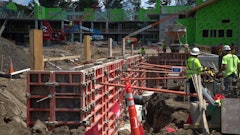
Take Video and Still Pictures of the Problem. When problems arise on a project, it is important to take still and video pictures at the site so that you can provide them to the panel in an arbitration. I recently arbitrated a case alleging that a subcontractor did a poor job of "forming," but there was no video and very few stills of the claimed misalignments,6 leaning walls out of plumb, and slab edges too short and too long. How could the GC expect to persuade the panel that the subs's work is defective simply on testimony, which would be controverted by the sub? If a picture is worth a thousand words, a video is worth ten thousand.
Keep Written Contemporaneous Records. A companion recommendation is to document everything contemporaneously in e-mails, letters, memoranda and daily logs. Respond in writing to communications from the other party. If one side never writes anything down, and the other does, which side will have more credible evidence to provide to the panel? Is a panel more likely to believe writings made at the time of the events in the regular course of business, or verbal declarations possibly fashioned after the fact in the heat of litigation? Document and respond. It's a pain, but not as painful as losing the case.
Practical Tips When Arbitration Begins
TIP 5: CHOOSING AN ARBITRATOR OR PANEL
What Kind of Arbitrator Do You Need? Evaluate your case and consider how each individual candidate fits your goals. Do you want someone who understands why harsh actions are often necessary, even customary? Then choose an arbitrator who has started and run businesses. Do you want to make an emotional appeal to the arbitrator that a hard working plumber has been treated unfairly? Then seek an arbitrator with a charitable, eleemosynary or public service background. Are you aiming for a strict interpretation of the law? Consider the candidate's age. I believe people become more conservative with weathering and withering.
You May Have to Live with Subconscious Bias. It is possible that no one is truly free from bias, since people tend to view the world through the prism of their life experiences. However, good arbitrators work hard to free themselves from preconceived prejudices of which they are aware. Subconscious bias, however, probably cannot be exorcised. All you can do is microscopically analyze the background of the prospective arbitrators and select the one who you think will most fairly judge your case.
Review the Arbitrator's Bio. If you use an institutional arbitration provider that maintains a roster of arbitrators, it usually will provide you with an arbitrator bio. The American Arbitration Association (AAA) does this. However, you may not realize that some providers impose space limitations on the bios. For example, the AAA allows a fixed number of characters for each section. So a very qualified arbitrator with 30 years of experience arbitrating in the commercial, employment and construction fields might be more highly qualified than someone with more to say about his experience solely in the construction industry.
Ask for More Info. You can and should seek additional information from potential arbitrator candidates through the AAA case manager. If you have any question about anything in the biography or disclosures, make further inquiry. You are even allowed to send joint questions or conduct joint telephone interviews with potential panelists. I've been interviewed several times and believe the parties gain comfort through this process.
Decide Whether You Want the Best Arbitrator. Now let's deal with something that might be considered both daring and offensive at the same time. Do you really want the best arbitrator for the job? The answer could be "no."
Suppose you represent the respondent in a case involving complex engineering or architectural defects and your client might be in the wrong. Would you prefer the arbitrator to be an engineer or architect who could easily see through the transparency in your client's defense, or an attorney who has represented clients in negotiation of many AIA (American Institute of Architects) standard form contracts and who might accept less exacting testimony?
Conversely, what if the case hinged on the interpretation of provisions in a contract that nearly all experienced construction attorneys would read in a way that is contrary to your client's position. Would you prefer a non-lawyer construction professional (such as the architect or engineer from the first example) who might be persuaded to see the language your way?
In the example referred to in Tip 4, the GC was trying to establish that a forming subcontractor was responsible for allegedly defective work. Whether the masonry sub or the forming sub was responsible for the problem work hinged on whether certain tie beams were part of the foundation or the walls and floors. The witness for the owner testified that the beams, which he alternately called "tie beams," or "cross beams," were part of the foundation or the footings for a porte cochere. Following this testimony, one panelist astutely observed to his co-arbitrators that the tie beams were part of the support structure for the vertical walls and floors. This meant that the masonry sub, not the forming contractor, would be responsible for the defective work. Was the witness trying to mislead the panel?
There are two lessons in this example. The first is to be careful not to appear to mislead the panel and certainly do not do so intentionally. The other lesson is the less obvious; although experienced construction arbitrators are not easily fooled, they can miss something important. It is possible for a witness to misdirect the arbitrator to a desired conclusion when the arbitrator is not expert in every aspect of the case.
In general, arbitrators who are architects or engineers know the law and construction lawyers understand many construction terms, like "delamination" and walls "out of plumb." Similarly, arbitrators who are project owners and general contractors have negotiated scores of agreements and are often more knowledgeable than attorneys in the nuances of highly crafted language.
TIP 6: CRAFT A STRONG DETAILED PLEADING
This tip relates to each and every document filed, from the initial pleading through the posthearing brief, if any.
When asked for a statement of claim, defenses or counterclaims, clearly describe the subject of the dispute, your claims, defenses, affirmative defenses, any counterclaims and other issues to be decided. Quantify the amount of damages or setoffs associated with each claim or counterclaim. Also, clearly explain any non-monetary relief sought. Don't be vague. At the end of the hearing the arbitrators often review the original pleadings, so a strong claim or answer can serve you coming in and going out of arbitration.
We arbitrators are impressed with the integrity of parties who concede their faults and obligations. We are skeptical of parties who believe their position is correct on every single item, every piece of work, every payment, deduction, debit and credit. In the real construction world it is more common for each party to have done some things right and some things wrong. So, when crafting your positions, be mindful that conceding the chaff improves the wheat.
Preparing for the Hearing
TIP 7. USE YOUR TRIAL PREPARATION SKILLS TO PREPARE
The same preparation that successful advocates give to their cases in litigation is required for arbitration. Abraham Lincoln said, "The leading rule for the lawyer, as for the man of every other calling, is diligence." Listen to Abe. Know your case, prepare, practice, rehearse, anticipate every question, answer, argument and counter-argument. Be sure your client has not hidden anything from you. Research the law. Know all the relevant documents. Check and recheck everything. Hire the best experts your client can afford. Prepare your witnesses.
TIP 8: USE DEMONSTRATIVE EXHIBITS
It can be very helpful to use visual materials- photographs, video, time lines, graphs, charts, and maps-to support your case.
If you plan to present graphs, charts, and/or time lines, use large, easy-to-read type. Do not overburden visual aids with lots of footnotes. Make sure the point of each graphic is crystal clear. If you are concerned that it may be too complicated, make a note to ask the arbitrators if they would like you to explain it further. If opposing counsel objects on the grounds that you would be testifying, you can advise the panel that you are providing the explanation in lieu of third party testimony to expedite the process. Panels will often permit this.
TIP 9: ORGANIZE EXHIBIT BOOKS TO MAKE THEM EASIER FOR THE PANEL TO USE7
I sometimes wonder what unfathomable logic goes into the organization of exhibit books. Do the attorneys implement maximum separation of exhibits so that we have to jump from one exhibit book to another with each question to the witness? That's how it often seems. If you hear grousing from the panel with each lift, turn, open, close, and restock of exhibit books, you'll now know why. The goal of organizing exhibit books should be to keep the hearing moving apace. Every time an arbitrator has to locate an exhibit the "apace" becomes a snail's pace and hours are lost over days.
What should you do? Arrange a conference call with your adversary and the panel well in advance of the hearing and ask the panel how they would like the exhibits to be assembled.
My preference is for counsel to prepare a separate exhibit book for the direct questioning and cross-examination of each witness, together with one comprehensive set of exhibits. The advantage is that the exhibits follow the questioning by counsel and the proceedings move along quickly.
Most construction cases involve repeated references to the contract documents. So it is also helpful for counsel to jointly prepare a binder that contains only the key contract documents and amendments. In some cases it might help the panel to have a binder containing all change orders. Finally, there are times when it might be useful to have a separate binder containing key correspondence, letters, e-mails and faxes arranged in chronological order.
While we're on the subject of exhibit books, please keep them at a maximum weight of 10 pounds and never fill them so much that the spine breaks or flipping pages becomes difficult. Panelists should not end up with muscle aches and strains from handling exhibit books. Now if only something could be done about those darn paper cuts.
At the Hearing
TIP 10. SET UP EARLY
Arrive early at the hearing so you can set up systematically. Put everything in order. Searching through files mid-sentence while you are addressing the panel or questioning a witness conveys weakness, disarray and even panic.
TIP 11: BEHAVE PROFESSIONALLY
Here are a number of conduct-related tips. (1) Come to the hearing well groomed and in accepted business attire. This shows respect for the proceedings. (2) Be courteous and respectful to everyone. (3) Do not irritate the panel by making frequent technical objections, rolling your eyes when the panel rules against you, requesting unnecessary changes in the hearing schedule or order of witnesses; or by making noises (e.g., cracking knuckles, taping or clicking pens, chewing gum). (4) Do not strive to control every aspect of the proceeding, or repeatedly challenge the panel's authority, or ignore panel directives. (5) Be polite to your adversary, not obnoxious, aggressive or contentious. (6) Make and refute arguments without personally attacking or disparaging anyone (except outright liars). (7) Ignore insults (which isn't always easy to do). Stay on point. (8) Do not argue with opposing counsel or excoriate him or her during breaks about the futility of their client's case. (9) Address your issues directly to the panel. (10) Maintain objectivity regardless of your affection and empathy for your clients.
TIP 12: ADDRESSING THE PANEL
Appropriate Mode of Address. Use Mr. for a male arbitrator and Ms., Miss or Mrs. for a female arbitrator (as in Mr. or Ms. Levine). An alternative is Mr. Arbitrator or Madame Arbitrator, or Sir or Madame. Another alternative is "the Panel." You can use this term to refer to a single arbitrator or three. The arbitrator is not "Your Honor" as the forum is not a court, although most arbitrators have given up correcting litigants who are accustomed to referring to judges in that manner. The fact is that most panelists won't mind any sincerely proffered respectful honorific.
Use the Arbitrator's Name. Attorneys who refer to the arbitrators by name leave a better impression than those who don't. But don't recognize the name of one and ignore the others. That happened to me in a recent case in which I was one of the "no-name" arbitrators. After a week of this, the other no-name panelist turned to me and said, "Does Mr. Counsel even know we're here?" Now, I can't judge what impact this had on the outcome of the case. But I can honestly say that it didn't affect my decision at all.
Praise to Show Appreciation. Here's something arbitrators rarely tell you: they want you to think that they are sharp. Yes, arbitrators should be devoid of ego and pride. Even suggesting that they are human might seem a sacrilege. But they are. So, when an arbitrator asks you or your witness a question, occasionally take the opportunity to praise him or her by saying, "That's an excellent question Mr. Jones."
TIP 13: MAKE SURE YOUR CLIENT REMAINS PRESENT THROUGHOUT THE HEARING
Your client should be present mentally as well as physically throughout the hearing. Clients who frequently text and answer e-mail on their Blackberry or iPhone or step out of the hearing room to take "important" telephone calls, do not make a good impression on arbitrators.
Your client's presence and attentiveness serves the multiple purpose in showing the panel he cares, developing confidence in the process, and being able to live with the final award.
TIP 14: MAKE A CLEAR OPENING STATEMENT
There are at least three things to remember about the opening statement. As you were taught in law school, never assume anything. When presenting your case, don't assume the panel has read your briefs or recalls the facts and issues from pre-hearing motions. In fact, it pains me to acknowledge that some arbitrators forget what the case is about during the period between the preliminary hearing and the hearing on the merits. When the hearing date arrives, you will have the opportunity to explain the case all over again in your opening statement. A trial lawyer canard states that litigation is the art of reducing the most complex cases to a few simple points that can be constantly repeated until the jury has no choice but to agree. Most panels leave a hearing with an overall sense of the case, not a mastery of every point and counterpoint.
Treat the opening statement as a de novo presentation of each aspect of your case; and keep it short and simple (KISS). Aim for a clear presentation that the arbitrators can follow.
TIP 15. ANTICIPATE WHAT THE PANEL WANTS TO KNOW
Some arbitrators refrain from asking questions during the hearing on the theory that it is counsel's job to present the case. Others are willing to ask questions, but will not do so if it might appear as advocacy for one side. Their abundant ethical caution requires you-the advocate-to be sure the arbitrator has the answers without having to ask any questions. This means you must make sure that there are no missing elements of your client's claims, no gaps in the evidence supporting your case, and sound explanations for bad facts and contrary evidence. If critical documents that are supposed to be kept in the ordinary course of business are missing or only copies are available, you should be prepared to explain why the originals are not there.
TIP 16. OBSERVE THE PANEL
Keep your eyes on the panel. Watch the arbitrators' facial reactions and body language. If you see a questioning brow after a point you just made, you can elaborate or explain in other words. If you see one arbitrator lean over and confer with a colleague on the panel, try to figure out what might be concerning them and respond accordingly. You can even ask the panel if it has any questions.
TIP 17: SLOW DOWN SO THE PANEL CAN KEEP UP
Arbitrators want to keep the proceeding moving forward, but there is a problem with moving too fast in a case involving many exhibits. As your examination gathers steam, the arbitrators are pulling heavy binders off the table, turning to exhibits while they are listening to the testimony, making notes on a pad, a computer, or on the exhibits themselves. When the exhibit references have lots of elements (for example, Respondent's binder 11, tab 15 E, Composite Exhibit 107, page 97), they take more time to find. Often the binders pile up on the table and adjacent chairs. When there is no more space on the table to put them, they need to be reshelved.
The point here is that you need to slow down your examination so that the arbitrators have sufficient time to reach for the appropriate exhibit book and find the exhibit in question. Arbitrators could instruct counsel to slow down, but you should ensure that this is not necessary by visually checking to make sure the panel has located the relevant exhibit before going forward with direct or cross-examination. It is permissible to ask the arbitrators if they would like you or your associate to locate an exhibit. If your panel skews to an older demographic, they may appreciate the offer.
The bottom line is giving the panel time to find the exhibits throughout the hearing can pay off during deliberation when the arbitrators' notes have completely registered the points you are trying to make with the witness.
TIP 18: DO THE MATH ON DAMAGES
If you represent the claimant, at a minimum, provide the panel with a calculation of the damages your client is seeking. Go the extra step and provide alternative models assuming that the panel will accept certain arguments of the other side. If you represent the respondent and are challenging the amount of the claimant's damages, provide a detailed calculation of your own showing errors in the claimant's calculation and your client's view of the damages involved. Whoever you represent, state the assumptions on which your calculation is based. Total all the columns. In other words, do the arbitrators' work for them. Of course, the panel will make its own calculations. But if you don't provide your own, you might not get the results you want. You have to make the panel aware of what your client wants and why. In sum, do the sums.
TIP 19: MAKE SURE YOUR WITNESSES ARE ON THE SAME PAGE AS YOU
Most lawyer construction arbitrators have a general idea of what construction terms mean. Arbitrators who are construction professionals (e.g., engineers, architects, general contractors) usually know the nuances of these terms and how the meaning may vary in different circumstances. In general, arbitrators who are lawyers will doubt the credibility of any witness who defines a construction term differently from the way they do, while arbitrators who are construction professionals will recognize which witness is off the mark.
Many hours have been spent arbitrating issues involving the interpretation of construction terms. You have to know what something is in order to determine who was responsible for preparing, making or installing it, what it must include, when it should be prepared, how it must be certified, and related issues. For example, you may think a "screed" is a piece of wood used to align newly poured concrete. But this definition raises many questions. Could a screed be made of something else? Does aligning mean leveling? What does leveling mean? Bringing slab surfaces to proper grade? Who is responsible for doing the leveling?
All you can do as counsel is go over the meaning of terms with your witness and make sure that both of you are in agreement on the definition and the various questions that will inevitably arise from that definition.
TIP 20: "CROSSING" EXPERTS
Highly qualified experts are well prepared for the hearing. They have reviewed all the necessary documents, been to the project site and talked to the project manager, and present to the panel exactly the opinion they were hired to present (notwithstanding that experts are ethically bound to present unbiased testimony).
Most attorneys have difficulty cross-examining a highly qualified construction expert because of the expert's depth of knowledge and experience accumulated over years of specialization. The wisest (and most costly) approach is to have your expert present during the direct examination of the opposing expert in order to help you prepare questions for your cross.
Don't risk a poor cross of an expert because it just provides an opportunity for the expert to reinforce the adversary's position. Sometimes, you are better off doing the minimum and relying on your own expert. But if you do cross, never belabor it. Make your point and then move on. And never ask a question you don't know the answer to. (This also applies to your own witness.)
TIP 21: WHEN TO MAKE BEST POINTS
Make your most telling points when everyone is most alert-at the start of the day, right after breaks, and after lunch. Arbitrators are supposed to be attentive 100% of the time, but in reality their energy flags just like most people. Also, even though they try to concentrate, minds can wander when the testimony is dull. I once spotted an arbitrator checking e-mail on his lap top during a particularly tedious examination. I subtly embarrassed him into stopping, but it does show how one's attention can drift.
TIP 22: HOW TO MAKE POINTS WHEN THE PANEL IS CONFUSED
Arbitrators often wonder what point counsel is trying to make when examining a witness. We might briefly huddle and ask what he or she is trying to demonstrate. Some arbitrators come right out and ask. As noted above, others believe it's not our job to make the advocate's case and will not ask in order to fill a gap in a claim or defense. My suggestion for counsel is to use the "leading question" format to summarize the points made by the witness. Thus, you might say to the witness, "So what you're saying is ..." or "Is that correct?" or "So that means ....?"
Here is an example where a leading summary question might have helped make an important point to the panel. The claim was that a GC did not pay a sub although the GC certified the sub's work (meaning that it was complete and satisfactory) in its request for payment submitted to the owner. A mass of bewildering exhibits were presented, but they did not clarify the issue for the panel. To make the facts clear to the panel, counsel for the GC could have asked its witness, "So this exhibit shows you didn't ask the owner for payment for work not completed by the sub?" In a separate situation where a sub was accused of unilaterally proceeding despite another sub's defective work, an excellent summary question would be: "So this exhibit demonstrates you told the GI the sloping was off but the superintendent told you to continue vertical on the balconies anyway?"
After you ask summary questions that make the point you intend, pause. Let the panel write these points down. Whenever you make a decisive point, watch the panel until they stop writing or typing to make sure they get it all down.
TIP 23: TAKE ADVANTAGE OF THE RELAXED RULES OF EVIDENCE
The general principle in arbitration is that the formal rules of evidence do not apply. Litigators who are new to arbitration don't fully appreciate what this means. Unlike court verdicts, arbitration awards can not be challenged for admitting evidence improperly. However, excluding relevant evidence might rise to the level of denying a party a full and fair hearing of a claim and could constitute grounds for vacating an award. So alter your expectations. Be prepared for the arbitrators to allow nearly everything into evidence and permit leading questions and narrative testimony for the sake of expediency. So introduce anything that may help your case even if you believe a judge might exclude it. Ask leading questions. Take advantage of the informality of the process. Oh yes ... feel free to occasionally object when opposing counsel does any of this, just to remind the panel to keep it all in perspective. For example, if the panel allows a copy of an absent original into evidence, remind the arbitrators of the best evidence rule. Experienced arbitrators give questionable testimony and exhibits the weight they deserve and your objection will remind them to question the merit of the document during deliberations. Certainly you should challenge unauthenticated photographs of the job site introduced to show defective workmanship on the ground that the photos could have been taken prior to your client's remedial work. Not all arbitrators have trial experience, so it is a good strategy to discount your adversary's evidence by challenging its relevance or reliability. In other words, just because the rules of evidence are relaxed, you shouldn't relax. Take advantage of what you can get in-but do try to keep the opposition out.
TIP 24: CLARIFY THE RELIEF SOUGHT IN CLOSING ARGUMENT
One question I sometimes hear from my arbitrator colleagues is, "So, what do they want?" At the end of your argument the panel should know what relief you want for your client and why. When writing your closing, avoid using legalese. Write simply and logically. Be concise, but not so terse that you fail to make your points. Give your closing a test run on a high school or college student to make sure he or she understands what relief you are seeking. Your closing argument and closing briefs should refute your opponent's damages claim item by item, calculation by calculation.
Concluding Thoughts
Be sure to get enough rest to sustain your energy level through a multi-day hearing. You need to be mentally agile and able to deal with any curve balls thrown at you.
Be humble in victory and accepting in defeat. You can consider the grounds for appeal later but be mindful that they are extremely limited. Finally, recognize that these tips are just a starting point. I hope they are "constructive."
Additional tips
Guidance for construction professionals and counsel in structuring contracts and handling disputes to reduce aggravation and achieve better results. Tips range from the tried and true to the bold and daring.
Do you really want the best arbitrator for the job? The answer could be "no."
Scrutinize the schedules and specifications (including the standard "spec" list) for inconsistencies, for it's often in the ancillary documents where conflicts reside.
Don't risk a poor cross of an expert because it just provides an opportunity for the expert to reinforce the adversary's position.
ENDNOTES
1 True this is not a construction rhyme. There are a number of theories about the origins of the rhyme. One is that Humpty Dumpty was a cannon used during the English Civil War (1642-49) between the Royalists (supporters of Charles I) and the Parliamentarians (called Roundheads). The cannon, which was supposedly placed on top of a church wall in Colchester) fell to the ground when the church tower was hit in an attack by the Parliamentarians. Royalist soldiers were supposedly the "king's men" referred to in the rhyme. See www.famousquotes.me.uk/nursery _rhymes/humpty_dumpty.htm and www.zelo.com/family/nursery/humpty. asp.
2 The parties can also determine the issues to be decided, the scope of relief and the framework for resolution. They can agree to administered arbitration or ad hoc arbitration. Only the former uses a professional independent arbitration organization, such as the American Arbitration Association, to administer the dispute. The administrator acts as an intermediary between the arbitrators and the parties.
3 Often a state trial court hears the first level of appeal of an arbitration award.
4 The details have been changed to protect the privacy of the parties.
5 The term "schedule" in construction agreements can refer to a timetable of tasks, as in the case of a CPM. But the term schedule may also reference an addenda, rider or attachment dealing with a multitude of issues including detailed requirements that need to be fulfilled prior to any payments being made. Often a timetable of payments is drafted in such a manner that the work precedent to a progress or other payment is described in detail. So what originates as a timing mechanism entails a description of work that is often described slightly differently elsewhere in the contract. This leads exactly to the problems this author is urging the reader to avoid.
6 One expert used the term "dancing" to describe looking at a series of walls of various angles and different heights and widths.
7 For this article I'm omitting discussion of the all-digital arbitration where there are no papers in the room, just people and laptops. However, it's worth noting the increasing popularity of electronic arbitration. My view is that this is the wave of the future.
Joel Levine is a full time ADR practitioner based in Florida. He serves on the American Arbitration Association roster of neutrals for construction and commercial cases. He is also a Certified Florida Circuit Court mediator and a Certified International Mediation Institute (IMI) mediator. As a former practicing real estate lawyer in New York and Florida, Mr. Levine negotiated and drafted a multitude of acquisition, development and construction agreements. He has served as a neutral on more than 1,000 matters, many of them construction disputes. He is familiar with a wide range of construction problems that can arise from the planning stage through completion of a project. A graduate of Harvard Law School, Mr. Levine obtained his first taste of construction by working on a renovation construction crew in Manhattan during the summer of his first year. After graduating, Mr. Levine served in the Peace Corps-Venezuela. Later in his career, he was a principal in a real estate company, which he took public. Mr. Levine can be reached by e-mail at [email protected] or by telephone at (305) 571-1164.
The author welcomes comments and questions. He can be reached by e-mail at [email protected]