Information provided by Asphalt Drum Mixers.
Tom Petty got it right with his lyrics, "The waiting is the hardest part." And while his song may not have been speaking directly to asphalt paving contractors, any company that receives hot mix asphalt from a competitor's plant knows it's the truth.
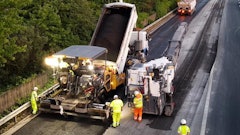
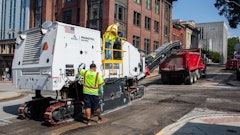
The truck driver must wait, sometime for hours, to receive the hot mix. Then he must make the trip back to the worksite, which could be several miles away, where the crew is doing some waiting of its own. After all, work can't progress without the hot mix, so the crew is stalled until the truck arrives. Yes, when it comes to paving, the waiting is indeed the hardest part.
Unfortunately, endless waiting isn't the only frustrating aspect. First, there's the actual cost of the asphalt, something the receiving companies can't control. Then there's the loss of productivity the crew experiences while they have to wait for asphalt to be delivered to the site.
And there's the inconvenience of having to travel miles away from the site just to get to the nearest asphalt plant. Finally, don't forget the costs associated with having multiple asphalt transportation trucks.
While all of this may be frustrating, does it justify purchasing an asphalt plant? It's a serious purchase that requires serious thought. Several factors need to be considered when deciding if owning an asphalt plant will meet an individual company's ROI expectations and if it will do so quickly enough.
And for those who already own an asphalt plant and are considering purchasing a larger plant or adding components, similar factors will need to be taken into account. Spending the time to do some research and thoroughly analyze the situation will put you on the right track toward increasing productivity, efficiency and, best of all, profits.
Market characteristics
Perhaps the first factor that should be looked into is the market size. Not only should one determine the total amount of asphalt being used, but potential customers who could drive the demand up should also be considered.
Check into the availability of aggregate and ensure that the source will be able to fulfill needed supplies through peak paving months. Because large asphalt producers often consume the bulk of aggregate supplies, a new asphalt producer may need to look for a nearby aggregate source.
Also, take the time to look at contracts awarded in the area. Investigate the number and sizes of area paving companies. Analyze what percentage of bids a new asphalt plant would be able to supply in the years to come.
Location, location, location
When it is decided that the market can support another asphalt producer, the next step will be to explore property locations. Know that rules and regulations vary greatly from one area to the next, with permitting rules and fees varying from state to state. Finally, keep in mind that acquiring a permit can take six to 12 months, so plan ahead and start the process early.
Environmental issues may come into play when applying for a permit. On a positive note, the Environmental Protection Agency announced in 2002 that asphalt plants were no longer on its list of industries considered to be major sources of hazardous air pollution.
Modern plants burn much cleaner than older plants. Also, asphalt recycling has increased since the 1970s, with asphalt now being the most recycled road material in America. But be aware that in some areas it may still be difficult to get a permit for certain plant designs.
Look into any transport restrictions that may apply to the area. A new producer will need to establish trucking provisions to transport material from the plant to the jobsite if it hasn't already been set up.
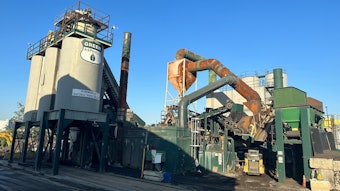
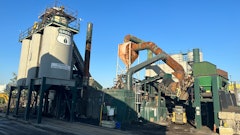
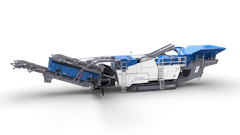
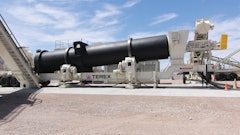
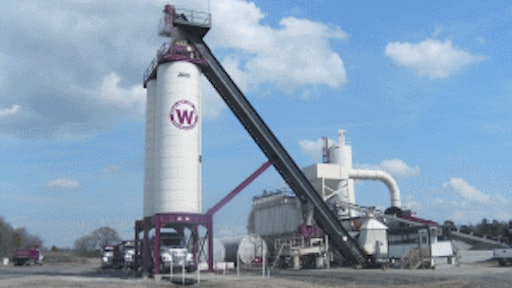
One final factor that will impact the location of the plant is the type of plant that will eventually be purchased. Plants are either portable or stationary. A stationary plant may be the best choice in some situations, but a portable plant will offer flexibility in terms of location and permitting requirements.
In areas where jobs are considerable distances apart, a portable plant would be the best choice. Some markets experience minimal growth and have a small population density, while others may see workloads shift from one area to another due to seasonal factors.
A portable plant would be the most sensible in these types of areas as well. Also, it's typically easier to get a permit for a portable plant's locations than for a stationary unit.
To avoid any surprises down the road, explore restrictions and permitting fees early in the process. When it comes time to look into the actual purchase, cost factors will first need to be considered.
Looking into costs
With prices ranging from $500,000 to $4 million, an asphalt plant is a serious investment for any company, small or large. While it is necessary to compare plant prices, don't forget to also look at operating costs and production capacities.
A plant may cost less initially, but if it isn't fuel-efficient or doesn't produce enough tons per hour for efficient operation, it will cost more over the course of its lifetime.
Also, look at how much will need to be invested from the start, such as the cost of the mix components. This will help one calculate how much to charge per ton to turn a profit, while still keeping the price fair.
Finally, a first-time buyer will often make the mistake of letting the price of the plant dictate the decision. Once a company has control of its own asphalt supply, it will be able to sell hot mix and lay down considerably more material. Purchasing a plant that is too small will not be able to effectively support the demand and therefore would not be efficient.
On the other end of the spectrum, purchasing a bigger plant won't necessarily be the right decision. A plant with a capacity that greatly exceeds demand would be wasteful and unprofitable. While price is certainly a large factor in choosing a plant, don't let it influence the decision too heavily. Stay focused on what type of plant makes the most sense for the present situation.
What to expect with ROI
ROI scenarios vary from one plant to another, but the majority of new asphalt plants will realize a return in three to 10 years. A paving company moving into asphalt production will gain greater efficiency upon controlling its own asphalt supply. Add in the fact that the company is now producing a product to sell, and the ROI typically will occur quickly.
A number of money-saving factors contribute to bring about a relatively fast ROI. For instance, the excessive downtime truck drivers and paving crews experience while waiting for the hot mix is costly.
Trucks will no longer have to wait in long lines and the paving crews won't be held up waiting for the truck to return. Contractors will be able to lay more asphalt, faster allowing them to complete more projects, faster.
Less transport time will also contribute to increased efficiency in some cases. Rather than having to commute to a competitor's plant, a contractor with a portable plant can place it where it's most convenient for him.
Shorter hauls also mean fewer trucks will be needed to get a sufficient amount of asphalt to the crew. The combination of these factors usually results in at least 50% better truck utilization for a paving contractor who enters the production market. That can easily add up to $1,500 per day when figuring average truck costs of $70 to $75 per hour.
Also, a paving contractor who produces his own asphalt will no longer be forced to comply with competitors' asphalt prices or have to accommodate to their schedules.
The benefits are measurable and clearly show how much productivity can increase and costs can decrease by owning and operating an asphalt plant.
To upsize or not?
For the contractor already in the asphalt production business who may be considering a newer, larger capacity plant, costs and potential savings should be examined.
A more efficient, larger capacity plant will allow a company to take on more projects and bigger projects. And a newer plant will reduce maintenance costs and emissions, while offering a better mix consistency.
For a plant owner looking to upgrade components, newer, high quality parts offered by some manufacturers may be worthwhile. Improved components such as baghouses will help reduce emissions, and recycle systems allow cost-efficient recycled asphalt pavement (RAP) to be utilized in the hot mix.
Better quality storage tanks in modern plants offer a more economical way to store and monitor pricey liquid asphalt cement. And newer storage silos provide a way to keep freshly mixed asphalt at an ideal, constant temperature until it is ready to be discharged.
All of these factors should be considered when weighing the costs and benefits of upgrading a plant.
Go for quality
When it comes to selecting an asphalt plant, it is important to know the characteristics that can help guarantee a better ROI.
For instance, a plant with a dual-drum configuration will maximize fuel efficiency while minimizing hydrocarbon pollution. A clean-burning plant also will extend the life of the baghouse, and the efficiency of a dual-drum configuration results in increased production.
Plants with a separate mixing drum will allow more mix flexibility, a benefit that will pay off in the long run. By using a separate drum, additives and RAP can be introduced into the drum while remaining isolated from the drying and combustion zones.
A plant that is easy to calibrate is an important feature, both when purchasing a plant for the first time or expanding to a larger plant. This will lower the risk of drifting out of spec, which in turn gives producers confidence in the product they're producing while helping to guarantee customer satisfaction. This feature will be especially important when producing mix for Superpave jobs.
All the steps involved with researching, buying, or expanding a plant will take time, but are well worth it in the end. Putting forth the effort to conduct thorough research will ensure that the plant purchased will be high quality and will provide sufficient capacity.
If it's decided that asphalt production is the right thing to do, the company can look forward to controlling its own destiny - no more relying on others, no more lost productivity, and no more waiting. Best of all, it can expect to see a steady growth in profits.