By Al Perlman
The United States is embarking on its largest investment in infrastructure since the 1950s, through the impetus of President Obama's $787 billion economic stimulus plan, otherwise known as the American Recovery and Reinvestment Act of 2009.
Nearly $90 billion of the stimulus plan is targeted directly at infrastructure investment: Of that, nearly $48 billion is aimed at transportation infrastructure, including $29 million to build and rebuild our nation's highways and bridges.
This massive infusion of dollars into infrastructure is designed to create jobs, reduce energy consumption and improve our overall quality of life. Clearly, infrastructure investment is a critical component in our nation's road to economic recovery.
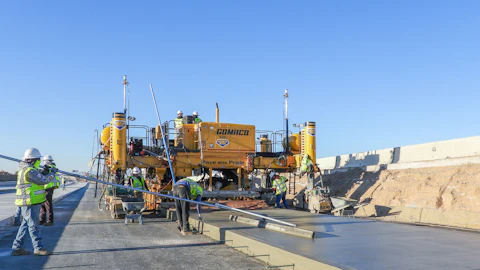
And, if it is to be successful, this road to economic recovery will be like so many of the other roads across America: It will be paved in concrete.
Concrete, of course, has long been the foundation -- literally and figuratively -- for America's construction industry. However, changing market dynamics are expected to demand an even greater role for concrete in this next round of infrastructure investment. These new dynamics include:
- A paradigm shift in the cost benefits of utilizing concrete, particularly versus asphalt in the construction of new roads. The cost of building roads with concrete is much less over the long term compared to asphalt, and recently has become about the same over the short term. This is a major development that is expected to have significant impact on the choice of building materials by state and local officials. In addition to being less expensive, concrete roads are more energy efficient than asphalt roads, plus they last longer and require less ongoing maintenance.
- The growing national emphasis on energy independence and environmental responsibility. New and more efficient roads mean less congestion, greater fuel efficiency and a reduction in carbon dioxide emissions. Beyond that, the cement industry has invested heavily in new technologies and equipment to improve energy efficiency at its manufacturing facilities.
- The emphasis on infrastructure investment to create jobs. For every $1 million the nation spends on infrastructure we create approximately 15 jobs. So the planned $87 billion infrastructure investment could create more than 1.3 million jobs directly. Beyond that, each construction job creates another 1.7 related jobs by infusing money into the economy, so the overall number of jobs created from the planned infrastructure investment could approach 4 million total.
Paving's New Reality
The commitment to invest significantly in the nation's infrastructure comes at a time when engineers, builders and planners are rethinking their criteria for selecting building materials, particularly for road construction. It used to be that asphalt was often "rubber stamped" as the material of choice because it was less expensive than concrete as an initial expenditure.
However, in the past five years the prices of asphalt have increased dramatically -- to the point where the construction of asphalt roads no longer provides any short-term cost benefits versus concrete roads. Since concrete roads are more energy efficient, more durable and require much less ongoing maintenance, state Department of Transportation officials are now turning more often to concrete as their solution of choice.
This is particularly critical in today's environment, as dollars are being allocated for new projects, because, in addition to rising prices of asphalt, there have also been product shortages during the past few years, which are expected to continue unto the future. These shortages are the result of greater efficiencies in the oil industry at producing gasoline as opposed to the waste material that is used in asphalt.
The pressure on DOT officials to spend their money wisely -- particularly in their choice of building materials -- has never been greater. More than 90 percent of public-sector cement construction is spent at the state level. States are all facing major budget crunches, with 47 states expected to incur budget shortfalls in 2009. Long term, the prospects for states aren't likely to improve: Nearly 23 percent of total state spending is on Medicaid, and that number should increase as the population ages.
This means that the construction and transportation projects being funded through the economic stimulus plan must be cost effective for the long term as well as the short term. Asphalt roads that require maintenance every seven or eight years are not nearly as cost-efficient as concrete roads that can last as long as 30 years without significant repair. The Portland Cement Association estimates that by using concrete instead of asphalt, states could save as much as $100 billion on roads built between now and 2015, based on the overall lifetime costs of the roads.
Job Creation at the State Level
Another critical issue for decision-makers at the state level is to determine where to invest the dollars they are receiving from the federal government for infrastructure. Over the short term, they might see some benefits in job creation through the implementation of "shovel-ready" projects such as road resurfacing or painting a bridge as opposed to building a new ramp for a bridge.
However, the investment in building new infrastructure or expanding existing infrastructure will create more jobs and bring a greater value to the community over the long term, in areas such as energy efficiency and quality of life. For example, PCA estimates the following:
- A road reconstruction that adds capacity creates 22 percent more jobs than a resurfacing.
- A new route creates 20 percent more jobs.
- A major widening project creates 17 percent more jobs.
- Bridge replacement creates 18 percent more jobs.
In addition, these types of improvements create lasting public works assets rather than short-term fixes. As dollars start becoming available for infrastructure investment -- and they are available already, with President Obama citing more than 200 projects already begun -- state officials are going to have to weigh the projects they choose based on the long-term benefits to their communities, and not merely on short-term job creation.
By using concrete as the building material of choice for these and other projects, state officials will be making a sustainable decision that will support future generations. As noted, concrete roads are more durable and require lower maintenance costs during the lifetime of the road. In addition, concrete roads can save states 20 percent or more in paving costs compared to asphalt roads.
Once In A Lifetime
The economic stimulus plan and the commitment by the federal government to invest in infrastructure provides a once-in-a-lifetime opportunity for state, local and federal officials to build a new foundation of safe, sustainable, energy-efficient roads, bridges, buildings and other assets for their communities.
By choosing the most efficient and sustainable building material, they can build something that will last for generations to come. More and more, as they sort through their various choices, they will find the road, as it often does, will lead to concrete.
About the Author:
Al Perlman is an award-winning business journalist and media executive. He is currently a partner and co-founder at New Reality Media, a consulting and custom content company based in the New York area. For more information you can contact Al at [email protected]
Read more about the new realities of paving at the PCA's webpage