Before you can begin discussing why it's so important to keep good roads in good condition you have to consider the facts:
- Hillsborough County had several funding sources for pavement management. All of these sources have been reduced because of recent economic challenges that have reduced home values and the taxes generated by those depreciated values, as well as the diminished gas tax resulting from reduced vehicle travel in the state.
- FY09 budget for road maintenance was 13.9M
- FY10 is $7.1M
- The FY12 budget could be reduced by another $3.5M, leaving the county with essentially only gas tax funds to maintain roads. The funds are expected to generate between $3.5M and $4.0M to maintain 6,900 lane miles of paved roads throughout Hillsborough County.
Many philosophies on how to maintain roads exist, with 'worst first' always paramount with motorists and taxpayers. This always seems to make the most sense to most people because they do not embrace the idea that anything can be done to a road expect replacement. Worst first may actually make sense if you have lots of cash, or you are talking about an asset you cannot treat any other way - like replacing road signs. Some roads, however, do have a multitude of other options, especially local, low traffic-volume roads, and can often benefit from managing the condition of the road surface.
Fortunately, many municipalities have a large percentage of local roads to deal with, and the authority to apply the right treatment at the right time. Hillsborough County's philosophy is simply to "keep the good roads in good condition," but that requires knowing what treatments to apply based on the condition of the road surface and when to apply those treatments to maximize the value of how the right treatment at the right time can extend the service life of the road.
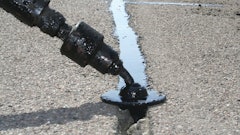
It's important to recognize that certain defects require specific treatments. Putting the wrong treatment (a misdiagnosed problem) on the wrong road is not only wasteful, but it can actually cost you more money than if you had done nothing. In other words you can make a deteriorating road condition worse.
The treatment arsenal is specific and you have to know which treatment is prescribed for a specific defect to get the performance punch needed. If you do not have the time to do it right, you sure don't have time to do it over.
So it's important to get it right with a well thought out plan as to what will be the best approach, and then monitor progress, report what worked and what did not. An incorrect treatment or timing of treatment will cost you credibility and money.
Having a game plan
W. Roger Cox, P.E., program manager for Hillsborough County's Transportation Infrastructure Management Division, says it's crucial to have a pavement management system based on inspections, planning and implementing the right treatment. That system has been instrumental in helping Cox and other road maintenance officials achieve a 78 Pavement Condition Index (PCI) rating of the county's road network.
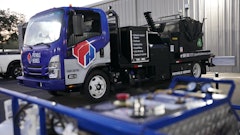
Every three years road engineers conduct an analysis of every lane mile in the network, using both the technology of an inspection vehicle that can gather visual evidence of surface conditions, as well as the physical inspections conducted by staff engineers.
For approximately the past six years the Transportation Infrastructure Management Division has also employed the Roadway Activity Planning Program (RAPP), software designed to maintain historical data on treatments and other construction activities performed on the road surfaces throughout the network.
"It's stand-alone software that allows our engineers to select projects that are the best candidates for the treatments our current budgets will support," Cox says. "We're driving our roads every three years to gather information on surface condition, and we have images to back up any identified problem areas.
"The RAPP system enables us to combines GPS (global positioning system) and GIS (geographical information system) information that allows us to select roads for treatments that are best suited to reset their PCI (improve the condition and raise the rating of the road surface)."
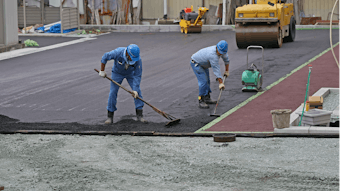
Budget plays an important role in determining which treatments can be applied to a road. You may need to utilize a "global treatment," like a micro surfacing application, in order to have an immediate effect on the PCI of a system and select a single or double course of micro surface treatment. This is not a repair and rehabilitation solution, but it will extend the service life of a road that will then be added to a backlog of projects for future re-consideration (5-7 years perhaps).
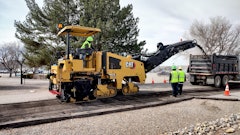
This could be the breathing room needed to pursue some expensive rehabilitation projects and make progress on your repair and rehabilitation program in general. When the roads come up for future treatment, you have the option of re-applying the same treatment or going with a repair and rehabilitation treatment that will actually re-start the life cycle clock on the road.
Stay flexible
Roadway treatments are tied to budget, existing road condition and customer satisfaction. In these budget times, nothing is static, and pavement programs need to have the ability to conform and adjust to change. Priorities will shift as budgets become tighter. The focus will most likely move toward the condition of the arterials and away from local road applications.
Of Hillsborough County's 7,000 lane miles, 65% are considered local (low volume) and 35% arterial (heavier commercial and commuter traffic). Local roads are not subjected to high truck loads and therefore, the deterioration curves are not as dramatic.
This gives the user agency time to weather the storm in anticipation of a return to a more normal budget cycle. Also, the truck and traffic volume of arterials demands that they be maintained. Without these main lines, goods and services will be impacted. For Hillsborough County, micro surfacing will probably be the "go-to" cost-effective solution for maintaining its local roads until budgets improve.
Agencies will most likely continue to build local road treatment program years, projecting when roads should receive some type of preservation treatment, but they will not be funded until sometime in the future. These lists can be reported as unfunded needs to policy makers who decide budgets. However, if the trend continues for an extended length of time, the roads in the "lighter" treatments will graduate to the more expensive treatments.
These potential graduating roads are and will be discovered from regular inspections of the road network. And for Cox and others in charge of maintaining Hillsborough County's road network, it's best to be prepared should the money train pull into the station.
Don't be afraid to try
The bottom line for Cox and Hillsborough County probably mirrors that of most road agencies across the county - not everything you try is going to work, but you need to continue exploring preservation solutions that keep good roads in good condition and extend the overall service life of your road network.
You will have to tweak nearly all approaches you consider based on budget and other considerations. If you recognize that pavement budgets are and will be dynamic, then you will always be looking for ways to maximize your preservation objectives.
Many believe that once a pavement management program is "solved" that it only needs to be replicated every year, by a computer program that spits out the list of roads requiring treatment and then sending that list to the construction engineer, who is charge of executing the projects.
There will always be a thinking person who evaluates and plans projects with budget, customers, and conditions in mind. It takes a long time to develop a successful pavement management program.
Successful programs do not automatically sprout in a week or even years. They are developed by individuals who are in it for the long haul, and who are charged with the task of applying the right maintenance/preservation solution to the right road at the right time - a very simple approach to a very complex problem.