By Mark McLeod
Incorporating additives in pavement sealers is most important. Different sealers require different additives depending on what circumstances the job presents to the contractor. Factors that can affect additive choice include ambient temperature, humidity, pavement temperature, vehicular stress, porosity of the pavement, sand load, and type of sealer. Using the correct additive can mean the difference between a top quality job and a substandard job.
Sealer manufacturers generally polymer modify their sealers in the manufacturing process to "bring all the ingredients together." But that sometimes is not enough to handle other post-added ingredients such as sand and other aggregates. So contractors often need to post-add additives to the mix to encapsulate and suspend the sand in the tank and in the sealer film. (We all know sand is necessary in producing a quality job and a composition with fillers or sand will typically cure faster than a coating without them.)
Whether you are using coal tar, asphalt-based, or a blended sealer, some additives are FAA-specified and designed to encapsulate the aggregates and fillers to create a uniform and continuous film. Water is our best friend but can be our worst enemy in sealcoating. You must have water to dilute sealer to the manufacturer's recommendations, but water can be your enemy when trying to keep sand and fillers suspended in the tank. As many contractors have found out sand and other fillers will fall out of an overdiluted sealer mix. I've often asked contractors, "If you shut off your agitator what happened to the sand or filler by the next morning?" It settled to the bottom of your tank!
The same happens on the pavement, and the sealer film will react the same way. But additives will suspend the sand in the film until all the binder particles have fused and created a tight sealer film through the hydration process. As the sealer dries the additive reacts and assists in this process.
The bottom layer in the sealer film is of most concern as it is the final layer to cure. An additive such as FASS-DRI PSA utilizes nano cure technology, and through molecular-generated heat actually dries the sealer from the bottom up opposed to the traditional top to bottom drying process. Nano technology will also reduce - and in most cases eliminate - severe cutting or tracking of the sealer. The actual process action is called "fugacity," which is the tendency of molecules to escape from liquid and is largely responsible for evaporation.
Additive Benefits
One of my biggest shortcomings early in my sealing career was not realizing what additives could do for my sealer, and worse, not understanding what additives could do to grow my business. Only after I used additives everyday for a season did I realize just what the features and benefits of additives were.
Additives in your mix allow you to get on the lot for striping in as little as 30 minutes, and in some cases you can open up commercial lots in less than four or eight hours with minimum scarring. You can virtually eliminate any re-emulsification of the sealer once down on the pavement (black water), and additive use disperses sand evenly throughout your sealer film. With proper use of the right additive you can experience almost no sand roll out in the gutters after a rain. Additives will help cure the sealer in high ambient temperature days and when the surface temperature is extreme (reducing significantly tire marks and cutting), and additive use also extends your season, a benefit in both spring and fall.
So given the many advantages using an additive can give you, additives are the most important action you can take to improve both your sealer quality and your bottom line.
Breaking Down the Cost
Additive cost is truly insignificant compared to the benefits of incorporating additives into your daily sealer mix. And once you break down your in-tank cost and realize how much it really added to your square foot cost, you will be sold on adding additives to your sealcoating operation.
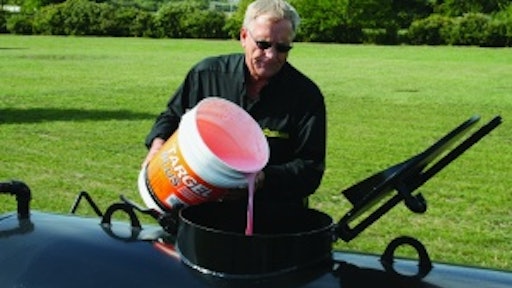
Many contractors are hesitant to add an $80 pail of additives to their already costly fill-up of raw sealer. They view the additional cost itself as a negative, and they also are unsure of the benefit of the additive.
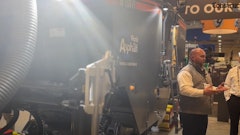
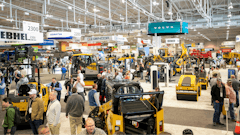
At the recent National Pavement Expo in Nashville I presented this cost analysis of incorporating an additive in the tank and per square foot on the pavement. I did not figure any sand as most sand prices are all over the board. Just sealer, water, and additive. The formula is based on:
- A standard 550-gal. tank
- Additive cost of $80 (5-gal. pail)
- Raw sealer cost of $1.90/gal.
- Material diluted and ready to use (rtu) applied at .15 gal./sq. yd./coat
It's pretty easy to see that adding an additive is not only beneficial to your bottom line; It will also give your customer the best possible job.
As I travel around and meet with manufacturers and distributors, they are telling me that more and more contractors are realizing the importance of adding a post added additive to their sealer mix designs. The quality of their seal projects is far superior than without additives.
In addition, with the actual costs as shown above, it really makes sense to use additives every time you load. An inexpensive added quality will set your company apart from the contractors who have not yet learned what additives can do for their businesses.
Stay ahead of the competition by knowing how to close more jobs utilizing additives. If you are bidding a project that needs to be opened earlier than the manufacturer's recommendations, and you know what an additive can do, this gives you an edge. You might be able to close the sale because you can open up his lot for business sooner than your competition that may not have learned what you know about additives.
When using an additive you also can be assured the striper can get on the lot sooner. This means you can do more work in a day or night; you will not have the typical problems associated with drying and curing.
Additive Calculations
No Additive Calculation:
- 400 gal. raw sealer = 400 gal. @ $1.90 gallon = $760.00
- 30% cut with water = 120 gal. @ $0.00 gallon = $0.00
- 520 gal. rtu sealer = $760.00
- 520 gal. ÷ .15 = 3,466 sq. yds or 31,194 sq.ft.
- $760.00 ÷ 31,194 sq.ft. =.0244 or a material cost of 2.44 cents/sq.ft.
1% Additive Calculation*
- 400 gal. raw sealer = 400 gal. @ $1.90 gal. = $760.00
- 30% cut with water =120 gal. water @ $0.00 = $0.00
- 1% additive added = 4 gal. @ $16.00 gal =$64.00
- 524 rtu gal. sealer = $824.00
- 524 gal. ÷ .15 = 3,493 sq.yds. or 31,437 sq.ft.
- $824.00 ÷ 31,437 sq.ft. = .0262 or a material cost of 2.62 cents per sq ft. Additional cost of only 18/100 of one cent per square foot over no additive.
2% Additive Calculation*
- 400 gal. raw sealer = 400 gal. @1.90 gal. = $760.00
- 30% cut with water = 120 gal. @ $0.00 = $0.00
- 2% additive added = 8 gal. @ 16.00 gal. = $ 128.00
- 528 gal. rtu sealer = $ 888.00
- 528 gal. ÷ .15 = 3,520 sq. yds. or 31,680 sq. ft.
- $888.00 ÷ 31,680 sq. ft. = .0280 or a material cost of 2.8 cents per sq. ft. Additional cost of only 36/100 of one cent per sq ft. over no additive.
Maintenance Inc.'s Mark McLeod presented "Understanding Sealer Additives: How to Do More Work, Better" at January's National Pavement Expo. Maintenance Inc., has been in business more than 75 years and manufacturers additives including FSA, FSA-AE, FASS-DRI, and TARGEL-PLUS. He can be reached at 800-892-6701 or at www.maintinc.com.