By Mark Kinter
The use of porous pavement surfaces for parking lots, driveways, alleys, and footpaths as an effective best management practice to control stormwater runoff has been growing at a double digit rate in the United States in recent years. The long-term success of porous pavement systems to promote maximum water flow depends on proper installation, maintenance and cleaning practices - including regular sweeping with a pure vacuum sweeper.
Brian Giles, sweeper products manager at Elgin Sweeper, says Elgin has participated in various research programs with major universities and municipalities across the United States to develop a better understanding of the maintenance requirements of porous pavement.
"This research has helped clarify the role vacuum sweepers and regenerative air sweepers play in maintaining and cleaning porous pavement surfaces," Giles says.
Types of Permeable Surfaces
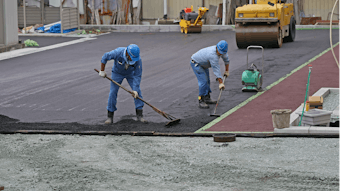
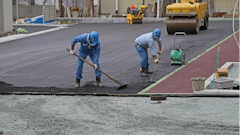
There are three types of permeable surfaces in use in the United States for stormwater remediation purposes - porous asphalt, porous concrete, and interlocking paver blocks.
Porous asphalt and concrete tend to be multiple-layer construction. Water runs through the layers to a sub-layer, which allows general or directed drainage. Cleaning the pores of porous asphalt or concrete is somewhat challenging.
"When high-pressure sprayers are used for cleaning, pollution is actually driven into the pores." Giles says.
Interlocking, permeable paver blocks are non-porous blocks arranged on a porous subsurface. The blocks have a gap between them filled with loose, sandy filler which allows water to percolate through the gaps. Giles says the use of interlocking pavers is growing in the United States, especially in low-speed (under 45 mph) traffic and parking areas and in high-pedestrian areas.
Plugging
Porous asphalt, porous concrete, and interlocking paver block surfaces can all become plugged with fine debris - mixtures of silt and oils - that can stop the percolating action and negate the purpose of the system. The first step in retaining the porous nature of the surfaces should be to install signs to inform the casual passersby that the surface is porous and that certain activities - such as depositing landscape material - should be avoided.
If pavers are routinely cleaned, the depth of plugging can generally be limited to half an inch. The most effective way to restore the percolation of paver surfaces is to remove the top layer of granular filler that is contaminated. Clean filler is then reapplied.
Several industry studies have shown that both surface types will plug, to varying degrees, with silt, fine clay, cement derivatives, and decomposed plant material. Maintaining and cleaning porous pavement surfaces to prevent the buildup of these sediments requires a different approach than the one used for traditional pavement.
Regenerative Air Sweepers
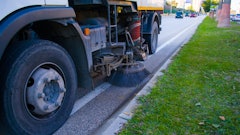
Regenerative air sweepers are the second most common type of street sweeper in the United States. They account for about 30% of all sweepers sold. In general recirculating mode, the amount of vacuum produced by a regenerative air sweeper is rather low and inadequate to perform restoration. Regenerative air sweepers frequently use a vacuum enhancer valve that limits the amount of air volume recirculated through the blast nozzle. This valve increases the vacuum level in the vacuum chamber of the sweep head.
"When operated at maximum capability, a regenerative air sweeper using a vacuum enhancer is considered a nearly pure vacuum sweeper," Giles says. In this mode, a regenerative air sweeper is capable of producing a maximum vacuum level of approximately 50 in. of water. "Due to the size and shape of a regenerative head, much of the produced airflow is drawn around the head seal, not through the permeable surface."
Regenerative air sweepers are not designed to be operated in this mode for dust suppression purposes, so they tend to blow excessive amounts of dust out the vacuum enhancer.
"When a regenerative air sweeper is operated in full regenerative mode, fine silt can be impacted into the pores of the surface with the air blast - especially if the surface is damp - so you need to operate carefully," Giles says. "In the full vacuum mode, the vacuum level will not restore a clogged surface, but may provide acceptable maintenance cleaning."
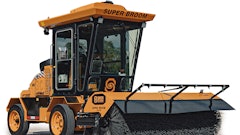
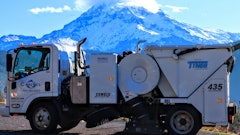
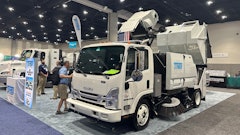
Pure Vacuum Sweepers Pure vacuum sweepers account for approximately 5% of the U.S. sweeper market. They operate like a giant vacuum cleaner, removing debris off the surface and depositing it into a debris hopper. The fan air is then simply exhausted out of the body. Water in the hopper or at the side brooms is used to prevent fine particles from being pulled through the vacuum fan and being exhausted into the free air.
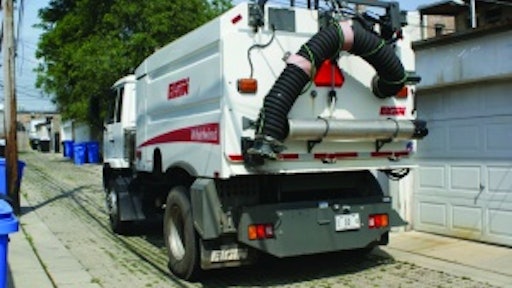
Giles says Elgin's Whirlwind, for example, can deliver a high vacuum level of water - up to 80 in. "Most porous pavements, and many interlocking block surfaces, require this degree of vacuum to restore infiltration of a clogged area."
The silt that plugs both types of surfaces is generally carried there by water. When damp, the silt swells and has a sticky texture to it. Removing silt from the pavement is best done when the surface is dry enough for the silt to contract and release its grip on the surrounding material.
"Both regenerative air and pure vacuum sweepers are designed to dampen the surface with a water spray to reduce airborne dust," Giles says, adding that sweeper hoppers can be preloaded with a few hundred gallons of water to eliminate carryover dust through the vacuum fan.
Maintenance cleaning of block areas can be done with a regenerative air sweeper or a vacuum sweeper. Giles cautions that both sweepers should be operated at low power levels to remove the loose surface material without disturbing the granular filler in interlocking paver blocks.
Restoration
Determining when restoration of the surface is required depends on the composition of the surrounding soil. In areas with very sandy soil the surfaces will last longer; while surfaces in areas with a high degree of clay in the soil will clog rather quickly. Visual inspection will determine when and if remedial action is needed to increase percolation in the paver openings.
When surface restoration is required, Giles says the top layer of granular material containing the silt plug can be effectively removed with a pure vacuum sweeper. While the granular material is generally inexpensive and easily replaced it's important to determine the cost and availability of replacement filler ahead of time before a complete restoration is attempted.
With 40 years' experience in the sweeping industry, Mark Kinter, technical consultant for Elgin Sweeper Co., has partnered with the EPA, several universities, surface manufacturers, end users, and equipment suppliers to understand the requirements of porous surface maintenance.