Flexible. Resilient. Eco-friendly. Rubberized asphalt possesses these attributes and many more, including reduced maintenance requirements, greater skid resistance and improved performance.
After a rather slow rate of adoption among municipal and state governments, new technology combined with an increased focus on the environment and a greater understanding of the product are making rubberized asphalt the preferred paving product for the nation's roadways and interstates.
The Basics
Rubberized asphalt is pavement material that consists of regular asphalt concrete mixed with crumb rubber, a finely ground rubber produced from whole scrap tires. Rubberized asphalt is safer than traditional asphalt, exhibiting greater skid resistance and decreased splash and spray in wet conditions. The material also improves nighttime visibility and reduces traffic noise levels by upwards of 5 decibels. The flexibility of recycled rubber helps to delay the aging and oxidation of the asphalt, preventing it from becoming brittle and cracking.
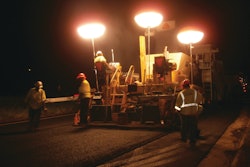
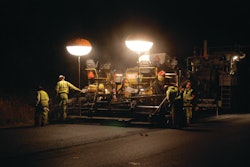
Rubberized asphalt can be used wherever conventional asphalt concrete or bituminous surface treatments would be used. It can serve as a surface treatment, hot mix or as a crack sealant. It may also be used in new construction or to rehabilitate an existing pavement.
Who's Using It?
Over the past 10 years, rubberized asphalt usage has been growing at a rate of about 10 percent a year. In the 1960s, Charles McDonald, a former Federal Bureau of Highways (now FHWA) employee and later the engineering supervisor Materials Testing Section for the city of Phoenix, AZ, developed the first successful time/temperature formula for incorporating scrap tire rubber into an asphalt paving material. This process is often referred to as the McDonald process, the "Arizona" process, or the "wet" process.
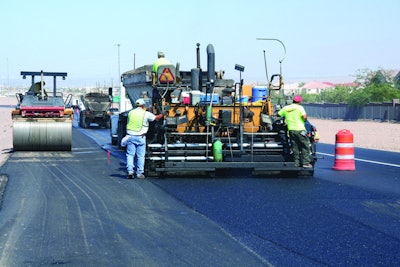
Today, rubberized asphalt is gaining wider acceptance by more state departments of transportation, as well as municipalities and cities. In 2003, the Arizona DOT began a three-year, $34 million project to resurface about 115 miles of Phoenix area freeways with rubberized asphalt. Other states using rubberized asphalt for highway and interstate paving projects include Alaska, California, Florida, Texas, South Carolina, Massachusetts, Nebraska, Rhode Island and New Jersey.
Until very recently, recycled rubber has not been used in lower volume applications that include parking lots and driveways. New technology and cost considerations are beginning to make such applications more feasible and desirable.
Market Conditions
Several misconceptions, combined with a lack of knowledge have prevented the widespread use of rubberized asphalt.
One misconception is rubberized asphalt costs more than traditional materials. This may have been the case in the past, but the economics have shifted since the mid-1990s. Spikes in oil prices have increased the cost of asphalt more than 250%, from approximately $140 a ton to $500 or more. SBS polymers have also been in short supply. There is a tightening supply of asphalt, and the price of liquid asphalt is now almost double the price of rubber. Because crumb rubber provides a reliable and consistent supply of material, the cost has held steady, remaining between $240 and $340 a ton during the same period.
The true cost savings associated with rubberized asphalt come from the long life cycle, decreased maintenance and use of less material. In most cases, due to the flexibility and strength of rubberized asphalt, only half of the material is required when compared to regular asphalt concrete.
Conserving Resources
Environmental considerations have made rubberized asphalt an attractive pavement product for municipalities, cities and states looking to reduce their carbon footprints.
Rubberized asphalt helps to provide an outlet for between 500 to 2,000 scrap tires per lane mile of pavement. For a 1-mile section of a 4-lane highway, between 2,000 and 8,000 tires that may have ended up in a landfill are used to create a better roadway. Because some applications of rubber asphalt are thinner than comparable conventional asphalt courses, less paving material is used. Research has shown that 4 inches of conventional asphalt can be replaced with 2 inches of rubberized asphalt.
The Future of Rubberized Asphalt
Despite the benefits and proven performance of rubberized asphalt, certain obstacles prevent wide-scale adoption. These include perceptions about cost and a lack of standard specifications. Most design procedures are currently geared toward a pure liquid binder. However, technology changes are on the horizon that will better accommodate tire rubber and make rubberized asphalt more accessible.
At the same time, the public is becoming more aware of the pavement choices available and the fact that rubberized asphalt can increase quality of life in terms of noise reduction. It is also a better alternative for the environment. This combined with the cost-savings and performance of rubberized asphalt are setting the stage for the product's widespread use as a pavement solution.
Doug Carlson serves as vice president, asphalt products for Liberty Tire Recycling, the premier provider of tire recycling services in North America. Mr. Carlson is a recognized expert in the use of rubberized asphalt, and has held a number of executive and managerial positions during career. He has authored twelve published reports on a variety of rubberized asphalt-related topics.