If replacing water pumps, repairing radiators and rebuilding engines with pitted cylinder liners are a repeated hassle, you need to take a close look at how you're maintaining radiator coolant.
"About every supplier quotes 40% of engine failures are attributed to cooling system failures," says Carmen Ulabarro, market development specialist for coolants, Chevron.
Selecting the right coolant, then maintaining it, translates into longer life for your water pumps, radiators and oil coolers and less sticking of thermostats.
Conventional coolant choices
Coolant serves several roles, including thermal heat transfer, freeze and boil-over protection, corrosion protection and cavitation prevention. That's why water by itself is a very poor coolant; without the inhibitor package, it would quickly corrode the cooling system.
All coolants use glycol as a base fluid. "There are two different glycol molecules," says Dan Arcy, Shell Lubricants. These include ethylene and propylene. "One of the advantages of ethylene glycol is you don't need to have as heavy a concentration to get the freeze point lower."
"Propylene is less toxic," says Ulabarro. "Ethylene glycol is very toxic." This can be an important factor if wildlife or children can access spilled coolant.
But lower toxicity only applies to new coolant. All used coolants are classified as hazardous waste. "They pick up the heavy metals of the iron and the lead solder," says Steven Pressley, vice president, Evans Coolants.
Biodegradability is a completely separate issue. "From an environmental perspective, propylene glycol actually takes longer to break down than ethylene glycol if it is dropped on the ground," says Ulabarro.
Conventional coolants are typically made of a 50/50 mixture of ethylene glycol and water. "Water is the coolant and ethylene glycol is the freeze point protector," Ulabarro points out.
But without an inhibitor package, the water would rust out your engine. Inhibitor chemicals really distinguish the coolants.
Conventional coolants use an inorganic salt-based inhibitor, which falls out of suspension and coats surfaces inside the cooling system. "They are supposed to lay down a barrier on every surface of a cooling system," Ulabarro explains.
"Because of flow, the deposit that is laid down gets washed away over time and you have exposed metal surfaces," says Ulabarro. Consequently, conventional coolant needs to be re-fortified with Supplemental Coolant Additives (SCAs) on a regular basis in order to maintain protection.
It must also be changed on a periodic basis. After a service life of approximately 250,000 miles -- if the coolant has been properly maintained -- the dissolved solids will have increased too much.
Benefits of ELCs
However, it really no longer makes much sense to use a conventional coolant in a heavy-duty diesel. "There is no specific reason why you should continue to use conventional coolants," says Arcy. "There are a number of benefits of extended-life coolants (ELCs), from protection to lower maintenance costs."
One such benefit is better heat transfer. "Conventional coolants, over time, will start to form scale or deposits," says Arcy. "That is from the silicates in the conventional-type coolant. As that starts to accumulate and get thicker, you are not going to have as good of heat transfer."
ELCs do not lay down layers that inhibit heat transfer. "Basically, you get 12% to 13% better heat transfer with an ELC vs. a conventional silicated coolant," Ulabarro states.
You also eliminate silicates. "Silicates are abrasive," says Arcy. "They will wear out the front seals in the water pump over time."
Ulabarro adds, "We can improve water pump life up to four times, depending upon the platform they are using. Some pumps are just better than others."
In addition, ELCs use a different chemistry for the inhibitor package - Organic Additive Technology (OAT). These inhibitors don't deplete like those used in conventional coolant. This is where you realize one of the greatest savings over conventional formulations.
Cavitation actually eats away the cylinder liners. "In a diesel engine, as the cylinder vibrates, it creates a momentary low pressure area in the liner," says Pressley. "The water then flashes to steam. The steam bubble smashes against the liner and literally erodes it away."
Conventional coolants use additives to protect against cavitation. "When you are using a diesel engine and you have a fully formulated coolant, it has nitrites and things to prevent cavitation," says Arcy. "As you accumulate hours or miles on the equipment, that level is going to go down. It could eventually go below the level where it is doing an effective job of protecting the cylinder liners."
Thus, you need to replenish conventional coolant additives on a periodic basis. But with ELCs, this interval is much longer, so there is less worry about missing maintenance.
As a result, extended-life or long-life coolants can actually help reduce the impact of poor maintenance practices. "If you don't have time to take care of your coolant, use something that is foolproof," Ulabarro advises.
The waterless alternative
Evans Coolant offers an alternative to water-based coolants that it touts as a life-long coolant. "We have a straight propylene glycol mixture," says Pressley. "When we eliminate the water, not only do we eliminate corrosion and cylinder liner cavitation, we raise the boiling point to almost 400° F."
Traditional water-based coolants rely on a pressure cap to raise the coolant boiling point to 250° to 255° F. Once you get above 180° F operating temperature, you only have about 70° before the coolant starts to boil.
"If you had a clear upper hose between the radiator and the engine block, you would see a frothy emulsion coming out because of all of the steam bubbles trapped in the coolant," says Pressley. "You begin to lose heat transfer."
As the temperature rises further, you get closer to the boiling point of the water. "As the temperature begins to increase to 220° or 230° F, you get steam pockets inside the cylinder heads due to the different characteristics of the water - surface tension, vapor pressure," Pressley notes. "As the incoming coolant comes by and there is no heat transfer, you get a hot spot. You can either develop detonation or, in severe cases, head gasket problems."
With the Evans Coolant, you are still 160° F below the boiling point when you are operating at 220° or 240° F. It is important to note here that all cooling fluids will boil in the cylinder head. "Your cylinder head can be 500° to 600° F," says Pressley.
What you want to prevent is steam pockets. "When Evans Coolant boils in the head, it automatically condenses when the incoming coolant comes in," Pressley explains.
Specific heat is one measure of a cooling fluid's efficiency that often gets attention. Water actually offers the best specific heat properties with a value of 1.0, according to Pressley. "A 50/50 glycol mix offers specific heat of .8, and we are down around .75," he notes. "But those properties only refer to when there is no boiling taking place - convective heat transfer where you have liquid all of the time."
Under light loads and low cylinder head temperatures, the 50/50 glycol mixes transfer heat better than the Evans Coolant. "In those scenarios, waterless coolant may run 5° or 10° warmer," says Pressley. But under such loads, it is really not an issue.
"Where we really shine is under heavy loads or ultra-high ambient temperatures when you drive engine temperature to 200° or 220° F," Pressley asserts.
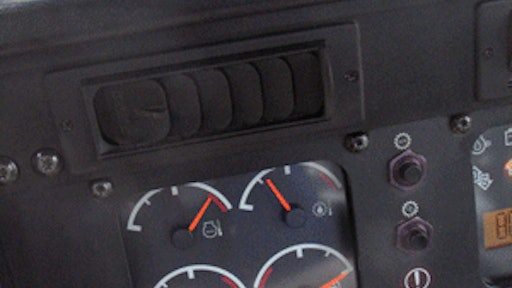
The engine temperature gauge shows your average temperature, usually where the coolant is leaving the engine. "Inside the cylinders the temperatures are always much higher," says Pressley.
This is where Evans Coolant's high boiling point and molar heat of vaporization are an advantage, he claims. Molar heat of vaporization is really just how much heat it takes to make a liquid boil. As the coolant boils in the cylinder, the vapor bubble breaks away and is immediately replaced with incoming coolant. This helps to stabilize the temperatures.
Because of its high boiling point, the coolant also allows you to run a zero-pressure, open-vented cooling system; or you can choose to run the conventional closed system. Even then, there will not be as much pressure buildup in the system. "We only build up about 4 or 5 psi because the fluid expands 10% at 200° F and 15% at 250° F," Pressley points out.
Compatibility
There has been a lot of concern over what happens if you are using an ELC or a product such as Evans Coolant and you have to top off in a remote location where these products are not readily available. Many of these concerns are unfounded.
"All coolants are based on glycol," says Ulabarro. Only about 3% of the product is the inhibitor package. "All coolants are basically compatible with one another."
But each manufacturer has limits of contamination that, once exceeded, change how you treat the coolant. For example, waterless coolant is less tolerant to contamination. There are no inhibitors to prevent corrosion from water. If the coolant level drops, you can add water to get to your destination, but the cooling system must then be completely drained and refilled. This can be a detriment given the much higher initial coolant price and the capacity of most diesel engine cooling systems.
ELCs allow a level of contamination with other products. "Our limit is 25%," says Ulabarro. "If you have a 12-gal. system and you add more than 3 gal. of another product, you have gotten to the point where you have diluted the inhibitors in an ELC. When you do that, our recommendation is to treat the coolant like it is a conventional coolant and start adding SCAs."
Arcy agrees, adding, "Our coolant can handle up to 15% contamination. It will still cool properly, but you need to treat it as a conventional cooling system and add SCAs."
If there is no danger of freezing, just add water to the ELC, Ulabarro suggests. Then you haven't changed the product. "When you come back to the shop," she continues, "you just adjust your freeze point."
|
ELC Conversion Fluids "ELC conversion fluid is 12 times the concentration of extended-life coolant," says Dan Arcy, Shell. First, the existing coolant has to be tested to make sure it is a candidate for the conversion. The initial test is the freeze point. "If you have too much water in there, you may as well drop it out and start all over again," says Carmen Ulabarro, Chevron. "You also want to check for the pH. The other thing to check for is nitrite level. If those three parameters are okay, then it's all right to add a conversion inhibitor, in my opinion." It is simply a matter of draining some coolant and adding the necessary volume of conversion fluid. "If a cooling system is a 12-gal. system, you are going to add 1 gal. of conversion fluid," says Arcy. "You don't have to drain all 12 gal." |