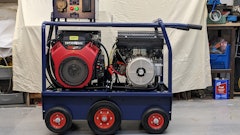
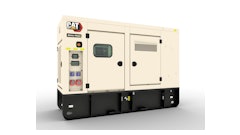
Size really does matter - at least when it comes to matching portable or towable generators to the tools on the job, and the extension cords used to connect them.
"Contractors may not be optimally sizing their generators for their applications," states Todd Howe, generator product marketing manager at Ingersoll Rand. "They tend to either overload the generator or underload it, and waste money by purchasing a larger unit than they need."
David Brown, vice president of MQ Power, agrees, noting, "Misapplication is the most common mistake we see contractors making. Proper selection considers the application, duty cycle and load. All three factors are important to proper generator selection."
According to Tim Sheehan, industrial sales manager of the power equipment division of Yamaha Motor Corp., "Contractors generally under-size the generator because they want to purchase the smallest wattage generator for the least cost possible."
"The problem is that contractors don't always consider all the equipment that could possibly be running at once, or they don't build flexibility into their generator selection," explains Derwin Pepper, product manager, Generac Power Systems. "Sometimes conditions on the actual jobsite require different equipment than expected. That really becomes a problem when larger tools demand more power."
Problems can occur
Potential repercussions can occur from using a generator that's not properly and adequately rated to the tool's amperage and load requirements. Possible scenarios include:
- You overload the generator. Its circuit breakers pop and you waste time resetting them.
- You cause damage to the generator. "Every time the breakers trip because of overload, it weakens the generator, as well as the tools. This could lead to downtime and lost income," Sheehan points out.
- Your workers have to alternate tool use. In the worst-case scenario, that could mean one crew is sitting idle, while those with tools the generator can power are working. In any case, it slows work flow and productivity.
- You could damage tools and decrease their life. "When you subject a motor to voltages below the name-plate rating, some motor characteristics change dramatically," Brown explains. "When amps go above the name-plate rating, heat builds up in the tool's motor; this damages the motor and shortens its life. It's most efficient when you operate motors at voltages very close to the name-plate ratings. Stay away from the 'outer limits.' "
- You could experience "wet stacking" on an under-utilized diesel towable generator, especially if the low load occurs over an extended time period. Wet stacking is excessive oil bypass in the system as the generator pushes oil into the exhaust system.
"The extra carbon causes engines to smoke and you get a performance loss, neither of which is desirable," Howe notes. "The solution is to put a heavy load on the generator, and in a couple of hours the engine will clean itself up." However, it's best to properly apply the generator to avoid this problem altogether.
Calculate demand
You have to do a little homework, including some math, to match a generator to your current job and potential new ones.
Begin by identifying the power draw (wattage requirements) for all the tools and appliances you want to power. Even though it's unlikely they will all be used at once, it's still a possibility.
"You can find the information on each tool's identification plate or in the owner's manual," Sheehan says. "If the power requirement is given in amps, multiply the amps times volts to get the watts."
Once you have individual tool wattage requirements, it's time to add these numbers together. "You add up all the wattages and compare your total with the generator's output specifications," Howe explains. "As long as you're in a 75% to 95% load factor window, you have a generator sized in the optimum range."
Pepper recommends an 80% figure. "If you add up all potential loads and use a generator that will at least provide 80% of the total, you should be fine," he says.
"The most important factors are the size and type of load," Brown adds. "You should also know the voltage; the amps; whether the load is single phase or three phase; if the load is purely resistive; the duty cycle of the load; and the operating environment. Altitude and ambient temperature are also important."
Once these factors are known, you can find a variety of sizing tables, charts, graphs and software to assist in determining the correct size of generator for the job.
You can also get help from generator dealers and rental centers. "Most manufacturers work with dealers who have been trained by the company, so they can educate contractors on the proper use, sizing and application of generators on the job," Howe says. "The 'big box' stores and online shopping don't offer that. Dealers are consultants who can guide you to what's best suited for the application and optimize your investment."
One other important consideration is startup draw or surge rating (standby rating on towables). Tools with motors draw higher amps at first, and this is the hardest load placed on a generator.
"Starting wattage isn't typically listed on power tool data plates, but can be calculated or estimated from a table," notes Howe. "Compare starting wattage needs with the generator's surge rating, and running wattage with the continuous rating. Ensure both values fall within the generator's ratings."
The other manufacturers mention that their generators have suitable surge ratings built in. "The amount of surge rating depends on the power of the alternator and design," Pepper explains.
Life-cycle costs
This leads to additional considerations, such as fuel tank size so you don't have to refuel too often.
Brown points out, "When purchasing a generator, contractors should pay attention to life-cycle costing. The more sophisticated buyers are evaluating initial cost, operating and maintenance costs, resale or salvage value, the amount of time they plan to operate the equipment and financing costs."
He adds, "Understand that in generators you get what you pay for, so compare alternator and engine specs, the controls and the sound levels of the generators you are considering to be sure you are buying quality." Also bear in mind the newest models now offer significant noise reductions.
Extension cords affect performance
A proper extension cord must always be used. However, use the shortest one possible for your application.
"The reason is voltage drop," says Brown. "Voltage drop describes the inherent reduction in available voltage associated with the resistance in the extension cord. This effect is directly proportional to the distance from the generator."
"The basic rule is the longer the cord you use, the thicker the wiring (gauge) needs to be," Pepper says. "If the gauge isn't high enough, the wiring will heat up, as well as the tool's motor. Both are potential safety problems, and shorten equipment life."
According to Brown, "If a cord is not heavy enough for the load it must carry, it could burn or there could be a severe reduction in power available at the end of the cord."
The Extension Cord Gauge chart shows the minimum extension cord wire size for the amount of the expected load. Note that the wire size increases with the length of the cord as the anticipated load increases.
Often, construction sites have a system of cables, cords, distribution panels and distribution "spider" boxes to get the power to where it is needed. "Each of these components can have an impact on the performance of the equipment being powered," Brown says. "Extension cords from the spider box to the equipment being powered must meet the requirements of the load. These extension cords, too, should be rated for the voltage and amount of current that is being carried to the equipment. Consider the length of the extension cord, as well as the distance of the distribution box from the generator."
Avoid using a longer cord than you need, as well. "Coiling a 100-ft. cord next to the generator also causes lower voltage at the tool, even if you're using just 10 ft. of it," Howe notes. "While portable units usually don't, towable generators often have a voltage output adjustment. If you measure the voltage at the end of the cord and it's insufficient, you can adjust the generator to provide optimum voltage to the tool."