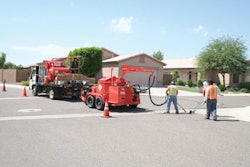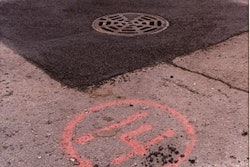

A decision in 2005 banning coal tar pavement sealer in Austin, TX, has snowballed in the past year causing other cities to consider regulation and the coal tar sealcoating industry to challenge the two studies that resulted in the ban to both support its product and fight the ban itself.
Industry support for coal tar is centered at the Pavement Coatings Technology Center (PCTC), a research organization in the coal tar sealcoating industry made up of more than 25 sealer producers, crude tar refiners, and others allied to the sealcoating industry. The PCTC is joined in its efforts by the American Coke & Coal Chemicals Institute (ACCCI), which represents producers of refined coal tar, the base material in coal tar sealer emulsions, to address what they believe to be grossly over-generalized conclusions relying on flawed scientific assumptions derived from minimal questionable data used to justify the Austin decision.
The Austin City ordinance, which banned use of coal tar based sealers within city limits, was rapidly passed in November 2005, and took effect January 1, 2006. By mid-2006 a group of several sealer industry companies initiated a lawsuit against the City of Austin seeking to have the State of Texas overturn the Austin ban ordinance. As of late November, this group also filed a formal complaint with U.S. Geological Survey (USGS), challenging the objectivity and data quality of a study performed by USGS researchers in Austin, which was used to justify the Austin City Council's ban.
But since Austin's decision at least one other city, Madison, WI, has taken steps to investigate its own ban of coal tar sealer. In addition, the New York Academy of Sciences (NYAS), under direction of the New York Harbor Consortium, has been conducting a series of studies to assess the impacts of various pollutants entering harbor waters carried from the Hudson and Raritan river watersheds, a 16,300-square-mile area that drains into the New York/New Jersey Harbor. Among the substances the NYAS study is examining are PAHs, the same substances that were of concern in Austin.
Plus, using the Austin studies as their basis, Senators Jim Jeffords (who has since retired) and John Warner have asked the EPA to revisit a 1992 ruling , which exempted recycling of coke oven wastes from regulation as an environmental hazard under RCRA [Resource Conservation Recovery Act]. The senators' letter cited the USGS study as having disproved assertions made by EPA more than a decade ago that coal tar-based products do not pose a risk to human health and environment. Industry members point out that the coke byproduct residue exemption to which the senators' letter refers is not relevant to the more general concerns with PAHs in the environment as expressed in the letter. EPA's exemption had nothing to do with the presence of PAHs in coal tar (or refined tars used in sealants) but was based on a comparison of constituents in products with and without recycling. Industry members say revocation of the exemption allowing blending of coke byproduct residues with coal tar would have no effect on the PAH concentrations in coal tar (or coal-tar based sealants produced from refined tar).
History of the Austin ban
PAHs (polycyclic aromatic hydrocarbons) are a group of more than 100 chemicals commonly found in the environment. Research has found that increased urbanization results in increased PAH levels, and major sources of PAH compounds to the environment are byproducts of combustion of fossil fuels in vehicle use, industrial processes, electric power generation, as well as residues of petroleum products such as gasoline, motor oil, tire wear and from other consumer products.
PAHs also result from wood burning, charcoal grilling, municipal waste discharge, and many other industries. In addition PAHs are commonly found in nature as a result of forest and prairie fires, volcanic activity, and biosynthesis by microbes and plants. Given these sources of PAHs, it's not surprising that urban areas are showing increased accumulations of PAHs in the environment.
Austin banned the coal tar-based products because it said "they are a potent source of PAHs, an organic contaminant known to be carcinogenic and toxic to aquatic life."
The Austin city council's action was based on recommendations by the city's Watershed Protection and Development Review Department (WPDRD), which said that particles of coal tar-based pavement sealer, carried by storm water runoff from parking lots and driveways into Austin's urban stream sediments, is the major source of PAH contaminants affecting aquatic organisms living in those sediments.
The supposed link between coal tar pavement sealers and PAH compounds in Austin's stream sediments first came as a hunch by a city environmental department worker, collecting stream sediment samples for routine PAH monitoring, who noticed pavement sealer being applied to a parking lot near a stream site. City staff subsequently conducted a series of sediment sampling tests at selected Austin stream locations. Local Austin USGS researchers also performed a cooperative experimental study, in which samples of run-off water from "simulated rain events" were collected from several paved areas characterized as coal tar sealed, asphalt sealed or unsealed, and analyzed for PAH content.
On the basis of this parking lot simulated run-off data and stream sediment information collected, Austin's WPDRD concluded that use of coal tar pavement sealants is a primary cause of PAH contamination in Austin's urban streams. Their next step was to decide that elimination of coal tar sealer would significantly improve aquatic habitat for mud dwelling creatures.
Rush to judgment
Industry members say the Austin city council's rush to judgment, ignores the considerable body of scientific knowledge compiled by researchers in the field of environmental toxicology. PAHs in the environment, and rising levels of PAH contaminants in urban areas in particular, have been analyzed in many studies and have been traced to a complex array of sources affected by many factors including population density, land use, and atmospheric conditions.
According to sealer producers, several fundamental flaws plague the analyses presented by the Austin WPDRD and USGS studies, which ostensibly depict direct connect-the-dots clues linking the PAH compounds in Austin's urban stream sediments back to parking lots protected by coal tar-based sealcoat.
Austin's WPDRD conclusion, "that coal tar sealants contribute the majority of stream PAH loading in the Austin area," is not supported by any empirical scientific data. None of the information presented or cited in the USGS 2005 report or any of Austin's WPDRD work has estimated or even considered PAH contributions from other sources in Austin, or any other urban environment. If PAH's introduced into the sediment load from the range of known major sources, (for example fuel combustion, vehicle oil spills, or leakage) are not evaluated, estimated, or in some way quantified for comparison, how can the city of Austin pronounce that coal tar sealant is the major contributor of PAH to Austin's stream sediments?
In fact, the primary comparisons to assess the magnitude of contaminants presented, in the USGS 2003 study and relied upon by Austin's WPDRD, to depict the environmental impact of PAHs is based erroneously on evaluating concentrations of PAH compounds detected in sealer products, and in particulates and scrapings collected from pavement surfaces. Industry representatives say concentration of a contaminant in a particular substance, whether expressed as percent, milligrams per kilogram, or parts per million, has no direct relationship to the amount of that contaminant entering the environment or its bioavailability.
A more relevant approach, as described in other studies to assess environmental impact from PAH sources, has been to evaluate the potential quantity of PAH's released by a particular source to the environment. This is determined by analyzing the yield in weight of PAH's released per unit source area during an event or time span, as compared to other sources in relation to their respective source areas, to develop an overall measure of PAH's contributed by each source. This preliminary step in environmental toxicology investigations would be followed by verifiable measurements to assess magnitude and extent of actual contaminant transport from the source to the aquatic environment, and then subsequently followed by evaluation of the degree a particular form of a contaminant (physical state or particle size) is available to enter specific organisms.
Industry members say an examination of supporting data in the USGS 2005 follow-up report reveals a somewhat different picture than what its authors claim. In the report one table (Table S2) contains data for yield of PAH's in micrograms per square meter for each of the pavement surfaces and events sampled. While average yields per unit area of PAH collected in runoff from test plots sealed with coal tar sealer were somewhat higher than the other test plots sampled, comparing this data with the land use data in another table (Table S3), would project PAH levels in Austin's environment due to runoff from coal tar sealed pavements to be very small.
For example, PAH's contributed by vehicle exhaust, a well-studied urban PAH source, can be derived from published EPA emissions factors for PAH compounds and Texas Transportation Institute data on vehicle miles traveled in the Austin metropolitan area. A comparison of these figures would indicate PAH's contributed by vehicle exhaust as 34 times the amount projected by runoff from sealed pavements. If the potential contribution of coal tar sealed pavements is only 3% that of vehicle exhaust, how can pavement sealer be a "major" PAH source to Austin's waterways? The impact of PAH contribution by pavement sealer would be even further dwarfed if other known major PAH sources are included in the analysis.
But even more importantly, the major contribution of vehicle traffic to PAH contamination in Austin's waterways was recognized in an earlier study in 2000 by USGS researchers, who noted the effect increased traffic had on PAH levels in the area: "The large increases in traffic offer an explanation for why PAH's have more than doubled in Town Lake from 1975 to 1990 while percent of urban land use only increased by 5%. This suggests that urban sprawl in outlying areas may affect traffic patterns and water quality in the inner city." Accordingly, this particular study attributes recent PAH increases in Austin's waterways to burgeoning traffic, not parking lots.
So while the coal tar issue percolates, contractors need to realize the issue is far from settled. Coal tar sealer is not banned anywhere in the country except for Austin, TX; the studies that resulted in the ban are being challenged; and a third study, which relies not only on scientific principles but also input from a variety of organizations, is underway.