Article contributed by Ingersoll Rand.
There are so many variables on construction projects that logistics never seem to go according to plan. Earthmoving projects experience problems with material gradation and moisture content. Plant operations, hauling logistics and mix laydown are fraught with interruptions on paving projects. There are so many impediments to achieving success, it can be surprising when construction projects are completed in accordance with agency specifications.
"Intelligent Compaction" in Concept and Practice
Compaction is one of the most important stages in the construction process. Without proper compaction or densification, materials cannot provide the support needed for structures or traffic loads.
Many believe that the process of compaction involves science. Others believe compaction is simply the application of practical techniques, using relatively simple equipment.
Proponents of the "science of compaction" are encouraging the construction industry to require sophisticated equipment to achieve what is called "intelligent compaction." The problem with this concept is that materials in construction are not uniformly ideal for the applications for which they are being used. Soils on earthmoving projects vary in properties, especially in moisture content. Improper field moisture content is the main factor in failing to achieve soil density. Knowing this, how practical is a requirement to use "intelligent compaction" equipment on these materials? Can the compactor compare a low soil stiffness modulus resulting from high air void content with a low modulus level caused by high field moisture content?
On a hot mix asphalt (HMA) paving application, can any compactor distinguish between rises in pavement stiffness resulting from increasing density and increased stiffness caused by cooling of the mix?
The answer in both instances is that no compactor is intelligent enough to reliably make this distinction.
Practical Compaction in Operation
Agencies and contractors recognize the importance of compacting disturbed soils to remove voids and avoid structural damage once loads are applied. Rather than relying on technology to produce satisfactory results, a more practical approach to achieve proper compaction is to make certain the people employed on construction projects are properly trained.
A well-trained compactor operator is more valuable and versatile than the "intelligent compactor." An experienced operator reacts to jobsite variables and compensates for changes to materials that allow construction to continue on schedule, which is important on any high-volume project.
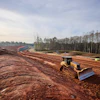
Experienced compactor operators on earthmoving projects visually recognize problems in the material and know how to improvise during changing conditions. For example, an experienced operator sees when soils are too dry or too wet and adjusts the operation of the compactor. The experienced operator can also alert other personnel onsite that material modifications are needed.
The compactor does not possess this ability. The computer on the machine can only react based on pre-programmed algorithms. If the measured dynamic stiffness modulus for the soil is too low, the "intelligent compactor" will adjust itself to generate more force and/or require additional passes over the material in an attempt to increase its stiffness modulus. If this soil is too wet, more compaction force and more passes only make the situation worse. The "intelligent compactor" does not distinguish between wet soil and soil with excessive air voids. Only an experienced compactor operator knows the difference.
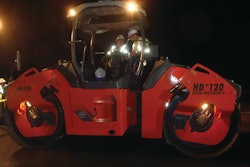
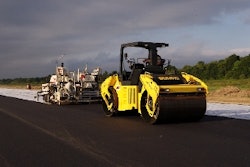
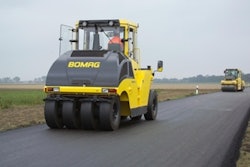
On paving applications, experienced compactor operators feel, hear and see the performance of the machine. Operators feel vibration feedback and know to turn vibration off. The sound of double amplitude drum bounce resulting from vibrating on materials too cool or too dense to permit additional compaction is the signal to the operator to stop vibration. An operator sees the residue of crushed aggregate particles on the surface of the pavement and knows to stop compacting with vibration. The "intelligent compactor" is only able to measure the degree of vibration feedback to sensors mounted onto the machine and cannot determine the cause of the excessive feedback or properly alter the performance of the compactor to compensate for the increased stiffness of the pavement.
The most frequent cause for stiffness increase is cooling of the pavement. The experienced operator knows what needs to be done to mitigate the situation; the compactor does not.
Cause and Effect
Few projects go according to plan from start to finish. Environmental factors, site conditions, material supply and other elements routinely interfere with project plans. Sometimes, conditions will be different day-to-day, or night-to-night in the case of some paving projects. Therefore, contractors should not rely on equipment to work equally as well under varying conditions. The key to achieving optimum work output on the majority of projects is the human factor - experienced people make the difference. No amount of sophisticated equipment can compensate for inexperienced manpower. Experienced manpower will always compensate for the lack of sophisticated equipment.
Situation
Quality control during a job by the contractor and the quality control by an agency are two of the most critical specifications contractors must meet on a job. Agencies find it difficult to train and keep competent field technicians. To compensate, they write job specifications that place the burden of in-process quality control testing on the contractor. Quality control testing at the end of a project is retained by the agency so that control of payment is maintained. This way the agency pays for what it gets rather than for what it originally specified.
Contractors take it upon themselves to find and train competent field technicians. The final payment for work performed - especially by governmental agencies - depends upon meeting deadlines and specifications. Many contractors realize the value of real-time quality control testing and keep a technician at work full-time on larger paving projects just to ensure no surprises are discovered after work is completed.
Complication
The construction process involves the element of time. Since most construction projects involve a succession of activities, if problems are discovered during final quality control testing, the costs to remedy the situation are expensive. This is one of the main reasons why some agencies believe technologies like "intelligent compaction" will benefit the construction process. In theory, "intelligent compaction" on earthmoving projects can accelerate the construction process. However, this is true only when all other variables of construction can be controlled in the same fashion.
The one variable that is impossible to control is weather. Weather conditions dramatically affect soil compaction applications. Soils that are too dry or too wet are not suitable for effective compaction. Therefore, "intelligent compaction" technology is not the universal solution for soil compaction applications.
Similarly, on HMA applications, time can be the contractor's friend or enemy. When HMA production and delivery is on schedule, laydown and compaction follows a predictable pattern for completion. If the supply of HMA is interrupted - an occurrence with alarming frequency - delays in laydown and compaction are inevitable. As time passes and the mix cools, achieving target density with the paver and compactor train is compromised. "Intelligent compaction" as a technology cannot assist when these complications occur. The cooling of HMA is predictable. The rate of cooling can be pre-determined based on historical information and current ambient conditions.
Resolution
A well-trained and experienced operator is better able to adjust to the ever-changing conditions encountered on construction projects than the computer-aided compactor. An experienced operator is more adept at adjusting the performance of the compactor to achieve needed results, especially when unpredicted construction delays are experienced. Just as a seasoned airplane captain takes command from the auto pilot system when turbulence or other conditions are encountered, an experienced compactor operator is able to adjust the operating characteristics of the machine when the changing condition of the material call on that operator to do so.