With fuel prices skyrocketing over the past year, many equipment owners are left wondering how they can enhance their fuel economy. And while diesel engines are getting more and more efficient as they strive to meet stringent emissions standards, there are still some things that you can do to ensure you're getting the most bang from your fuel budget.
Engine manufacturers say fuel efficiency is governed by many factors including the design of the engine and the machine it is used in, but as far as things you can do to enhance efficiency, it mostly boils down to meticulous maintenance and high-quality fuel.
Design plays a role
Different diesel engines use various technologies to achieve fuel efficiency. There are several different types of fuel injectors, for example. Indirect injectors (IDIs) use a nozzle that looks like a spark plug that sprays fuel into the precombustion chamber. On the other hand, direct-injection (DI) systems, sometimes referred to as pencil-type injectors, spray directly onto the piston itself.
"Direct injection is probably more efficient," states Mark Crenshaw, service engineering manager at Kubota Engine America. "Although Kubota moved toward indirect injection engines because they were the first to meet Tier I on diesel. Now we're back to having both because technology has allowed direct injection to be just as clean."
He adds, "DIs were easier starting while IDIs were quieter, so there have always been some trade-offs."
Bill Durant, engineering manager at Hatz Diesel agrees that fundamentally, direct-injection engines are more fuel efficient. "The fuel is injected directly at the top of the piston bowl," he explains. "With indirect injection, the injector injects at the side chamber first and the fuel is then transferred to the main combustion chamber."
Many manufacturers, such as John Deere, are moving toward a high-pressure common rail system (HPCR) or an electronic unit fuel injector system in order to meet Tier III emissions standards that went into effect in January.
"These are top-of-the-line fuel systems because they give the best control of fuel delivery and the best injection pressure," says Tim Francis, manager, field service, for John Deere Power Systems. "As more stringent emissions regulations become effective, older fuel injection systems, such as the rotary injection pump system, won't be used as much because they are unable to control fuel delivery as accurately as the high-pressure common rail system."
Zack Ellison, director of industrial and OEM support at Cummins, agrees that HPCR is becoming the norm in engine design for off-highway equipment because of the many benefits it offers.
"More and more, we're seeing engine manufacturers move toward a high-pressure common rail," he says. "In this case, high-pressure fuel is pumped into the engine. This allows optimum fuel usage at low rpm or idle. HPCR is also much quieter because there's less diesel knock. The combustion event is earlier, so there's less slapping of the piston."
Durant at Hatz notes that with smaller diesel engines which are less technologically advanced, fuel efficiency is more a function of engine usage and maintenance than design.
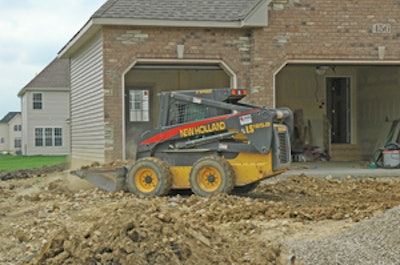
Ellison agrees, noting that off-road equipment, by the very nature of its work, is not designed for optimum fuel efficiency. Construction equipment, for example, often runs at maximum engine speed to operate the hydraulic pump.
"The engine rpm is set based on the requirements of the machine's hydraulic pump such that the engine is able to perform the work it was designed to do most efficiently," he explains. "An engine might be most fuel efficient at 1,700 rpm, but the machine requires 2,500 rpm to perform the task at hand; thus it burns more fuel than it would at optimum speed for fuel efficiency."
Maintenance is key
So, whatever size diesel you have in your fleet, the most you can do to enhance fuel efficiency is to stay on top of maintenance.
"[You] mainly need to worry about three things when it comes to maintaining [your] fuel system," says Francis at Deere.
"Draining the water separator at the appropriate intervals, replacing the fuel filters at the manufacturer's specified intervals, and using only manufacturer-recommended fuel filters. For example, if you purchase a fuel filter that doesn't meet the engine manufacturer's specifications, that filter might not have the right micron rating, and today's diesel engine fuel systems have become less tolerant of contamination. This means it's crucial to change the fuel filter on time and to buy the correct fuel filter."
Francis adds, "If you don't change your filter according to the manufacturer's specifications or if you use the wrong filter, you can fail the high-pressure pump or you can fail the injectors. Also, if you don't check the water separator and therefore let water into the fuel system, components can fail. Once they've failed because they've become contaminated, they almost always need to be replaced."
Ellison adds his own suggestion: "To make equipment more fuel efficient, be sure the exhaust and intake restrictions are within limits." To that end, he recommends periodically checking the exhaust pipe for kinks and bends. Likewise, the air filter needs to be changed according to the manufacturer's recommendations.
"Change it; don't clean it," he advises. "A number of customers try to clean the air filter and wind up tearing it, which allows dirt to enter directly into the engine, which can score the cylinders. It's not always easy to see these tears, so it's always best to change the filter instead of cleaning it."
He adds, "Operators should do a daily visual inspection of the air filter to ensure all joints and clamps are secure and that it's in good working order."
You get out what you put in
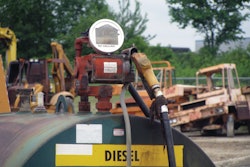
According to Crenshaw at Kubota, diesel engine fuel efficiency is greatly affected by the fuel itself. He recommends using only clean, uncontaminated fuel of known quality. Fuel that is dirty can clog fuel filters and get into the injection pump or the injector itself and cause performance problems. "Having good, clean fuel quality is key to maintaining any fuel system efficiency," he states.
As mentioned previously, one of the most common contaminants found in fuel that has been stored incorrectly or for long periods of time is water. Crenshaw says that water in diesel fuel can create algae. Equipment owners should be sure to check the water separator on their engines daily and drain them, if necessary.
"Lots of customers say they don't get adequate life from their fuel filters, but this is mostly due to the quality of their fuel," says Ellison at Cummins. "If you're storing fuel for a long time or if there is any chance you have a leaky tank, you need to treat your fuel with an anti-microbial agent."
In addition to fuel quality, the type of fuel used is important to fuel efficiency as well. "There is a difference between winter and summer fuel," says Ellison. "Winter fuel, if blended, will be 8 to 10 percent less efficient than summer fuel because it is a lighter, thinner fuel. There's a 5 to 10 percent increase in usage to get the same performance."
Using the wrong fuel for the season can affect performance. "If you use summer fuel in the winter, for example, your fuel will turn to Jell-O as the wax crystals gel. This can clog the fuel filter."
In general, it's not just the fuel that should be pure but everything involved with maintaining the engine in order to achieve optimum fuel efficiency. "If dirt gets into the injectors, you can have injector ‘hosing' where a steady stream of fuel is sprayed; no atomization," explains Ellison. "This can melt the top of the piston which can lead to a scored cylinder and a major overhaul."
He continues, "A number of customers, when they change their filters, will pour fuel out of a dirty can into the clean side of the filter, which goes directly into the injectors. You should always pour into the dirty side or use very, very clean fuel."
Durant at Hatz agrees, advising service techs to keep the fuel tank clean, inside and out, and to generally clean all surfaces when maintaining the fuel system.
Ellison says cleanliness is everything when it comes to engine maintenance. "You wouldn't want someone to do surgery on you with dirty instruments. Likewise, you want things to be clean when you're servicing your engine."
Jenny Lescohier is the editor of Rental Product News, a sister publication of Concrete Contractor.