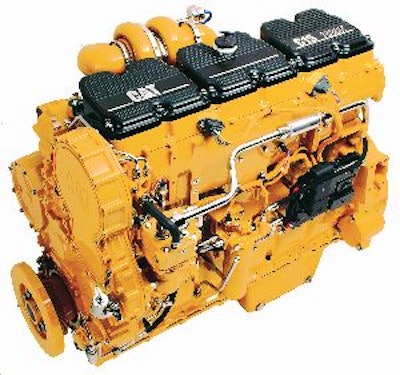
A lot of apprehension filled the air as the deadline for EPA '07 emissions-compliant truck engines drew near. New technology in the form of catalyzed diesel particulate filters (DPFs) would be required to meet these stringent requirements, adding a layer of complexity and cost. Rumors surfaced about heat rejection issues, fuel economy and the level of maintenance and service that would be required. Then there were the cost projections indicating you could expect up to a $7,500 premium for the additional components.
Luckily, most of the concerns were unfounded. We contacted owners experienced with the '07 EPA-compliant engines to get the real scoop.
Performance gains
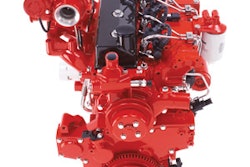
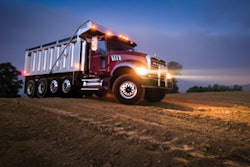
Lancaster, PA-based, Thomas Trucking hauls bulk cement, mulch, topsoil, crushed limestone, sand, wall stone and winter products. Its fleet includes bulk cement trailers, dump trailers, tri-axle dump trucks and single-axle dump trucks. This includes eight 2008 model Peterbilt trucks equipped with '07 Caterpillar C15 engines. These trucks had between 20,000 and 70,000 miles accumulated when we interviewed John Thomas.
According to Thomas, the trucks have proven reliable, especially when you consider it is a totally new design. "What you have to realize is that you have a whole new truck," he states. "They not only changed the engines, but I think the biggest fear was all of the configuration differences they had to make... Everything is totally different.
"We have had one or two issues where the pipe coming out from the motor and into the regen cracked," he continues. But this was very minor considering the changes in the overall design. "You can test and test, but until you get it on the road you don't know what you have," he says.
Reliability has not been a concern. "Out of the eight, we have four or five we have never touched," says Thomas. A couple had minor issues that Caterpillar resolved, but there have not been any major problems. "We have had no heating issues at all," he says.
Fuel economy is also not a factor with these trucks. "We actually find that the fuel economy is about 1/4- to 1/2-mpg better," says Thomas. "They actually perform better because they have more power than the '06s did."
The only drawback has been that the trucks don't allow the use of heated beds.
The diesel particulate filters (DPFs) need to be regenerated to burn off accumulated particulate matter. During this process, exhaust temperatures can reach high ambients. But drivers typically don't notice. "You can't tell anything," says Thomas. "You just drive the truck."
Thomas also didn't have to pay the cost penalty associated with the additional emissions hardware. "I actually paid less for my '08 trucks than I paid for my '07 trucks," he recalls. The trucks were ordered from the Peterbilt dealer in November of '06. "They were hungry and everybody was scared of the [new engines], so I ordered them in November for March/April delivery."
Many customers fear the unknown, but Thomas isn't one of them. "There is always a fear," he says. "The same thing happened in '04. The bottom line with anything in life is you have to go forward. There are guys out there that, if you let them, would still have mechanical engines. My theory has always been the future is coming. We can't stop it. I would take some of the risk up front and run the new stuff. Sure there are going to be some downsides to it, but you have to pick up and go. There are a lot more positive things than negatives."
Proven reliability
Calfrac Well Services is a leading provider of specialized oil field and well stimulation services. The company runs a fleet of approximately 750 trucks. It currently has 26 Kenworth T800s equipped with '07 Cummins ISX engines.
These trucks spend 50% of their time on paved roads and 50% off road. "We don't accumulate a lot of miles," says Greg Kessler, maintenance manager. "They get a lot of hours, but not a lot of miles."
Calfrac Well Services made a decision to convert its entire North American fleet to Cummins engines. "Looking at everybody's emissions strategies, we really liked Cummins the best as far as what road they were going down," says Kessler.
Some of the trucks have racked up 1,000 hours already without any major issues. "There was an initial calibration problem, and we were only seeing it with our trucks that were operating in Colorado at altitude," says Kessler. "We didn't notice it with any of the units that we had operating in Arkansas and Oklahoma." Cummins has since corrected this problem. "Excluding a couple of calibration issues, they have been stellar - no problems."
Despite working in tough environments, the trucks keep their cool. "There are no heating issues whatsoever, and that was pulling real heavy loads at altitude," says Kessler. "Fuel economy is about what we expect. To be honest, we really don't map fuel economy. We are not an over-the-road company."
Since the company spends a lot of time off road, it did fabricate a guard to protect the DPF. "We did build some brackets, with Kenworth's permission," says Kessler. "We were real scared about dinging the filter - it is expensive. And we were concerned about heat rejection.
"One of my major concerns with regen was the 840° F plus temps you are going to see, and potentially higher," he continues. This was addressed by having the electronic control module (ECM) programmed. "Part of my ECM standardization is we disabled any regens in PTO or below 5 mph. Anytime we are on location, a regen will not occur."
These trucks perform the necessary regenerations while travelling down the road. And this is invisible to the drivers. "I have asked them and to this day they have not been able to tell me if they have noticed a regen or not," says Kessler.
With idle time regulations being implemented in California and looming in several other states, Calfrac has taken a close look at its operating practices. "We have kind of changed our thinking and beat it into our drivers that if it is not required, it doesn't need to be running," says Kessler. "It has really changed our mentality toward how we utilize our equipment on location. We have equipped these new tractors with automatic startup so they can start up and warm up on their own and shut back down, which we think helps a little bit as far as driver issues and emissions."
There were many unanswered questions when Calfrac purchased its first 26 trucks with the '07 technology. "It has been a real learning curve for us, as well," says Kessler. So far, the trucks have proven up to the task. "There are no real maintenance obstacles," he says. And the company just placed an order for five additional trucks.
Transparent technology
Little-Ton Sand & Supply hauls sand, dirt, stone and concrete to general contractors and demolition contractors in the six counties surrounding Indianapolis, IN. The company has been in business since the 1960s, and was purchased by Joe and John Littleton from their father in 1998.
The company was among the first to run Sterling Trucks in the Indianapolis area. "Our local dealership started selling Sterling the same year we took over the business," says Joe Littleton. Since the brothers took over, the company exclusively runs Sterlings, with 60 Set-Back L-line trucks and seven Acterra models.
Eight of the current trucks have the '07 emissions-compliant engines. The smaller Acterra trucks are fitted with the Mercedes MBE 900 engines, while the L-line models are powered by Mercedes MBE 4000 engines. Little-Ton Sand & Supply initially made the switch to Mercedes power during the introduction of the 2004 emissions regulations. "We haven't had any troubles with them," says Littleton.
Littleton admits he was concerned about the new technology as the deadline for the '07 emissions-compliant engines approached. "I was a little worried, because when we would go to the truck trade shows, nobody could tell you anything," says Littleton. But the fears proved unwarranted. Littleton has not noticed a performance difference between the previous generation trucks and the models with the '07 technology.
Little-Ton Sand & Supply has run its 2007-spec engines since last Spring. "We run about 50,000 miles a year, and we got most of those trucks in late Spring," says Littleton. "They probably have 35,000 or 40,000 miles on them."
The transition to the new technology has been rather transparent. "It is pretty seamless," says Littleton. "When it gets close to regeneration, sometimes the drivers will say it is sluggish. But once they regenerate, they are fine."
The only downside has been the additional cost of the DPF. "It was about $7,000 a truck," Littleton notes. "Nobody is happy with that."
Little-Ton Sand & Supply didn't have to make any changes to the specs of its trucks as a result of the new technology. "On the Sterling trucks, I didn't see any chassis changes - just where they mounted the exhaust," says Littleton. "The aftertreatment device fits up under the right-hand door. I guess you would have had a fuel tank there before, but we only run one tank anyway. You really can't tell the difference unless you look for it."
Littleton also can't see much difference in fuel economy. "There was nothing that would raise any alarm bells," he says. He notes there are so many variables that affect fuel mileage on a vocational truck. "A lot of it is the driver. A lot of it is the type of job that you are putting them on."
In this case, the driver has more of an impact on performance than the switch to the '07 engine technology. But Littleton has a plan in place to attract the best drivers in the midst of the driver shortage. All of the trucks are custom painted with the company colors, and are equipped with air conditioning and comfortable cabs. "My drivers like the comfortable, roomy cab," he notes.
Drivers are also well compensated. "We pay our drivers a little more than other companies, and our Sterling trucks are very nice and well maintained," Littleton states. "If you give drivers good wages and good, reliable equipment to work with, they will feel more appreciated and do a better job."
It's still early to report on long-term durability, but if these owners are any indication, the '07 emissions technology isn't anything to be feared. If you remain skeptical about the latest technology, remember that 2010 is just around the corner, with even more stringent emissions regulations to come.