By Jeff Lax
When it comes to old, worn asphalt driveways and parking lots, commercial real estate owners, property managers, and even owners of single-family homes struggle with the same questions: Do we repave or sealcoat after making repairs to cracks, potholes and depressions? What is the most cost-effective and durable solution?
The industry has debated this issue for decades, and what has been learned is that each option has lasting, dramatic effects and that they actually complement one another. That’s the information pavement maintenance contractors need to convey to their clients who are trying to decide which pavement maintenance option best suits their needs and property.
Sealing
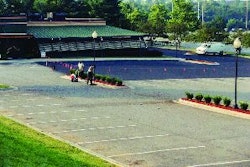
Sealcoating is one of the most important steps to protecting an owner’s investment in an asphalt driveway or parking lot. Sealers consist of emulsions that combine asphalt or refined coal tar with clays, mineral fillers, and water. Once applied, the water evaporates and the emulsion hardens to form a protective coating. It also becomes a beautiful black surface that adds curb appeal, giving a single-family home, multi-family residence, or commercial or industrial property a polished look. Industry experts agree that driveways or parking lots lacking the sealer can generally last only five to six years before the beginning stages of breakdown.
Initial sealing should occur six to 12 months after the asphalt surface is laid to allow the pavement to “cure” so oils can escape and the surface becomes ready for sealer. The initial sealer application forms a barrier to prevent water penetration and to inhibit deterioration of the asphalt binder by oxidation and over-drying.
As unprotected pavement ages the asphalt binder hardens, losing flexibility and becoming increasingly brittle. Ultraviolet rays from the sun break down the carbon bonds in asphalt, further weakening the pavement. Also, daily and seasonal cycles of heating and cooling cause the pavement to expand and contract. These stresses eventually exceed the pavement’s ability to flex, and cracks form. If water seeps into the cracks and freezes, the cracks expand, allowing more water to penetrate, making the cracks wider and deeper. This cycle leads to accelerated deterioration of the parking lot surface. Early sealcoating can prevent all these preliminary dangers to the life of the asphalt.
Sealer is typically the most cost-effective solution and should be reapplied every two to three years as preventative maintenance. In fact, several government and Asphalt Institute studies have shown that neglected asphalt pavement can cost up to five times as much to repair as asphalt that has had a regular maintenance program, including sealcoating.
Pavement maintenance begins by filling cracks, patching deteriorated areas, and cleaning (and possibly priming) oil-saturated spots on the pavement surface. The asphalt also must be cleaned of dirt and debris before sealer can be applied.
While some homeowners sealcoat their driveways themselves, professional contractors not only apply a high-quality sealer material but also have professional equipment such as crack cleaners and power blowers that often enable them to perform a longer-lasting, high-quality job. Plus, professional contractors can handle other pavement repairs that a homeowner won’t be aware of, so property managers at any level will be best served by hiring a pavement maintenance professional to handle their pavement.
Repaving
Repaving is the only decision for driveways or parking lots that have severe deterioration, deep wide cracks, subsided depressions and numerous potholes.
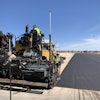
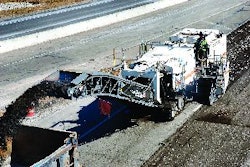
An asphalt overlay consists of a compacted layer of one-and-a-half to two inches of hot mix asphalt being placed over the existing asphalt, essentially giving the driveway a new surface. Just as with sealcoating, the first task is repair of existing pavement. Areas where the pavement surface has slumped indicate failure of the stone foundation supporting the pavement. These areas require digging out existing asphalt, and repair and compaction of the stone base with new material before patching with asphalt mix to prevent trouble spots from returning after repaving. Then an overlay is placed over the old surface. No sealcoating should be added for six months to a year, just as with any newly constructed pavement.
And while an asphalt overlay can begin to deteriorate within five to six years without maintenance, it could last up to 25 years with regular upkeep. The upside to installing an overlay is the pavement has a renewed wearing course, providing a pliable, flexible surface. Also after the overlay, the maintenance program can start over, lending to a virtually brand new drive or lot. However, extreme weather, heavy loads, and shortcuts during construction could lead to premature wear and failure. The downside of repaving is that it is expensive (typically thousands of dollars more than sealing). Plus, if the original asphalt isn’t properly cleaned and prepared, cracks and uneven sections may return, as well as other problems that may not have previously existed such as delamination of the overlay because of poor adhesion to the old pavement.
What’s Better for your customer?
The amount and regularity of repaving will differ from climate to climate, and even when asphalt is maintained properly an asphalt overlay will be needed every 20 to 25 years.
Regardless of whether you repave or repair, sealcoating is one of the most important aspects of any pavement maintenance effort as it protects asphalt from weathering and degradation and extends pavement life. Without sealer, the asphalt could require an overlay in as little as five to six years, costing thousands of dollars. When comparing costs, industry experts believe the best investment a homeowner or commercial property owner can make is a well-tailored maintenance program that includes regular sealcoating.