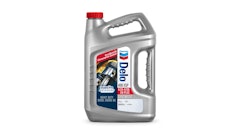
When used in reference to transmissions, the term "genuine parts" conjures up images of gaskets, plates and bushings. But these days, its usage has spilled over into discussions about fluids, as well.
"We keep asking equipment to do more and more," says Jack Zakarian, consulting engineer at Chevron. "As a result, transmission fluids are becoming more of a 'genuine part'. They are more like gears and clutches where you can't take one manufacturer's parts and put them into another's transmission. Fluids have become part of the design of the transmission. Many builders consider them a design component."
That's why it's important to use the right fluid for your particular transmission. Manual truck transmissions require different fluids than automatics, and they each require different fluids than off-road, heavy-duty construction equipment with powershift or hydrostatic transmissions. You'll find fluid information for a particular transmission listed in the equipment operator's manual. Work with your oil supplier to match the specification to the product label of any fluids you're considering.
"Using the right fluid will improve the durability of a transmission," notes Dan Arcy, Shell, "whereas the wrong one can mask a problem and reduce the life of the transmission."
Arcy witnessed one such scenario at a car repair shop where shop technicians used tractor transmission fluid to "fix" a shifting problem in a passenger car. "Tractor transmission fluids have a high level of friction modifiers, which caused the clutch to slide," he says. "While those modifiers made the car easier to shift, the clutch ultimately wouldn't hold together and the life of the transmission was reduced."
When selecting a transmission fluid, also evaluate what you're trying to accomplish. If you want to take advantage of an extended warranty program or extended drain intervals, it likely requires the use of very specific fluids. In these situations, some contractors choose to use a synthetic fluid, indicates Mark Betner, heavy-duty product manager at Citgo. "Synthetics can offer superior low-temperature performance and long service life, and can better resist breakdown during sustained high-temperature operation. They have become very common in over-the-road truck transmissions and can offer benefits in light-duty transmissions, although they are not as common in off-road applications."
A growing list of options
When you factor in synthetics, as well as premium and traditional mineral-based fluids for each application, there are a host of options on the market. And the list is growing. "Everyone is getting highly specialized," says Zakarian. "There used to be one common automatic transmission fluid that would lubricate just about everything. Now there are at least six different types — and they aren't cross compatible.
"There are many different fluids because each transmission works differently," he continues. "There's a common misconception that there isn't much difference, but that isn't the case. If you want the best performance, you need to use the right fluid for the application. The bottom line is that any manufacturer who builds a transmission specifies its own particular fluid."
"Transmissions have been designed to work with a fluid that has certain characteristics, frictional requirements and seals that they're compatible with," adds Arcy. "If you use something that hasn't been tested for a particular transmission, you can shorten the life of components."
With an automatic transmission, the fluid has to provide just the right amount of friction on the clutch plates so they can separate quickly, yet hold together. "If you don't have the right fluid, you will notice poor shift quality and you get rapid wear of clutch plates or torque converter material," says Zakarian.
Conversely, fluid for a manual transmission focuses on gear protection, especially for the teeth, which are exposed to such high stresses. "If you don't use a good quality fluid, as it starts to break down, it will form deposits on the seals that can cause the transmission to leak," Zakarian points out. "Also, as the fluid degrades — or oxidizes — and reacts with air at high temperature, it will deposit varnish and sludge on the equipment, which will prevent it from working properly."
Critically assess use of engine oil
It used to be you could use engine oil as a transmission fluid. Some contractors still do, largely to simplify fluid management at the shop. There are also certain situations where it can make economic sense, especially in off-road environments.
"In construction equipment used in off-road applications, contamination from dirt and dust plays a part in determining when you have to change the fluid," says Arcy. "Even if you have a fluid that can go 10,000 hours, you wouldn't make it that far because it would get contaminated before that. In some off-road applications, it can be a more economical approach to use engine oil."
But since engine oil is not as stable from an oxidation standpoint as a transmission fluid, especially a synthetic one, you will want to critically assess its use.
"Some off-road equipment owners would like to continue using engine oil in powershift transmissions, but it can cause a loss of power transfer and shorten transmission and oil service life," says Betner. "Fluids designed specifically for powershift and hydrostatic transmissions tend to promote longer transmission life and improved efficiency."
Avoid additives
In an effort to improve performance, you might be tempted to add supplemental additives or "top treats" to transmission fluids. However, oil suppliers strongly discourage additive use, citing that a number of additives are already incorporated to achieve certain performance criteria.
"Depending on the fluid, we add different types of additives at different concentrations," says Arcy. "They play a pretty significant role in meeting the transmission builders' requirements."
Some of the more common additives include friction modifiers, anti-foam and -corrosion inhibitors, dispersants, pour point depressants and seal conditioners.
"A lot of supplemental additives can have cross interaction," says Zakarian. "When combined with our additives, there's no guarantee they will do what the seller says they will."
"Once you add something, we can't guarantee that our fluids will continue to meet all the requirements that they did before adding the supplement," Arcy points out. "They might detract from what we've done as suppliers. Plus, the problem you're trying to fix might not be related to a fluid issue at all."
Since transmissions are such a big-ticket item to repair or replace, it makes sense to follow OEM recommendations for proper fluid use. "We talk a lot about engine oils," says Betner. "But transmissions can cost twice as much and last half as long, so it's important to talk about fluids that can maintain their life."