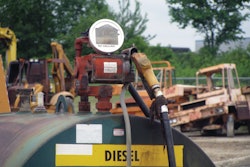
While the thought of paying over $3 per gallon for diesel fuel may no longer shock you, paying such a high price still stings. Even at around $2.50 per gallon — a considerable bargain for many — fuel costs can take a significant bite out of potential profits.
"Fuel is the biggest operating expense a contractor has," notes Dan Arcy, technical marketing manager at Shell.
With that in mind, finding ways to improve — or at the very least maintain — fuel efficiency in your equipment becomes increasingly important to your bottom line.
Critical to meeting that goal is making sure engines run at peak efficiency. "The key is to maintain the engine," stresses Shawn Ewing, technical coordinator for heavy-duty lubricants at ConocoPhillips.
"When engines are tuned properly, they will always run at their peak fuel efficiency," adds David Tuohy, off-highway specialist, Chevron Products Co. "When there is improper injection flow or timing, fuel will not be burned in a timely fashion and the unit will use more fuel."
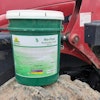
Proper selection and maintenance of fluids — including engine oils, transmission and hydraulic fluids, etc. — can also make a difference in equipment fuel consumption.
Consider synthetics
Today, there is a wide variety of mineral and synthetic engine oils and blends from which to choose. So finding the right match is not only possible, it is key for obtaining the equipment operating performance you expect.
To make any significant gains in fuel efficiency, you will likely need to make the transition to synthetic oils designed specifically with fuel efficiency in mind.
"With some of our fuel-efficient synthetic lubricant packages, users can see a potential 5% to 6% increase in fuel efficiency compared to our standard mineral packages," says Steve Goodier, technology manager at Castrol. "Synthetics perform better because they can better handle contaminants and friction, which benefits fuel efficiency. Friction — hydrodynamic as well as metal-to-metal friction — is one of the main aspects you can change with a lubricant. Additionally, these synthetic lubricants offer extended drain intervals so you gain the benefits of oxidation control, as well."
Equally important is the proper selection and maintenance of other fluids that run through the system, including transmission, hydraulic and axle fluids, as well as greases for wheel bearings, suspensions, steering, etc. These are also available in mineral-based or synthetic options.
"In reality, it's difficult to measure how much you can actually save in regards to fuel efficiency," admits Arcy. "Driver habits also play a role. We do a lot of testing and we see the differences that driver habits can make. We've seen two identical trucks run identical routes with identical engines have two different fuel consumption rates. In the case of on- and off-road applications, practices such as idling can negatively affect rates, as well as increase soot levels."
Lubricant quantity and quality
Because lubricants — either mineral or synthetic — can degrade over time, it's important to maintain them to the correct level and quality. "If service is neglected on any vehicle, there will be a strong negative cost associated with this behavior," stresses Tuohy. "You can expect a higher fuel usage, worn components, wear and tear on the engine and a dangerous vehicle for both operators and their companies."
Don't be tempted to extend the drain interval beyond the manufacturer's recommendations, these experts caution.
"As you run your equipment, you generate soot," explains Arcy. "That soot is normally deposited in the crankcase where it thickens the oil. When that happens, it takes more energy to pump the oil throughout the system and your fuel economy goes down. While you might save money on buying less oil, you could end up spending more in fuel."
If you do choose to establish extended drain intervals, make sure the lubricants you use are designed to accomplish that goal. An effective oil analysis program is also critical to ensure you don't push drain intervals too far. "It can identify coolant or fuel leaks, as well as monitor soot and wear levels," Tuohy points out. "It's part of an overall maintenance program where the entire vehicle needs to be serviced — from bumper to bumper."
Clean your filters
Your overall maintenance program should also include checking the coolant level — which is often overlooked — and monitoring cleanliness of air filters.
"It's critical to have a good air filter system," says Keith Bechtum, engine liquid product manager at Donaldson. "You only have one chance to stop a particle of dirt. Once it gets past the air filter, it's into your oil."
"Once an air filter gets plugged, it's harder to get air into the engine to make it work properly," adds Grant Adams, senior engine marketing manager at Donaldson. "If you look at all the filters in an engine, air filters have the biggest effect on fuel efficiency."
Donaldson recommends servicing air filters or cleaners by monitoring restriction indicators. "Don't remove them or blow or shake them out until the restriction indicator says it's time to change them," advises Greg Ufken, director of liquid product management.
Changing filters as indicated is a simple step that can reduce your costs down the road. "Maintenance is inexpensive compared to the alternative," notes Ewing. "And you don't have to go into great detail. Some simple, common sense practices go a long way."