Convincing transportation agencies, legislators and taxpayers that a "worst first" approach to maintaining the quality and safety of road structures throughout the country proved to be an underlying theme of presentations and discussions at the recent Midwestern Pavement Preservation Partnership conference held in East Lansing, MI. Sponsored by the National Center for Pavement Preservation, MPPP's mission is to provide pavement preservation practitioners (public agencies, contractors, suppliers, academia, local and federal government officials) an ongoing regional forum to publicize and share information that promotes the benefits of pavement preservation. With insufficient funding available to address all infrastructure needs, whether it's new construction or maintaining existing roadways, preservation plays a vital role in not only maintaining the quality and safety of good road structures, but also helps to maximize available funding for maintenance, reconstruction and new construction.
Preservation proponents promote cost-effective solutions, both long- and short-range programs, by providing "the right fix at the right time in the right place."
King W. Gee, associate administrator for the Federal Highway Administration's Infrastructure, told MPPP attendees that managing the nation's 3.9 million miles of roads will require a continued preservation approach. In fact, Gee issued a Preservation Maintenance Eligibility memorandum (Oct. 8, 2004) to all FHWA directors of field services, division administrators and Federal Lands Highway Division engineers stating: "The FHWA supports increased flexibility for using federal-aid funding for cost-effective preventive maintenance." The FHWA recognizes that "timely preventive maintenance and preservation activities are necessary to ensure proper performance of the transportation infrastructure."
The memorandum states: "By using lower-cost system preservation methods, states can improve system conditions, minimize road construction impacts on the traveling public, and better manage their resources needed for long-term improvements, such as reconstruction or expansion. Preventive maintenance offers state DOTs a way of increasing the return on their infrastructure investment."
The American Association of State Highway Transportation Officials (AASHTO) defines preventive maintenance "as the planned strategy of cost-effective treatments to an existing roadway system and its appurtenances that preserves the system, retards future deterioration, and maintains or improves the functional condition of the system without increasing the structural capacity."
According to Gee, the system preservation approach is a necessary part of the infrastructure solution because it extends the service life of roadways, maximizing the investment, while buying some time for long-term solutions. He acknowledged Kansas DOT's 20-year preservation approach and how it has improved the quality of roads throughout the state.
A preservation model
Jon Rice, P.E., managing director of Kent County Road Commission (Grand Rapids, MI), presented the approach his agency is taking to implement a preservation program that will eventually achieve higher levels of system conditions by 2015.
The Commission implemented its preservation program for all county roads in 1999. It also implemented a software program to analyze pavement conditions to determine when a preservation approach will provide the most value to the life cycle of a road. With five years of data collection, Rice said that if a road goes from fair condition to very poor condition, it will cost four to five times more to bring that structure back to fair condition.
While Kent County's road maintenance budget has remained constant over the past five years, an increase in preservation funds has been made to eliminate major rehabilitation expenditures. As the Commission evaluates major expansion, construction and reconstruction projects, it also evaluates whether or not adequate investments are being made to preserve the overall system. On an annual basis, it assesses existing and projected conditions of its roadways, and forecasts the system's level impact of alternative investment scenarios.
In 2003, 59 percent of Kent County's road system was in good (maintain) condition, with 27 percent in fair condition (requiring preservation) and 14 percent in poor condition (requiring reconstruction).
Rice and other preservation proponents know that for every $1 spent on preservation to maintain a road in fair condition, the investment can jump to $4 or $5 if the road is allowed to deteriorate to a poor condition; and they also know the drop from fair to poor condition happens quickly.
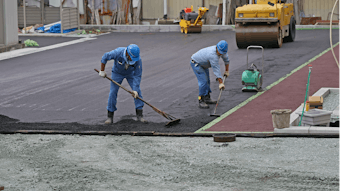
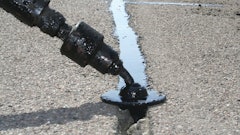
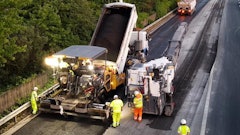
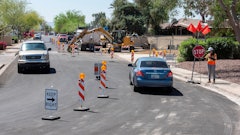
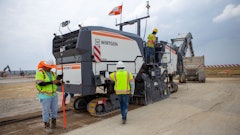
Rice and the Kent County Road Commission's preservation approach is to apply appropriate preservation treatments to roadways that are in good or fair condition to preserve the quality of the structures, as well as extend the life cycle of the structures. Preservation practices currently used in Kent County include crack sealing and patching, microsurfacing, chip seal, and thin hot mix asphalt overlays.
Since implementing a preservation program, the Commission shifted investment dollars from construction/expansion to preservation, and overall road conditions have improved significantly. In 1999, 29 percent of the county's road system required reconstructive work. In 2003, only 13 percent of the county's system was designated as a reconstruction candidate. By 2008, Rice projects that only 2 percent of the system will require reconstruction. But what's more significant about the preservation approach being used is that approximately 80 percent of the county's road system will be in good condition and remain in good condition for years to come.
'Best Practices'
Currently eight of the proposed 13 Midwestern states that were invited to join MPPP have made the commitment to do so, and representatives from their respective road agencies briefed MPPP conference attendees on their current preservation efforts. Some have extensive preservation programs, like that of Kansas, while others are in their infancy in implementing a preservation approach.
Minnesota spent $32 million on pavement maintenance in 2004, covering 2,900 lane miles (10 percent of its system) with preservation surface treatments like chip seal and microsurfacing.
Michigan has established a warranty program to monitor and police pavement maintenance contractors working on state-funded preservation projects.
Kansas' 20-year-old pavement management program continues to evolve as preservation proponents strive to put 72 percent of the state's road system in good condition. Kansas' preventive maintenance program is "ride oriented," which means if a preventive maintenance action can improve the ride for motorists, then it's approved.
Montana's annual $40 to $50 million preservation budget is let to projects that comply with the state's DOT's Guidelines for Nomination and Development of Pavement Projects.
Indianna utilizes its Pavement Management Groups to provide a systematic way of recommending, reviewing and approving proposed preservation projects. While the state's pavement preservation program still requires a lot of work in getting local, district and central DOT offices to agree on what, when and where the approach makes sense, a substantial portion of the state highway construction budget is earmarked for pavement maintenance/preservation.
North Dakota, on the other hand, is just starting to develop an investment strategy that will support a preventive maintenance program as a good investment in preserving the state's infrastructure assets.
Missouri is still operating in a reactive "worst first" mode in maintaining its road system. The DOT is currently trying to educate the public, as well as internal customers, on the benefits of initiating a preventive pavement maintenance program.
Illinois DOT recently initiated its pavement preservation approach by approving 27 project locations (three per each of its nine districts) to begin evaluating how preservation techniques like microsurfacing, chip sealing and slurry sealing extend the life cycle of its roads.
Moving forward
Through the Transportation Pooled Fund Program (TPF), MPPP hopes to develop national protocols for pavement preservation and publish those protocols as AASHTO standards to improve the overall quality and treatment performance.
According to Larry Galehouse, NCPP director, "two overwhelming issues" were designated as top priority by MPPP members. First, MPPP directed the NCPP to post on its web site various state specifications regarding preventive maintenance preservation techniques. The hope is to establish some standardized preservation practices that will eventually become uniformly accepted by road agencies throughout the Midwest and eventually the country.
Also, once funding has been released from TPF, which is sponsored by FHWA, AASHTO and the Transportation Research Board, the NCPP will begin to collect data on preservation research that various states have conducted to this point. The intent is to identify duplication of research efforts to better identify what type of research needs to be done.
The MPPP will continue to meet on an annual basis to discuss and exchange information on sound preservation practices, as well as provide training to implement successful preservation programs.
Two other preservation partnerships, one in the Northeast and one in the Southeast, are in a formation stage, and Galehouse anticipates the synergies to be gained by additional regional groups will benefit the overall objectives of all involved in pavement preservation.
For more information on MPPP, contact Larry Galehouse at the National Center for Pavement Preservation, 517-432-8220 or www.pavementpreservation.org.