With construction crews around the country geared up for a long, hot, busy summer, many firms and businesses are thinking “safety.” But one safety issue that’s often overlooked is sun exposure. Working in the elements is part of being a construction worker, but it doesn’t mean you should forget about protecting yourself or your workers from this potential safety risk.
Cynthia Babbitt, a safety specialist in small business outreach, believes most individuals don’t think they’re vulnerable to the sun. For that reason, they make the mistake of not worrying about the amount of sun exposure they may get on the job.
“There’s a lot more stuff in construction that’s killing people more overtly than sun exposure,” says Babbitt. “There are falls, being squashed by equipment and machinery and trenching and shoring cave--ins. People die more frequently from those things than they do from sun exposure.”
But the risks associated with sun exposure are real and immediate. “Heat stroke, heat exhaustion, severe sunburns -- those things wear your people down and decrease productivity,” Babbitt points out. “When you’re worn down and tired in general, you’re more prone to have an accident.”
Dr. John DiGiovanna, a dermatology professor at Brown Medical School and an investigator at the National Cancer Institute, notes that skin cancer and other long--term effects of the sun are very preventable. Just as worker protection against ear and eye damage is commonly practiced, skin protection from ultraviolet radiation should become common practice, too.
“People are becoming much more concerned about risks associated with their occupations,” he says. “And in this situation, protective measures are available. Sunscreens are easy to use, they’re an inexpensive cost and they work.”
Short--Term Risks
It’s important that your crews be aware of the dangers of the sun and how to avoid risks. A.J. Scardino Jr., Ph.D., PE, SHHOFI, CIAQP, CPCM, CHCM, CFEI, CFII, CSSD, is president of Sigma Associates LTD., a Mississippi company that provides health and safety training to businesses and municipalities. He emphasizes the importance for workers to stay hydrated. He also notes that many businesses and municipalities lessen sun exposure risks by starting workdays early in the morning and ending them by early afternoon.
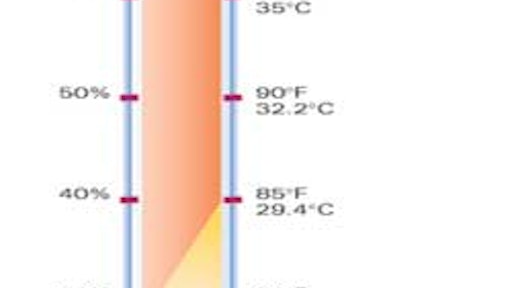
Scardino advises referencing The Heat Equation chart shown below. This chart assesses heat risks by showing the relationship between temperature and humidity on the body’s ability to cool. He explains that evaporation of sweat on the skin’s surface helps to cool the body. “It’s important that you perspire,” says Scardino. “The body senses the rise in the core body temperature, runs blood to the surface so it can be cooled, then brings the cooled blood back into the body core where it can help cool the body down.”
When this system can no longer keep up, heat stress occurs. Some of the symptoms include headaches, dizziness, weakness, irritability, confusion and nausea. If someone believes they are suffering from heat stress, they should seek shade or go indoors, drink water and apply a wet cloth to the skin.
Scardino warns that heat stress can manifest into heat stroke, which could cause permanent damage or death. “Heat stroke is critical. When a heat stroke occurs, the individual should immediately be moved out of the sun to a cool place,” he says. “They should be cooled down by any means. The key areas to cool down on the individual are the armpits and groin, because these are where the heaviest blood vessels flow.”
Scardino emphasizes the importance of education throughout a workforce to guard against heat illnesses. “The most important thing is to know what to look for and to ensure that your co--workers know what to look for,” he advises. “If you go down and everyone just stands around gawking at you and they don’t know that you’ve had a heat stroke, you could die.”
Long--Term Risks
The sun exposure you get this summer can contribute to premature aging, wrinkles and pigment irregularities (sun spots, liver spots) in years to come. Sun exposure can also lead to skin cancer.
Each year, 1 million Americans are diagnosed with skin cancer, with research showing a direct correlation between UV radiation exposure and this condition. The two most common types of skin cancer are basal cell and squamous cell carcinoma. Melanoma is a far less common but more deadly type of skin cancer.
The American Cancer Society estimates that some 55,000 new cases of melanoma will be diagnosed in 2004. Nearly 8,000 people are expected to die from melanoma this year.
Many factors put people at risk for skin cancer. People with a fair complexion and light--colored hair and eyes, numerous moles and a family history of skin cancer are at a higher risk than others. But another large factor in skin cancer risk is lifelong ultraviolet radiation exposure. Dr. DiGiovanna notes that people who work in the sun every day are at a far higher risk to get skin cancer. “People who work outdoors get a huge amount of lifelong sun exposure because they’re spending every day getting ultraviolet radiation exposure,” he says.
Dr. DiGiovanna emphasizes the use of preventive measures for avoiding skin cancer and other conditions related to ultraviolet radiation. He adds that prevention is easy, and is really only a matter of covering up and using sunscreen. “The same way people get up every morning and brush their teeth, outdoor workers should get up every morning and put on their sunscreen,” he says.
Babbitt notes that it might be difficult to get construction workers to guard against the sun, but employers should encourage this behavior. “It could be hard to convince a construction worker to wear long pants, long sleeves, a broad--brimmed hat, sunscreen and sunglasses,” she admits. “People believe they are cooler when they’re wearing fewer clothes, but they don’t account for the evaporative cooling that happens when they wear light--colored, loose clothing.”
Five Sun Safety Tips
1. Cover up. Wear light clothing that covers as much skin as possible. Wet clothing is less effective in blocking UV rays, so bring an extra shirt to work.
2. Use a sunscreen. Cover exposed skin with an SPF (sun protection factor) of at least 15. Reapply sunscreen every two hours, or more if you are sweating a lot. Don’t forget a lip balm with sun block in it.
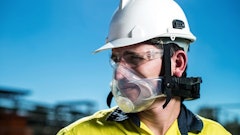
3. Wear a hat. Two--thirds of skin cancer cases occur on the neck and head. Full--brim sun shields and cloth neck shields are widely available attachments for conventional hard hats.
4. Wear eye protection. Protect your eyes from sun damage by wearing sunglasses or safety glasses that block UVA and UVB radiation. UV protection comes from an invisible chemical applied to the lenses, so dark lenses are not necessarily the best -- make sure you check labels.
5. Avoid direct sun exposure. UV rays are the most intense between 10 a.m. and 4 p.m. If you must be in the sun during these hours, take breaks in the shade, use proper sun protection and drink water and sports drinks that replenish electrolyte levels.
Source: U.S. Department of Labor, Occupational Health & Safety Administration