Contractors need to see the value of preventive maintenance, or they won't do it," says Larry Spring, Northeast product support manager for Ingersoll-Rand. "It is cheaper to maintain your equipment than to repair or replace it."
Not only that, but well-maintained equipment makes you more productive and results in a better job. So the tips in this article are designed to help you keep your equipment operating — and operating at peak efficiency — throughout the season.
"One of the most commonly overlooked procedures in paver maintenance is the daily care," Spring says. "The time spent doing preventive maintenance is the best money the contractor can spend all day."
Keep Your Paver Producing
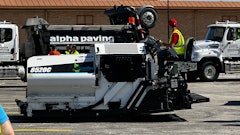
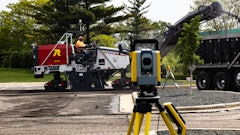
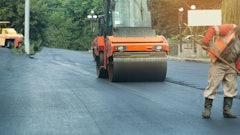
Mark Bolick, LeeBoy product support manager, says that if a paver is not regularly serviced and properly maintained, the chances of major problems occurring can go up significantly and productivity can decline. The machine might work — but not properly — resulting in a poor-quality mat that could cost the contractor more money in fines and repairs than paying for routine servicing.
At the start-up of each day, check fluids (engine oil, hydraulic oil, transmission fluid, and engine coolant), check that the battery is filled to the proper level, grease points, and check cables, torque hubs, hydraulic functions, and engine hours.
Also check the following:
Conveyor chains. These are the most expensive wear item on a paver and Bolick says hours of use and tonnage generally will dictate when these need to be replaced. Look for wear patterns on sprockets and chains, and make sure bars on the conveyor aren't bent. Also, make sure to adjust all chains to specifications. Conveyor chains that are not adjusted properly may make the drive sprockets wear prematurely or unevenly. Similarly, auger conveyor drive chains that are out of adjustment can jam the inside of the auger box, locking auger conveyors with asphalt.
"You can usually hear the chains jumping or snapping during operation if they are loose," Spring says. "For example, when auger drive chains come loose, you can hear them slap the inside of the box after the conveyors are turned on."
Clutch or drive plates. Check every 500 hours to make sure all are tight and adjusted. A clutch that is not serviced or properly adjusted can slip; if the clutch fails completely, there will be no hydraulic flow to drive the traction system or conveyor, and the machine must be towed.
Wear plates on augers. As wear plates get smaller from wear, they won't move material as efficiently. Visually inspect these regularly.
Auger/conveyor drive chain. Check the tension on the drive chain: With the paver shut off, grab the outer end of the auger and twist. There should be no more than 1 in. of play or movement in the auger. Also inspect the auger sections for wear.
Screed plate. As the plate is used, it will get thinner (you can see it). If it gets too thin, holes will appear and that will begin to affect the mat.
Service the screed. A screed not properly serviced can heat unevenly, damaging the frame or screed plate.
End gates. End gates wear just like a screed plate; change before thinning affects mat quality.
Track rails. Monitor for cracks or other wear signs; check rollers too.
Hydraulic hoses. A loose hydraulic hose pulls air into the system, causing damage to the pumps and the entire hydraulic system. If you notice increased noise during operation and/or the oil becomes foamy, you might have a loose hose.
Lubrication. Follow the manufacturer's schedule. Daily, check level of hydraulic fluid, engine oil, radiator, and grease push rollers and pivot bearings. Weekly, clean and grease screed extension slides, and grease screed depth cranks and pivot points. Lubricating at the end the day while the machine is warm ensures that lubricant reaches all critical points.
Clean paver daily. Daily cleanup can increase the life of components in material handling areas and reduce many mat problems. So manufacturers recommend the paver be cleaned after each shift, especially any parts that can be damaged by constantly working with extreme temperatures and extremely abrasive materials.
"Cleaning a machine each day is easier than cleaning asphalt off after it has hardened," says Keith Hofer, service manager at Gehl Power Products' Yankton, SD, plant.
Abrasive materials, which accumulate in sprocket, bearing, auger and conveyor areas, increase the stress on all components and accelerate wear. Cold paving material can break loose and produce tears in the mat as they pass under the screed.
Hofer suggests applying a release agent any place asphalt would touch, most importantly on the bottom of the screed and in the hopper.
Keeping Sealcoating Rigs Operating
Steve Rapp, manager, equipment division, SealMaster, says vigilant contractors can make sure their sealcoating equipment produces as efficiently as possible.
Reduce buildup in tank. "You can get a buildup of 1/2 in. to 1 in. thick or even more because the tanks get hot from being in the sun," Rapp says. "If the buildup is too thick the sealer dries and falls off into the tank and can plug up the intake." Open the lid and using even a regular garden hose, spray down the walls inside the tank once or twice a year to knock off the buildup.
Monitor the agitation shaft. "Sometimes the agitation shaft starts leaking and once the sealer leaks into the bearings they're ruined," Rapp says. "So any leakage, where the shaft comes through the bearings, should be taken care of immediately. Sometimes you can simply tighten the bolts. Other times you have to remove the bearings and replace them and put a new shaft seal in."
Keep tank lids vented. Plugged vents mean the pump won't pump properly; on a gravity flow tank the material won't flow smoothly.
Keep spare parts on hand. Bill Grauer, Bluegrass Sealing & Striping, Louisville, KY, says he is able to keep his sealcoating crews running partly by keeping extra spare parts on hand.
"Anything that's wearable is going to get you sooner or later and that's what we stock," Grauer says. He says he orders two sets of parts for his diaphragm pumps, including two diaphragms, four balls, four seats.
"I run 30,000 to 60,000 gallons of sealer through each truck with 2 1/2% additive and 4 lbs. of sand per gallon in the mix," he says. "If I have the parts in stock I can tear a pump down and have it back in service in 90 minutes."
David Lewis, Moore Seal Inc., Kirkwood, DE, keeps extra ball valves on hand, including spares on each truck, "because the sand really eats them up." He recommends buying quality ball valves because the cheap valves will split and leak quicker because of the sand.
"If you pay more money it's worth it because the higher-quality ball valve will last three or four times longer than the cheaper valve, meaning you have to spend less time changing the ball," Lewis says.
He says contractors should replace the ball valves periodically, such as on a rainy day when the crew has downtime. "If a ball valve doesn't break and it's about time, replace it anyway because you know it's going to."
Lewis says one way to know a ball valve needs to be replaced: If a wand leaks when you lay it down, the ball valve needs to be replaced.
Keep filter baskets clean. Lewis recommends cleaning the filter baskets at least twice a week. "There's nothing worse than getting out on a job and the pump starts starving," he says.
Taking care of your striper
"Clean, clean, clean." That's what Craig Treon, general manager at Kelly-Creswell in Xenia, OH, says. "A striping machine is just like an expensive paint brush — if you want to use it again, you've got to clean it."
Treon says cleaning and regular maintenance on striping machines is essential to keeping money coming in, and he is echoed by Rob Krommendyk, product line manager for truck-mounted paint stripers at EZ-Liner Industries, Orange City, IA.
"Lack of summer maintenance and attention to potential breakdowns can cost the striping crew hundreds of dollars in down time alone, not to mention the added cost of repair," Krommendyk says.
To keep striper running well:
Clean tips and nozzles daily. Use techniques recommended for the specific type of paint you use. "And use clean paint," Krommendyk says. He says straining paint before use is recommended for smaller striping machines but is not normally needed for larger machines.
Change filters. "Since paint is being sprayed so closely to a machine's engine or compressor, the engine draws in overspray, and that clogs filters pretty fast," Treon says.
Protect equipment. Spray components with oil to prevent over-spray sticking to them and to allow a thorough cleaning at the end of the day by simply wiping with a clean cloth.
Tape over gun hole when not in use. On rainy or humid days, taping over the exhaust hole of automatic striping guns overnight or during storage will prevent moisture from entering the chamber, which can lead to rust and corrosion around the diaphragm.
Avoid partial flushing of lines. Since latex paint is formulated to dry in high humidity, adding water can actually accelerate the drying process in the paint lines, causing plugging and build up.
Jim Lunay, JCL Equipment Inc., Xenia, OH, has a slightly different philosophy on striper maintenance.
"For people who are rookies, I tell them to clean their machines every day," Lunay says. "But if people are experienced stripers, I tell them to fill the tank up with paint and leave it sit overnight. People familiar with striping equipment don't often have maintenance problems. An experienced striper will know where to look for that clog."
Lunay does say, however, that even the experienced striper should check the oil, engine, and compressor every morning. Weekly they should drain moisture from the main air tube and blow out the intake filter on the compressor. He also suggests shooting wheel grease in the wheel bearing every three to four months.
Maintaining Crack Repair Equipment
Like other equipment, crack filling machines face long hours, dirty conditions, and extremely hot temperatures. Manufacturers encourage contractors to follow the maintenance schedule included with equipment as the easiest way to prevent breakdowns. "Keep track of your machine's hours and then the maintenance program will tell you what needs to be taken care of at any given time," says Marty Drinkwine, Cimline technical advisor.
A good example is the equipment's heat transfer fluid. As the fluid heats up and then cools down it picks up dirt, causing it to lose its heat transfer ability. "The oil itself will actually break down and lose the ability to transfer heat to the material," Drinkwine says. "It will still get up to the right temperature but the process will be slowed. It won't be as efficient as when the transfer oil was new."
Crafco recommends checking heat transfer oil (and hydraulic oil) every 8 hours and changing it at least every 500 hours. Cimline suggests changing heat transfer oil "about once a year" or somewhere between 750 and 1000 hours of use. Crafco recommends changing hydraulic filters every 250 hours.
- Daily checks: All fluids (add if low), the exhaust, fuel filters, air cleaners, hose and cover, hose connections, and material system (clean it out).
- Weekly: Check fluids, including the heat transfer oil and hydraulic fluid.
- Material pump packing. As you pump material out of the hose you're putting pressure on the packing gland. Crafco notes that the packing of the pump needs to be snug — but not too tight. Some drippage — several drops a minute — are necessary for the pump to function effectively. If material is dripping more than that, the packing needs to be tightened. Too tight and you cause premature wear, slow down the pump, and make it less efficient. Too loose and material will leak out.