Today's skid steers are not "your father's Oldsmobile," so to speak. They’re bigger, more productive and they come with a heck of a lot more features than the machines of yesteryear. The question is, how much do your customers really need from the skid steers they rent from you?
"Customers buying a skid steer for themselves tend to want more bells and whistles," states Curtis Goettel with Case. "So they’ll go with a higher horsepower and more expensive control systems to make it easier on the operator. If they’re buying it for other people to run, they tend to be more interested in keeping it simple."
That being said, there are two distinct types of rental customers in the market for skid steers: the smaller contractor/weekend warrior who rents for a day or a week, and the longer-term rental going to bigger contracting firms. "The difference is really obvious in this economy," says Goettel. "Lots of companies that used to own their skid steers are now renting, and those customers want larger machines with more features."
Still, the lion’s share of skid steer rentals are the 1,300 to 1,800-pound machines going out for shorter-term periods. "Those machines are easy to operate, easy to fix and hard to break," says Goettel. "Without a lot of extra features, rental businesses can easily recover their cost." Larger skid steers, like those with over 2,000 pounds of rated operating capacity, are the ones that tend to be outfitted with the most options.
Back to basics
"In rental, most skid steers are equipped with the basics," says Kelly Moore at Gehl Co. "They come with the most common type of controls and without too many options."
There are some features, however, that offer a lot of value, some at very little additional cost. Here’s what most manufacturers listed as "must-have" options for skid steers in rental fleets.
Choice of control patterns – The ability to switch between standard mechanical hand/foot and hands-only H-pattern controls is highly valuable in rental. Customers are often only comfortable using the control pattern they’re used to and do not want to struggle with learning a new one.
Leading skid steer manufacturers today also offer electro-hydraulic (EH) joystick controls that operate in the ISO control pattern, along with packages that allow the customer to switch the controls from standard ISO configuration to an H-pattern configuration.
"Electro-hydraulic joystick controls are very popular with customers looking to reduce operator fatigue by providing low-effort controls for all machine operations right at your finger tips," states Gregg Zupancic at John Deere.
The cost of adding this feature to your skid steers can be significant, however, but customers who enjoy using equipment and are effective at completing their jobs will be more likely to return to your business to rent again.
"It will cost a few thousand dollars," Goettel says of EH controls. "On larger machines, it’s a no-brainer, but on smaller machines, there might a 25-percent overall cost increase."
Cab enclosures with heat – Most skid steers in rental fleets are spec’ed without cab enclosures, but they're seen more often in northern states. This option can significantly increase the cost of the unit, but in regions where it gets cold and snowy in the winter, it can be a really attractive option. In warmer climates, it might make sense to choose a cab with air conditioning, but this is a luxury in rental fleets.
"In a really hot climate, you may be able to charge extra on rental fees for offering air-conditioning in skid-steer loaders, and it can help with resale," notes Greg Rostberg at Bobcat.
Severe-duty/solid flex-style tires – You never know where your customer is going to be using your machine or what for, and tires can be quite costly to replace. With this in mind, it makes sense to choose severe-duty or solid flex-style tires that can't go flat. Available in different treads to suit various applications, upgrading to this option not only enhances the performance of the skid steer, but also guarantees no downtime due to flats.
Block heater – In colder climates, it's a good idea to outfit your skid steers with a block heater that will enable the engine to start easier when the mercury takes a dip into the single digits.
Backup alarm – Standard on some models – and almost a no-brainer – it's important to spec your skid steers with an audible backup alarm that lets bystanders know when the machine is moving in reverse to ensure the safety of everyone on the jobsite.
Attachments – "A skid steer is really a power unit for attachments," says Goettel. "Most owner-operators will buy an average of 2.6 attachments for each skid steer they purchase. In rental, they might buy as many as six attachments per skid steer." To meet all your customers‘ needs, it pays to offer a wide array of attachments to go with your skid steer fleet.
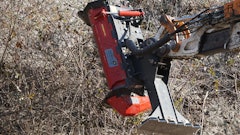
At the very least, it’s wise to offer a replaceable cutting edge on each bucket to prolong its life, Zupancic says, adding, "Other features to consider include a self-leveling bucket, Power Quik-Tatch and occasionally a high-flow hydraulic option if the customers are using some of the more hydraulic-thirsty style attachments, like cold planers, mulching heads or snow blowers."
ROI – The ultimate goal
At the end of the day, the number-one goal for your skid steer fleet is to achieve the highest return on investment in the shortest period of time. As such, it doesn’t make sense to option your fleet with a lot of deluxe features if your customer base is interested mostly in short-term rentals.
"Rental businesses would like to maximize their return on investment, so, for the most part, their machines are no frills," says Moore. "But it’s dependent on what region you’re in and your customer base. The more options you add, the more it will cost, but the better the resale will likely be. Also, if your customers really prefer a certain feature, it might be worth it to make the investment."
Rostberg agrees, adding, "They would have to make a lot of new sales out of it to recoup those option fees. However, when it comes time to sell a machine, options can be helpful."
With or without the extra bells and whistles, skid steers are constantly evolving to provide operators with more and more performance and comfort, and you can expect that trend to continue. “We expect machines to get easier to operate and help customers to get their job done more accurately and faster,” Zupancic says. “In the future, we expect to see manufacturers taking advantage of the drive-by-wire technology of EH joystick controls by integrating more push-button automatic features. These could include technologies that allow the machine to recognize previous operator settings, help the operator control the machine more precisely around the jobsite, or automatically move the machine into the right position to complete a task. In the future only the sky is the limit for new features and options that help improve a customer’s productivity, uptime and at a lower daily operating cost.”