Have you ever signed a construction contract you wish you had read before signing? Often times, general contractors and subcontractors are so excited to get a job they'll sign anything put in front of them. As a general contractor, I often see subcontractors sign our lengthy twenty page subcontract without reading it. What if it contained clauses making it impossible for them to get change orders approved or win contractual disputes in court or give up their rights?
Do you read your contracts?
Many contracts I have been asked to sign contain many unfair clauses which would make it impossible for us to get paid in a timely manner, finish the project per the plans or make any money. We were once asked to sign a general contract including a little clause hidden in the fine print: "The owner has no obligation to pay unless the bank funds the payment." Luckily, before signing, we read the contract, met with our customer and agreed to have the unacceptable payment clause changed to: "The owner is liable to pay for the work regardless of whether the bank funds or not."
Unfortunately, most contracts and subcontracts aren't awarded until the last minute when the project manager finally gets around to awarding them and gets them typed or permits are ready or the funding is in place and the loan has recorded. This usually happens the day before your crews and subcontractors are needed out on the jobsite. Pressure is on to get started as fast as possible and sign the contract later. With this happening, there is never enough time to read the contract in detail, have it reviewed by your attorney and then negotiate all of the unfair clauses before you start work. Signing construction contracts for new buildings, remodels or improvements without agreeing to all of the clauses in advance is like getting on an airplane without knowing where it's going or if it has enough fuel to get to your final destination.
Contractors and subcontractors must take the time and effort to review every contract before signing them. Don't sign what you haven't read or agreed to. The old saying: "Trust me!" doesn't work in your favor very often. For every project, large and small, go through each step of the following checklist before putting your pen to paper and celebrating a new job to start.
Contract Signing Checklist
1. Review your bid
When you get called that you are the successful bidder, don't get excited and put the cart before the horse. Before gearing up to sign a contract or start work, review your bid carefully. Have your bookkeeper check the math. Have your field superintendent and foreman check the labor and equipment figures. Call your major suppliers and subcontractors to confirm their bids. Remember, only you decide if you will sign the contract and agree to all the terms. If all looks good, go on to the next step.
2. Review complete plans
General contractors and subcontractors don't always get to see the complete set of plans, specifications, addendas, general conditions, proposed contract format and complete contract documents when asked to submit their bids. Before signing a contract, review all plans and project documents including: architectural, structural, civil, plumbing, mechanical and electrical plans; soils reports; addendum's; finish schedules and the City conditions of approval.
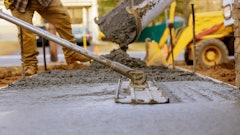
A general contractor told me about an office building project he built where there was a conflict between the different project plans. The site concrete subcontractor poured the curbs, gutters and sidewalks exactly as shown on the civil-grading plans. The next day, the architect asked the job superintendent if the rebar called out on the architectural plans and in the soils report had been installed in the freshly poured sidewalks. The contractor and field superintendent had never cross-checked the civil plans with the architectural plans or soils report. In addition, the architectural plans were never issued to the site concrete subcontractor. Who's fault is this? The general contractor tried to blame the subcontractor for this problem, omission and remedy. The subcontractor claimed they were not aware of the rebar requirement in the walks. In the end, the general contractor was forced to remove all the sidewalks and repour them with the required rebar steel at a cost of $40,000. Was saving $50 by not giving the subcontractor a complete set of plans worth it? Never - Never - Never sign a contract without reviewing the complete set of plans.
3. Review all specifications
Because specification books are often three inches thick, many contractors only read the section that affects their trade. It is imperative, however, to review all specification sections before you sign a contract. You are contractually liable for all requirements included in the complete document. The general conditions section, for example, contains contractual requirements for jobsite safety, submittals, cleanup, change orders and how to get paid.
On a new school project several years ago, an asphalt paving subcontractor got a call from the project superintendent that the locker room floor was ready to pave. Unfortunately for the paver, the asphalt flooring was called out in the finish schedule section of the specifications and not shown on the civil or site plans. A complete set of plans, specifications and the finish schedule would have eliminated this problem. Never - Never - Never sign a contract without reviewing the complete specifications.
4. Visit the jobsite
Always send your field superintendent to the jobsite to look for any unforeseen conditions, conflicts with the project plans and logistic concerns that can cause you grief later. Every job looks different in person than they do on paper. Things to consider include:
- Access
- Parking
- Mobilization
- Staging area
- Power availability
- Phone availability
- Water availability
- Project office location
- Storage yard access
- Soil conditions
- Demolition required
- Clearing required
- Neighboring property
- Protection Required
- Hazards
- Street improvements
- Location of underground
5. Review the job schedule
Before committing to any project, make sure you completely understand and agree with the project schedule. Lost job profits generally can be attributed to improper scheduling of crews, poor supervision and lack of field coordination. And a schedule that's too optimistic will result in a crunch at the end of the project which costs everyone money. Be careful to verify your major subcontractor and suppliers can man the project to meet the schedule. Look for delay and damage clauses contained within the contract. Also, look at how delay charges will be transferred through to subcontractors if they don't perform. Consider issues like weather delays, strikes, material shortages, etc. when reviewing every contract. Verify how you can remedy situations where you are being delayed by the project owner or a subcontractor not performing as well.
6. Complete a project checklist
When reviewing construction contracts, use this simple project checklist so you and your project team won't overlook important items. On the list be sure to include
- Scope of work
- Inclusions & exclusions
- Plans & specifications
- Project schedule & manpower
- Insurance requirements
- Bonding requirements
- Payment procedures
- Cash flow requirements
- Person(s) authorized to sign
- Change order procedures
- Dispute resolution methods
- Notice required on issues
- Delay, claims & protests
- Request for information
- Shop drawings & submittals
- Meetings required to attend
- Safety requirements
- Permit requirements
- Site access, logistics & parking
- Special tools & equipment required
- Contract close-out procedures
- Final payment procedures
7. Verify project funding
Every general contractor and subcontractor has the right to know that projects have adequate funds to complete them plus a reasonable reserve for unforeseen changes and contingencies. So, always ask for proof of funding. It can be awkward to ask, so I often tell customers that my banker or bonding company won't let us sign a contract without assurance there is money set aside to complete the project. Doing jobs without getting paid isn't any fun.
8. Read complete contract
Signing a contract prepared by someone else can be scary. The days of a handshake contract are long gone. Today, contracting Is About contracts! If you don't understand what you are signing, you won't stay in business very long. Many contacts contain clauses that are one-sided and unfair. Carefully look over contract clauses dealing with such issues as:
- Payment, retention & pay when paid
- Indemnification
- Authorizations, notices, approvals & administration
- Conflict resolution and disputes
- Arbitration vs. court
- Schedule issues: Failure to perform; Delays and weather; Acceleration & termination; Liquidated damages
- Change orders & back-charges
- Cleanup & supervision
Every construction company must have a good construction attorney. Meet with your attorney at least twice a year. List out the most important "red-flag" clauses to look for and decide what you will and will not sign. Remember, you have the right to sign only what you agree with. Never sign an unfair contract. If you are being asked to sign something you feel is unfair, meet with your customer and negotiate fair terms agreeable to both parties. If they won't budge, it is your choice. Weigh the risk of signing and agreeing to clauses that are unbalanced and then make a decision based on a clear understanding of what you are in for. Some contractors review a contract and then cross out the inappropriate clauses or change what they don't agree with, initial the changes and then sign the contract. This is not a guaranteed way to win a dispute and in some states this practice will not hold up in court.
9. Execute contract
The construction business is risky enough without unfair contracts. So, before you execute any contract, follow thesenine9 steps and start out every project on a fair and level playing field.
George Hedley is a professional business coach, popular speaker and best-selling author of "Get Your Business to Work!" and "The Business Success Blueprint For Contractors" available at his online bookstore. He works with business owners to build profitable growing companies. E-mail: [email protected] to request your free copy of "Winning Ways To Win More Work!" or sign up for his free monthly e-newsletter. To hire George to speak, be part of his ongoing BIZCOACH program, or join one of his ongoing Roundtable Peer Groups, call 800-851-8553 or visit www.HardhatPresentations.com.