If you want to create a culture of safety on your jobsites, clear communication is the starting point. When it comes to safety, too many managers and workers do not have any idea what Experience Modification Rate (EMR) means or what their company's EMR is. Most importantly, too many managers and workers do not understand how they can positively impact their score.
What follows is a two-step process to simplifying the EMR equation.
STEP 1: Lose the Corporate Jargon
Experience Modification Rate.
What does that mean anyway?
It's a rate, a mathematical factor, that is modified by an experience. OK. That tells me nothing. What experience? It reeks of corporate business speak. It's the type of phrase that seems to be hiding something.
Google "EMR rating" and the first non-Adwords link directs you to Brandenburg's Project Safety page. Here is their definition:
"Experience Modification Rating (EMR) measures worker compensation claims. Maintained exclusively by the insurance industry, EMR is the objective measurement of each employer's claims experience."
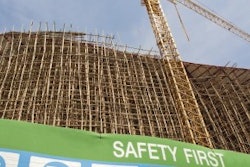
Aha. The rate is modified by the claims experience. But you don't experience a claim. You experience Disneyland, food poisoning, the Super Bowl, and a scaffolding collapse while you're tuck-pointing 30 feet in the air. You don't experience a claim.
What generates a claim? An injury or death - that's what. Someone experiences an injury or death… and that leads to a claim. But the experience is not the claim.
To simplify things, I propose we banish "EMR" to the quants at the National Council on Compensation Insurance (NCCI), the ones doing the calculations. But on the jobsites and within the walls of our own companies, let's start calling it our "R.I.D. Rate," the Rate of Injury and Death.
Call it Experience Modification Rating and the most common answer is, "Uh, I just know we are under 1.0." Call it Rate of Injury and Death and I bet people will know exactly where it stands.
Don't underestimate the impact of the words we choose. The words we choose set the tone for our behavior.
Calling it the R.I.D. Rate would also lead directly to the conversation about what we are actually getting rid of: money, productivity, focus, days on the schedule, and OSHA compliance. And let's not forget some other things we're ridding: good workers and deep sleep for the families of the injured workers.
STEP 2: Create a +/- statistic for everyone on your job
Now that we have a straightforward name for the rate with which workers are injured or killed doing a given job for a given company, let's break it down a bit further. Because as the saying goes, "What gets measured gets managed".
A common complaint I hear about the artist formerly known as EMR is it is too broad. EMR doesn't help pinpoint those individuals that are behaving in an unsafe manner.
I'll ask a dumb question: Why can't we statistically track the safety record of each individual? Why can't we create a Safety +/- statistic for every employee?
In hockey and basketball, the +/- stat is tied to team performance. The "Plus Minus" stat tracks the differential in terms of gain (plus) or loss (minus) while a certain individual is in the game. For example, Harry Carpenter comes into the game and the score is 20-20. He leaves and the score is 34-30. The game was tied when Harry entered. Harry's team was up by four points when he left. "Plus 4" for Harry Carpenter. While he was in the game they improved their lead by four points.
In theory, we can do that in construction too, right?
Harry Carpenter comes on the job and on average, an injury occurs around him once every 220 working days. Henry Hammer comes on the job, performing the same job as Harry Carpenter, and an injury occurs around him once every 350 working days.
How would this help? Well, with this data in hand, you'd be able to ask some interesting questions.
- Which individual has the lowest +/- rating? Why?
- Which foreman has the lowest +/- rating? Why?
- Which crew has the lowest +/- rating? Why?
What combination of individuals on a certain job gives you the optimal balance of talent, efficiency and safety?
If you knew this number for all your employees over the past five years, what would you do differently?
Moneyball Comes to Construction Safety
Brad Pitt's Oscar-nominated movie, Moneyball, is a story about looking at the same set of data and coming to different conclusions than everyone else. It's a story about leaders having the conviction to veer away from the way it's always been done. In Moneyball, Pitt's Oakland A's bottom line for evaluating talent was their ability to get on base. They understood there were 27 outs per game. Outs were finite, limited, precious. Players who made the fewest outs were going to play - somewhere. Despite the logic, it was heresy in the early 2000's.
In a hyper-competitive construction market with razor thin margins, your bottom line is, well, your bottom line. If you are paying higher premiums because your people get injured more often than your competitors, your cost of doing business is higher.
You can lower your cost of doing business by making every employee accountable for safety. Not just their own safety but everyone on the job.
This two-step program is far from a pre-packaged solution. There are lots of holes in the argument. But don't get defensive: Consider this a formal challenge. A challenge to create individual accountability for safety.
Imagine for a moment, it's the year 2017 and we have a +/- stat for every employee. They carry it around with them like a construction-grade batting average. It's a mathematical reflection of the likelihood of someone - anyone - getting injured or killed on the job while he is there.
How did we do it? What obstacles were overcome?
We continually talk about developing a "Culture of Safety," how we must look out for the safety of others. Then why not track it? What gets measured gets done....
So dump EMR today in favor of the R.I.D. Rate. The language change alone will generate positive safety chatter. Then start a discussion about how we can develop an individual +/- Safety stat for every employee. Your bottom line and employees' lives are on the line.
And if the Oakland A's can do it… why can't you?
Bradley Hartmann is el presidente and founder of Red Angle - a Spanish language training firm focused exclusively on the construction industry. He can be reached at [email protected] and www.redanglespanish.com.