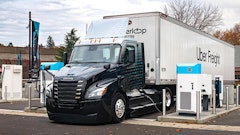
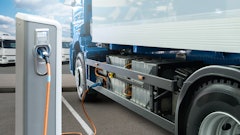
Regulatory requirements governing fuel economy, emissions and safety have turned today’s work trucks into rolling computers. At the same time, pressure to reduce operating costs has led manufacturers to add even more electronics to vehicles and truck equipment to improve operational efficiency. The net impact of these technological advancements is that fleet managers need to re-think every aspect of how they design, maintain and manage their fleets.
Embedded Technology and Beyond
Much of the technology that fleet managers are exposed to on a daily basis is embedded in the vehicles and equipment that they purchase.
This technology offers numerous opportunities to improve the way work trucks are designed and managed. For example, data that can be retrieved from vehicle powertrain control modules (PCMs) can be useful both in vehicle maintenance and in helping fleet managers design better, more efficient replacement vehicles.
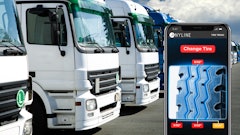
By adding telematics to vehicles, fleet managers can get real-time or near-real-time information on how their trucks are performing and can use that information to define individual vehicle drive cycles. The GPS tracking and geofencing features associated with telematics systems can be used to improve the operational efficiency of a fleet and to reduce fuel consumption, both of which directly help the bottom line. Telematics systems can also be used to influence driver behavior.
Other available technologies, both electronic and mechanical, may allow fleets to limit idling time, reduce rolling resistance, improve vehicle aerodynamics and reduce vehicle weight — all of which will improve a fleet’s fuel economy and may reduce maintenance costs.
Vehicle Upfitting
The productivity of a work truck is directly tied to the way it is designed and built. In many cases, truck equipment and component manufacturers now find it advantageous, if not necessary, to interface their products with the truck chassis. In the process, they can often provide features and capabilities that were prohibitively expensive, or even impossible, in the past.
Likewise, truck equipment upfitters are discovering that OEM components and system capabilities, which are often accessed through the vehicle’s multiplex wiring system, can help them upfit a vehicle more efficiently. The knowledgeable fleet manager leverages these capabilities when specifying new work trucks to both reduce upfitting costs and to improve vehicle productivity.
Most chassis manufacturers offer multiple upfitter component packages. One popular example is pre-installed switch packages in the dashboard that can be programmed to provide specific functionalities. This eliminates the need for the upfitter to work under the dash of a truck or to cut into the vehicle wiring system.
Remember that upfitter package availability and multiplexing capabilities vary between manufacturers, and from model to model. Fleet managers need to be knowledgeable of these variations and should evaluate the impact the variations may have on final upfitting costs.
In the Maintenance Shop
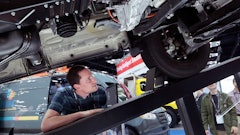
Technology makes it possible to track every replacement part that goes into a vehicle; a vehicle’s mileage and/or number of operating hours accumulated between failures; vendor part numbers for replacement parts; and very accurate maintenance labor costs. This data gives fleet managers the ability to:
- Accurately track failures by vehicle make and model.
- Track failures by both application and operating environment.
- Determine the mean time between failures for various components, tracked by vendor, part number and operational conditions.
- Optimize replacement parts inventory.
- Establish an accurate predictive maintenance program.
- Easily and accurately track maintenance costs by specific vehicle, make and model.
This information can then be used to further optimize vehicle specifications and make better purchasing decisions for chassis, vehicle-mounted equipment and replacement parts.
Let’s Go Even Further
As a fleet manager, it’s important to review your maintenance program every year. In the process, you will probably discover that you need significantly different maintenance schedules for vehicles based on their age. But again, computer technology can make it an easy task to generate multiple maintenance schedules based on individual vehicle requirements.
In the case of vehicles classified as “commercial,” government-mandated service intervals may become the controlling factor. The technology-driven improvements in equipment have led industries such as aviation and railroads to petition the government for adjustments in required maintenance and inspection schedules. There may be a similar movement in the commercial truck segment in the coming years as suppliers provide better and better equipment.
Be Proactive
The technology to improve your fleet’s operations is out there. Take the time to learn what is available and then determine how you can utilize it in your fleet. This means reading articles in trade magazines, attending trade events and talking to your peers. In many cases, you will have to sell your ideas to upper management, so be sure to do your homework before approaching them.
Keeping up with the latest technology developments and how they can improve your fleet operations is not easy. However, if you make the effort, you will likely discover that in the long run, it will make your job easier, reduce your costs and improve your operational efficiency. All in all, that is not a bad return on your time.
Want to Learn More?
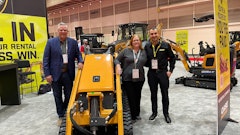
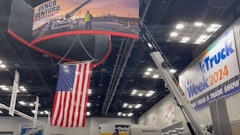
The technology applications mentioned in this article and many others will be addressed in educational sessions at The Work Truck Show 2013 or the associated Green Truck Summit in Indianapolis, IN. The Work Truck Show 2013 runs March 6 to 8, 2013, with educational sessions, including the Green Truck Summit, kicking off March 5.
For a complete Work Truck Show schedule, visit www.ntea.com/worktruckshow/. In addition to the educational sessions, more than 550 companies will exhibit the latest vocational trucks and technologies on the show floor.
Robert "Bob" Johnson is a former fleet manager and currently serves as director of fleet relations for NTEA, the Association for the Work Truck Industry.