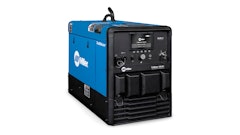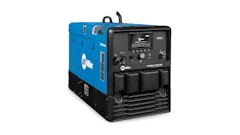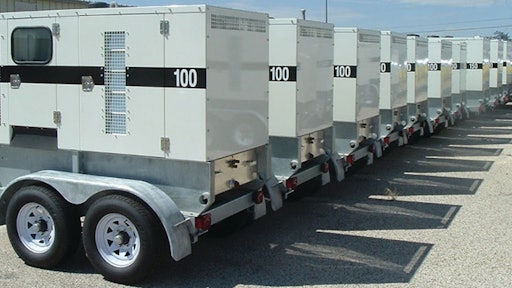
Generators can be indispensable for providing remote power to operate tools, lights, etc. on construction sites. And overall, they are a relatively safe means to that end. Yet, like any equipment, they can present safety concerns if used improperly.
Safe operation of any generator begins by reading the operator's manual. The manufacturer is the undisputed expert on the equipment, and companies typically employ a host of personnel to evaluate codes, standards and best practices for its generator models. After becoming well-informed, it's still important to be aware of the primary hazards associated with generator use so you can then help ensure the safety of your customers. Ask an electrician for guidance on local codes.
Avoid electrocution
Generators produce electricity, so be as careful with them as you would with any piece of electrical equipment. The electricity provided by a generator is exactly the same as that supplied by normal utilities and carries with it the same hazards for shock and electrocution.
Advise customers to exercise extreme caution when operation in wet conditions, such as when it's raining or snowing, and don't ever set the unit in water. They need to keep power cord connection points off the job surface (grass, mud, etc). Warn them to start or stop the generator only when no electrical loads are connected, and to avoid overloading the generator by trying to operate more equipment than its output rating allows.
Visually inspect cords. Make sure wires aren't damaged or crossed and check to ensure they're adequately insulated. Since overloaded cords can cause fires or equipment damage, check and point out the cord ratings to customers so they won't overload them by trying to draw more power than they're rated to handle. It's a good idea to restrict cord lengths to 50 feet or 100 feet maximum. Avoid laying cords in high-traffic areas, and use cord ramps to protect them. Always assume wires are energized or could become energized.
You can run the risk of operator electrocution if a generator isn't properly grounded. Grounding can be accomplished by driving a copper rod with a wire from the rod to the generator. The wire is then attached to a ground point on the machine. Some generators use an internally grounded neutral to the frame to ensure performance and personal protection. If in doubt, contact the manufacturer or dealer for help.
When selecting a generator, consider the available safety features. Many provide GFCI protection and covered outlets to minimize electrocution hazards. Some also feature additional guards, 110% fluid containment and emergency shutdown buttons and systems.
Carbon monoxide -- the silent killer
Because a generator uses a combustion engine, it gives off large amounts of carbon monoxide. This gas is dangerous because it's colorless and odorless, making it very difficult to detect. Because of this, it's very important to ensure your generators are properly ventilated.
The easiest way to ensure proper ventilation is let customers know they should never run the generator indoors or in an enclosed space of any kind, including garages, basements or crawl spaces. A well-ventilated room will not prevent the buildup of toxic gas. Also, when mounted outdoors they should be placed away from openable windows and doors, as even prevailing winds can blow engine exhaust through the openings. In addition, a generator should always be placed with 3 to 4 feet of clearance on all sides. This allows for air movement around the generator and helps increase ventilation and prevent carbon monoxide buildup.
Beware of fire hazards
Under normal operating conditions, generators become quite hot, which increases the risk of fire while refueling. To prevent a fire, make sure customers know the generator must always be turned off and allowed to cool down completely before refueling.
Pouring a flammable liquid on hot engine parts can cause the fuel to ignite. Although refueling a generator while it's still warm -- or worse, while it's still running -- might save a bit of time, it could up putting people in life-threatening situations.
Improper storage can be dangerous
Another danger associated with portable generators has more to do with the fuel used to run them that with the generator itself. Where the fuel is stored can bring operators into harm's way.
Flammable liquids should be handled and stored according to OSHA's 29 CFR 1926.152 standard. This includes common sense ideas like not storing fuel indoors and storing fuel in properly labeled containers away from the generator and any other heat source. The heat from the generator can cause fuel vapors to ignite even in a sealed container. This is important information for both your customers and your business.
More safety considerations
For those working near a generator, the noise level can be high enough to warrant hearing protection. Check the owner's manual and manufacturer's specifications to help determine if your model requires hearing protection. Keep in mind that offering customers hearing protection when it might not be strictly required will not put anyone in danger and might help to protect your customers in the long run. Wear personal protection equipment (PPE) like safety glasses, ear plugs, non-conductive gloves and shoes. Remove jewelry and wear tight-fitting clothing.
Post OSHA electrical safety Quick Cards and Fact Sheets at your rental counter as reminders. You can download them for free at: www.osha.gov/pls/publications/publication.html
Also, explain to employees and customers they should not lean on generators or place objects on or against them. When possible, only one hand should be in contact with a generator. Make use of meter probe holders and insulated tools.
While some generators are meant to be portable, they may still weigh several hundred pounds, so care should be taken during transport. Be sure to check local vehicle speed limits when towing and never drive faster than is safe no matter what the speed limit is. Tell customers to use chock blocks when they're not connected to the tow vehicle.
Also, be aware of moving and hot parts. Don't put anything, including appendages, near the moving or hot parts of a generator or a compressor. Some models have a voltage selector switch on the inside of the machine so operators can't change it while the unit is running.
Generators are an important tool to help your customers get their job done, and their use doesn't have to be a hazard to operators. If a generator is treated with the respect that is typically given to utility-supplied electricity, the injuries to operators can be kept to a minimum.