WASHINGTON /PRNewswire-USNewswire/ -- The President's Budget for fiscal year 2012 (FY12) includes $4.631 billion in gross discretionary funding for the Civil Works program of the U.S. Army Corps of Engineers (USACE), offset in part by a proposal to cancel $57 million of prior year funding, of which $35 million was provided through an emergency supplemental appropriation.
The Honorable Jo-Ellen Darcy, Assistant Secretary of the Army for Civil Works, said, "This year's Civil Works budget for the U.S. Army Corps of Engineers reflects the Administration's priorities through targeted investments in the nation's infrastructure that help restore the environment and revitalize the economy, while also reflecting the need to make the tough choices necessary to put the country on a fiscally sustainable path.
"The Budget funds the planning, design, construction, operation and maintenance of projects, and focuses on the three main Civil Works mission areas: commercial navigation, flood and coastal storm damage reduction, and aquatic ecosystem restoration, as well as hydropower.
"This is a performance-based budget that funds the construction of projects that reduce risk to public safety, provide significant environmental restoration benefits, or provide significant economic returns on the nation's investment," said Darcy.
The Army Civil Works program additionally contributes to the protection of the nation's waters and wetlands; the restoration of certain sites contaminated as a result of the nation's early atomic weapons development program; and emergency preparedness and training to respond to natural disasters.
New federal funding in the Civil Works budget consists of $3.753 billion from the general fund, $758 million from the Harbor Maintenance Trust Fund, $77 million from the Inland Waterways Trust Fund, and $43 million from Special Recreation User Fees.
The FY12 funding will be distributed among the appropriation accounts as follows:
- $2.314 billion for Operation and Maintenance
- $1.48 billion for Construction
- $210 million for Mississippi River and Tributaries
- $196 million for the Regulatory Program
- $185 million for Expenses
- $109 million for the Formerly Utilized Sites Remedial Action Program
- $104 million for Investigations
- $27 million for Flood Control and Coastal Emergencies
- $6 million for the Office of the Assistant Secretary of the Army for Civil Works
Non-federal partners are expected to make approximately $540 million in cost-sharing contributions to the Rivers and Harbors Contributed Funds in FY12. Additionally, $15 million in Federal Permanent Appropriations will be available to USACE in FY12, and $85 million will be available from the Coastal Wetlands Restoration Trust Fund for the work of several of the Federal agencies including the Corps, overseen by an interagency Federal-State task force led by the Corps.
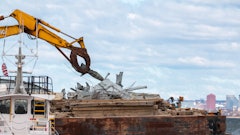
The FY12 Budget funds capital investments in the inland waterways based on the estimated revenues to the Inland Waterways Trust Fund. Among coastal navigation projects, the Operation and Maintenance (O&M) program gives priority to the harbors and channels with the most commercial traffic. The Budget also funds maintenance work at harbors that support significant commercial fishing, subsistence, or public transportation benefits, although at a lower total level than in prior years.
In connection with the FY12 Budget, the Administration proposes changes in the way federal navigation activities are funded. The Administration will work with Congress to reform the laws governing the Inland Waterways Trust Fund to support increased investments in safe, reliable, highly cost-effective, and environmentally sustainable inland waterways, while ensuring that commercial navigation users meet their share of the costs of activities financed from this trust fund. The Budget proposes to increase revenues paid by commercial navigation users sufficiently to meet their share of the costs of activities financed from this trust fund in future years. In addition, legislation will be proposed to expand the authorized uses of the Harbor Maintenance Trust Fund so that its receipts are available to finance the federal share of efforts carried out by several agencies in support of commercial navigation through the nation's ports.
The FY12 O&M program is funded at $2.445 billion, including $131 million in the Mississippi River and Tributaries (MR&T) account. The Budget emphasizes performance of existing projects by focusing on the maintenance of key commercial navigation, flood and storm damage reduction, and other facilities.
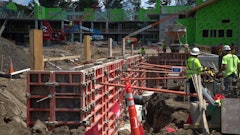
The FY12 construction program is funded at $1.558 billion, including $78 million in the MR&T account. The construction program uses objective, performance-based guidelines to allocate funding toward the highest performing economic, environmental, and public safety investments. The priorities of the Corps' aquatic ecosystem restoration program are coordinated with, and informed by, interagency collaboration to restore nationally significant ecosystems including the California Bay Delta, Chesapeake Bay, the Everglades, the Great Lakes, and the Gulf Coast.
The Budget funds 92 construction projects, consisting of 10 dam safety assurance, seepage control, and static instability correction projects (includes one project completion); 20 projects ranked on the basis of life-saving benefits; two additional project completions; two new starts; and 58 other continuing projects.
By program area, the 92 funded construction projects consist of 55 Flood and Storm Damage Reduction projects (three budgeted for completion), 16 Commercial Navigation projects (including five continuing mitigation items and four dredged material placement areas), 19 Aquatic Ecosystem Restoration projects (including three projects to meet Biological Opinions), and mitigation associated with two Hydropower projects.
Among the ongoing construction projects in the FY12 Budget are: the South Florida ecosystem restoration program, which includes the Everglades ($163 million); Olmsted Locks and Dam, IL & KY ($150 million); Wolf Creek Dam, Lake Cumberland, KY, seepage control ($132 million); Columbia River Fish Mitigation, WA, OR & ID ($128 million); Herbert Hoover Dike, FL, seepage control ($85 million); Center Hill Lake, TN ($79 million); Missouri River Fish and Wildlife Recovery, IA, KS, MO, MT, NE, ND & SD ($73 million); Bluestone Lake, WV ($70 million); and New York and New Jersey Harbor, NY & NJ ($65 million) .
The three construction projects funded for completion in the FY12 Budget are: Crookston, MN ($1.25 million), Dover Dam, OH ($5 million), and Santa Paula Creek, CA ($2.1 million).
The FY12 construction program includes two high-priority new construction starts: Hamilton City, CA ($8 million), and Raritan to Sandy Hook (Port Monmouth), NJ ($3 million).
The FY12 Budget includes funding for both initial construction of projects to reduce storm damage along the coast and periodic renourishment of such projects. The FY12 program supports 10 such projects, of which three are initial construction and seven are periodic renourishment.
The Budget funds activities for large-scale ecosystems including the California Bay Delta, Chesapeake Bay, Columbia River, Everglades, Great Lakes, Louisiana Coast, Missouri River, and Upper Mississippi River. The Corps will continue to work with other federal, state and local agencies, using the best available science and adaptive management, to protect and restore these ecosystems. Environmental sustainability of these ecosystems also helps to support positive economic growth in the surrounding communities.
The FY12 Budget provides $50 million ($46 million in O&M account and $4 million in Flood Control and Coastal Emergencies (FCCE)) for a comprehensive levee safety initiative to help ensure that federal levees are safe and to assist non-federal parties to address safety issues with their levees. The initiative includes funding for ongoing work on the National Levee Inventory Program as well as for the Silver Jackets interagency teams.
The FY12 Regulatory Program is funded at $196 million. With these funds, USACE will continue to protect the nation's waters and wetlands, improve compliance with and enforcement of wetlands regulations, and improve permitting processes.
The FY12 FUSRAP program is funded at $109 million to continue remedial activities at 22 sites.
The FY12 Investigations account is funded at $104 million. The Budget includes four new studies: Englebright and Daguerre Point Dams (Yuba River) Fish Passage, CA; Cano Martin Pena, PR; the Chesapeake Bay Comprehensive Plan; and the Louisiana Coastal Area Comprehensive Study. Funding is also included for the Water Resources Priorities Study, a high-priority evaluation of the nation's vulnerability to inland and coastal flooding and of the effectiveness, efficiency, and accountability of existing programs and strategies.
Emergency Management is funded at $34 million in FY12, with $27 million in the FCCE account for preparedness and training to respond to floods, hurricanes, and other natural disasters, and $7 million in the O&M account. The FCCE funding includes Corps participation in an expansion of Silver Jackets interagency teams to every state to provide unified federal assistance in implementing flood risk management solutions.
Recreation is funded at $259 million in FY12, with $247 million in the O&M account and $12 million in the MR&T account. USACE is the nation's largest provider of federal recreation opportunities, and its recreation areas contribute to the success of the Administration's Great Outdoors Initiative.
The FY12 Army Civil Works budget press book, including a state-by-state breakdown, is available at http://www.usace.army.mil/CECW/PID/Pages/cecwm_progdev.aspx.