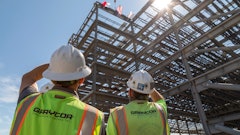
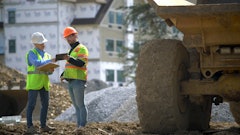
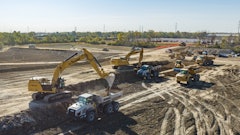
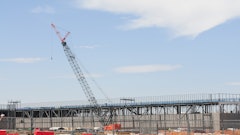
America and Minnesota need better roads and bridges, and Minnesota Representative Jim Oberstar, Chairman of the House Transportation and Infrastructure Committee, is the champion for quick passage and full funding of a highway bill that would provide money for infrastructure improvements. What we haven't heard enough about is how a fully-funded federal highway bill could help us get out of the economic downturn by creating jobs, as we will see in a moment.
Are improved roads and bridges important to residents of the North Star State? A research group, The Road Information Program (TRIP), recently issued a report entitled "Future Mobility in Minnesota: Meeting the State's Need for Safe and Efficient Mobility;" see www.tripnet.org.
According to the report, the cost of crumbling infrastructure to each Twin Cities motorist is $1,501 each year. This cost derives from poor road conditions, lost time and fuel from traffic congestion, and the expense from traffic crashes. Think about the opportunity cost. Besides car repairs, how else could you spend $1,501? Perhaps a small portion of those savings could be used to pay to improve roads and bridges.
And Minnesota leads the nation with the highest share of urban roadways considered congested during peak travel time - 76 percent
About $65 billion will be needed during the next 20 years to achieve state priorities for safety, mobility and infrastructure preservation, but the Minnesota DOT estimates that only $15 billion will be available. The $50 billion gap means bridges and roads will go without maintenance and continue to jeopardize safety.
As is always the case with transportation issues, there is more to building better roads and bridges than the very important matters of time and safety for US drivers. There is also global economic competitiveness.
Funding gaps as the one described above put Minnesota and the rest of the US at a disadvantage in the global marketplace. Emerging markets seem to "get it," even if we don't. According to research issued late last year, China invests nine percent of its gross domestic product (GDP) in infrastructure versus 0.93 percent for the US. In August The Economist said China's stimulus package (reportedly $586 billion) is at least 13-15 percent of its GDP, and possibly 18 percent. The US "$787 billion stimulus package amounts to 5.5 percentage of its GDP," and only $27 billion has been designated for transportation infrastructure. If the US is going to remain the world's economic leader, our investment in roads and bridges will have to increase accordingly.
Now, about those jobs. With a national unemployment rate of nearly 10 percent, workers would only benefit from infrastructure investment. Many experts contend that infrastructure investment is superior for creating jobs and economic stimulus. A recent study by the USDOT estimates that for every $1 billion invested in US infrastructure, nearly 35,000 jobs are created, and a University of Maryland analysis demonstrated that every $100 invested in infrastructure returns $350 to the economy.
By funding the highway bill, Congress would actually be funding a jobs bill that would help keep one vital manufacturing sector operating in the US.
The companies my association represents in the construction equipment manufacturing industry are experiencing a depression, not a recession. Upwards of 40 percent of those working in this manufacturing sector have lost their jobs in this downturn, so this industry needs a fully-funded highway bill now.
The simplest way to explain the importance of the federal highway bill to the construction equipment industry is this: a fully-funded highway bill will promote significant long-term funding and planning for serious construction projects, such as new bridges, new roads and other infrastructure improvements. Long-term planning means construction contractors have market certainty and can afford to buy new equipment. The more the bill is postponed, the harder it is for contractors to bid and plan for significant long-term construction projects, which leads to additional job losses.
Washington had an opportunity with the stimulus package earlier this year to adequately fund badly needed infrastructure improvements. Unfortunately, DC's leadership did not choose to spend stimulus dollars to improve our failing infrastructure, or build it as is the case in China. As often happens with Washington, things have not turned out as promised.
However, by funding the highway bill, Washington would send the right signal by helping a vital manufacturing industry. By fully-funding a federal highway bill, Congress would boost US economic well-being and competitiveness. Washington needs to hear that the country needs the shorter extension, and that all infrastructure funding options must be considered: Toll roads, user fees, a gasoline tax, public private partnerships, bonds, sales, etc.
A legislative deadline for the highway bill is looming on October 31. Congress must either decide in favor of a long-term plan to improve our neglected roads, that creates thousands of good paying sustainable jobs, or to stay in a holding pattern. Congress can put the construction industry back to work, or it can continue to delay much-needed legislation. Americans deserve quick action by Congress to provide the needed funding for safe and efficient roads, bridges and highways.
Dennis Slater is President and Secretary of the Association of Equipment Manufacturers (AEM), whose role is to provide trade association services on a global basis for its member companies. Visit: www.aem.org.