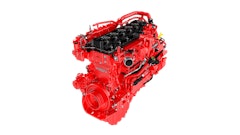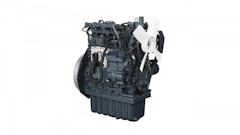
The major advancements in clean diesel technology have been highlighted in a new and unique study by the University of California-Riverside that found commercially cooked hamburgers emit more particulate matter than 2007-2010 model year clean diesel trucks. The UC-Riverside study was funded by the South Coast Air Quality Management District and the San Joaquin Valley Air Pollution Control District.
“While the primary focus of this new study was on emissions from commercial charbroilers, this comparison clearly illustrates the significant improvements from clean diesel technology on California’s air quality. In fact, the study also found that the particulate matter (PM) inventory from commercial cooking is more than double the inventory from heavy-duty diesel trucks,” said Allen Schaeffer, the executive director of the Diesel Technology Forum, a non-profit national organization dedicated to raising awareness about the importance of diesel engines, fuel and technology.
“I will say this is an extremely unusual comparison. Generally, clean diesels are matched up against natural gas, hybrids or electric vehicles for emissions or fuel efficiency tests. This is the first time we’ve gone head-to-head against fast food,” Schaeffer said. “But more of these kinds of comparisons are likely, especially In California, where clean diesel technology has been such a success story. Today in California, the majority of particulate emissions come from brake and tire wear, with diesel emissions making up small and declining fraction.”
New Technology Reduces Diesel Particulate Emissions
“In the United States, emissions from heavy-duty diesel trucks and buses have been reduced by 99% for nitrogen oxides (NOx) - an ozone precursor - and particulate emissions. A key part of reducing emissions has been the shift to ultra-low sulfur diesel (ULSD) fuel that has been available since 2006,” Schaeffer said. This change in fuel specification reduced sulfur emissions from 500 to 15 parts per million (ppm), and enabled the use of advanced emissions control technologies.
"Similar advancements are taking place in off-road engines and machines," said Schaeffer. “Across the U.S., emissions of particulate matter from diesel engines are declining and make up less than 6% of all particulate emissions.
“Because of the investments in new technology it now takes 60 of today’s technology trucks to emit the same level of PM emissions as one truck built in 1988," he added. "In addition, new farm tractors and construction equipment of all shapes and sizes are now at, or are moving toward, near-zero emissions for particulate matter.”
Several recent scientific and academic research studies have highlighted the advancements in clean diesel technology:
- On August 2, 2012, a new report was released - “Advancing Technology for America’s Transportation Future” – which was authored by the National Petroleum Council (NPC) for the U.S. Department of Energy. The NPC report states: “Diesel engines will remain the powertrain of choice for (heavy duty) vehicles for decades to come because of their power and efficiency. There are, however, opportunities to improve the technology. Significant fuel economy improvements in diesel powered trucks are possible. Indeed, the fuel economy (mpg) for new Class 7&8 HD vehicles, which consume more than 70% of the fuel in the trucking fleet, could be doubled.”
- In a special presentation on May 24, 2012 to the California Air Resource Board (ARB) in Sacramento, California, leading international scientists discussed the key short-lived agents black carbon (soot) and methane. Findings presented to the ARB indicated a 50% reduction of black carbon in ambient air over the past 20 years. Mary Nichols, Chairman of the ARB stated: “It is encouraging to see that ARB’s diesel regulations, while designed to improve public health are also addressing climate change.”
- A study released on April 12, 2012 by the Health Effects Institute (HEI) provides important new insights into the emissions and health effects of the new diesel, known as the Advanced Collaborative Emissions Study (ACES). These and related findings were recently presented at a CARB Research Seminar.
- In its March 2012 Report to Congress on Black Carbon (BC), the U.S. Environmental Protection Agency (EPA) stated: “[T]he United States will achieve substantial BC emissions reductions by 2030, largely due to controls on new mobile diesel engines.“ The EPA report also recognizes the challenges in reducing emissions from both mobile and stationary diesel engines in these developing countries since they typically do not have ready access to cleaner low sulfur fuels that are required for most advanced emissions control technologies.
- New research released April 23, 2012 from North Carolina State University - “Real-World Measurement and Evaluation of Heavy Duty Truck Duty Cycles, Fuels, and Emission Control Technologies” - shows that federal requirements governing diesel engines of new tractor trailer trucks have resulted in major cuts in emissions of particulate matter (PM) and nitrogen oxides (NOx). Trucks in compliance with newer standards showed a 98% decrease in NOx and 94% reduction in PM emissions.