The Concrete Polishing Association of America (CPAA) is pleased to announce the release of a glossary of accepted definitions for terms in the polishing industry. In an effort to establish industry standards, the following terms and definitions are now available from CPAA.
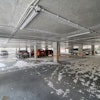
Polished concrete: The act of changing a concrete floor surface, with or without aggregate exposure, to achieve a specified level of gloss using one of the listed classifications — Bonded Abrasive Polished Concrete, Burnished Polished Concrete or Hybrid Polished Concrete.
Bonded abrasive polished concrete: The multi-step operation of mechanically grinding, honing, and polishing a concrete floor surface with bonded abrasives to cut a concrete floor surface and to refine each cut to the maximum potential to achieve a specified level of finished gloss as defined by the CPAA. This yields the most durable finish and requires the least maintenance.
Burnished polished concrete: The multi-step operation of mechanical friction-rubbing a concrete floor surface with or without waxes or resins to achieve a specified level of finished gloss as defined by the CPAA. This operation yields a less durable finish and requires more maintenance than bonded abrasive polished concrete.
Hybrid polished concrete: A multi-step operation, using either standard grinding/polishing equipment, lightweight equipment, high speed burnishing equipment, or a combination of, to combine the mechanical grinding, honing, and polishing process with the friction rubbing process by utilizing bonded abrasives, abrasive pads, or a combination of, to achieve the specified level of finished gloss as defined by the CPAA.
Surface coated concrete: Surface coated concrete does not conform to the definition of polished concrete per the CPAA. It is the operation of applying a film forming coating to a concrete floor surface to achieve a specified level of finished gloss. Durability depends on the quality of the chemical coating used, the amount of traffic across the floor, and floor maintenance.
Maximum refinement: The point in time when the diamond tool has refined the surface to the degree to which it no longer cuts or cuts very little under its current weight and variables as defined by the CPAA.
Aggregate exposure: Grinding a concrete floor surface with bonded abrasives to achieve a specified class of exposed aggregate. These are classified as A, B, C and D with varying levels of exposed aggregate. To view a table describing these definitions, please visit http://www.concretepolishingassociation.com/glossary.php.
Finished Gloss: Processing a concrete floor surface to achieve a specified level of finished gloss prior to application of any protective treatment; Flat (ground), satin (honed), semi polished, and highly polished are measured in reflective clarity (DOI), and reflective sheen (specular gloss). Finished Gloss is classified as levels 1, 2, 3 and 4 with varying degrees of reflective clarity, and sheen. To view a table describing these definitions, please visit http://www.concretepolishingassociation.com/glossary.php.
Gloss Measurement: A determination of specular gloss that incorporates distinction of image, haze and Rspec.
Reflective Clarity: The DOI (distinction of image) value of the degree of sharpness and crispness of the reflection of overhead objects when measured by a device in accordance to ASTM D5767.
Reflective Sheen: The specular gloss value of the degree of gloss reflected from a surface, at specified angles of illumination, when measured by a device in accordance to ASTM D523-08.
Liquid Densifiers: An Aqueous solution of SiO2 dissolved in the respective Hydroxide (see below) that penetrates into the concrete surface and reacts with the Calcium Hydroxide to provide a permanent chemical reaction that hardens and densifies the wear surface of the cementitious portion of the concrete.
- Sodium Silicate
- Potassium Silicate
- Lithium Silicate
- Alkalis solution of Colloidal Silicates or Silica
All the above is the same chemistry varying only by the alkali used for solubility of the SiO2.
NOTE:
1. The following products do not harden or densify concrete.
- Siliconate is a synonym for Sodium Silicate that is a solid without any water and therefore non-reactive in the reactions described above.
- Colloidal Silica SiO2 that is suspended only in H2O is non-reactive as a densifier.
- Siliconates are sometimes a truncated descriptions for a Alkyl (organic) Alkali Metal Silicate which are water repellents and react in the acid form of CO2 (Carbon Dioxide) and H2O (Carbonic Acid). These might be used as an additive in Silicate Solutions for early water repelling of the densifiers.
Definition of Sealer from ASTM D16: A liquid composition to prevent excessive absorption of finishing coats into porous surfaces; also a composition to prevent bleeding.
- Sealer-Semi Impregnating Stain Protection: A film forming material which will penetrate into the polished and densified concrete leaving a protective surface film of less than 0.5mils which meets the OSHA requirements for slip resistance as tested by ASTM D 20471, and Stain resistance of ASTM D 13082.
- Sealer-Impregnating Stain Protection: Non-film forming stain and food resistant penetrating sealer designed to be applied to densified and polished concrete. Material must meet the requirements of OSHA for slip resistance as tested by ASTM D 20471, and Stain resistance of ASTM D 13082.
Notes
1. ASTM D2047 - Standard Test Method for Static Coefficient of Friction of Polish-Coated Flooring Surfaces as Measured by the James Machine.
2. ASTM D1308 - Standard Test Method for Effect of Household Chemicals on Clear and Pigmented Organic Finishes.
“With the establishment of these standardized definitions, contractors, owners and architects can communicate more clearly about the desired surface and necessary processes,” said Brad Burns, Executive Director, CPAA. “The result of the standardization will be a higher quality end product.”
The full list of industry leading terms and definitions used with processed and polished concrete can be found here: http://www.concretepolishingassociation.com/glossary.php.