Tilt-up construction may still be a relative newcomer in the building industry, but the Tilt-Up Concrete Association is already celebrating its 20th anniversary in 2006.
Those of us who were involved in the industry back in 1986 can attest to how far tilt-up has come and impart optimism for the future of the industry.
It's no secret that tilt-up construction is a growing market and quickly becoming a preferred building method in both the private and public business sectors. Of course, nobody understands this trend better than TCA. The association illustrated its understanding of the benefits that spurred tilt-up's growth with the organization's 2005 convention theme: "Tilt-Up 4 Today: Energy, Environment, Economy, Efficiency." When we sell tilt-up construction, these are four very important words. They have propelled the method to its position of growth, and they will undoubtedly continue to make tilt-up a beneficial selection for building owners and the communities they serve.
The same advantages that helped start tilt-up still ring true, but the sophistication level and application to new markets continues to expand. Today, we are creating smaller structures than we ever thought practical with tilt-up panels. Plus, as innovation continues, we are also taking tilt-up to new heights, continually breaking records — with panels reaching nearly 100 ft. in height and topping 300,000 lbs.
Testing the structural limits of tilt-up keeps engineers challenged, and the expanding architectural options keep architects creating buildings we never thought tilt-up could achieve. It's easy to see — just compare today's tilt-up with the more utilitarian applications and finishes of tilt-up buildings just a decade ago.
Instead of looking back at TCA's past 20 years, we can follow tilt-up as it shapes a positive future. Many of the trends have already started and will continue to gain strength.
Sustainability and green building will continue to be a hot topic. With the inherent properties of concrete and the natural energy efficiency of the method, more and more projects will benefit from sustainable design principles. Even if they are not officially certified as LEED buildings, tilt-up structures have a head start toward sustainable design.
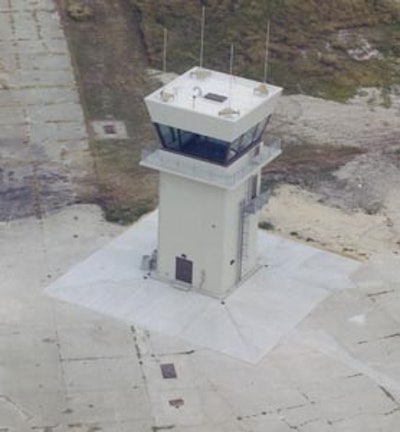
Smaller structures — personal residences, band pavilions and air control towers — are becoming more routine. At the beginning of this decade the big box market evaporated, but many tilt-up contractors successfully adapted the fundamental efficiencies of tilt-up on significantly smaller footprints. Today, as we see the traditional tilt-up markets re-emerge, we are left with a dramatic demonstration of tilt-up's adaptability for buildings of all sizes.
As tilt-up construction continues to garner a larger and larger share of the building market, product manufacturers are following, and in some cases, leading the business. Makers of products devoted to architectural finishes are clamoring to get involved in the tilt-up industry by making their products easier to incorporate in the construction process. This trend benefits contractors by making their jobs easier, but it also benefits building owners by increasing the architectural options they can choose.
Retailers across the country — both large and small — are capitalizing on the enhanced architectural options. They are beginning to recognize that the tilt-up method provides retailers with architectural options that accent their corporate or brand identity. Plus, tilt-up allows them to meet aggressive construction schedules in a cost-effective manner. Whether it is a large lifestyle mall or a single retailer, time and image equal success, so helping retailers get to market sooner and more professionally will keep them coming back to tilt-up.
And, finally, schools will continue to be a booming market for tilt-up contractors. The benefits for school boards and their communities are endless — speed, economy, durability, energy efficiency, sound absorption, clear-span interiors and the list goes on. It's no wonder so many schools are looking to tilt-up for quick, cost-conscious construction.
Two overriding concepts that will also propel tilt-up construction to future growth are sustained quality and increased technology. The success of the ACI/TCA joint certification program indicates positive steps toward quality construction. To date, more than 700 people have passed the certification exam. More than 500 certified technicians and nearly 200 tilt-up supervisors are now working on tilt-up jobsites around the United States and in Canada.
Still, increasing technology is of little value if it doesn't improve the design or construction processes. As projects continue to become more and more complicated, it will be important to use technology to communicate between team members and explain the building process to owners. Enhancing technology should facilitate coordination and add efficiency to the entire process, not bog the entire team down in details. 3-D modeling technology is one example of leveraging technological advancements to simplify coordination and better explain project details.
Technology is also impacting tilt-up in the field. Besides the expanding array of products for architectural treatments, the construction process is being enhanced with the introduction of adhesives for securing panel edge forms and rustication. New braces to support taller panels, larger cranes, temporary helical anchors and a wide array of communication and data transfer technologies — just to name a few — are now available.
A number of other factors will also keep the tilt-up industry growing into the foreseeable future. After an oversaturation of the market, big box warehouses will cycle back, as retailers face increasing demands for distribution space. Newer tilt-up markets, such as religious and educational, will become established, reducing the resistance of building owners.
With the forces of terrorism and Mother Nature as a prime concern throughout the nation, security and durability of structures is paramount. No other method can attest to the durability that tilt-up has proven. Just ask people in Florida who flocked into tilt-up buildings during the 2004 hurricane season.
Maintaining a future as bright as tilt-up's will take work, as other building methods will strive to steal our market share. But, the opportunities for growth into new markets and the possibilities for increased architectural sophistication will help tilt-up maintain its position as a leading construction method. I can't wait to see what the tilt-up industry does in the next 20 years.
TCA celebrates 20 years
The Tilt-Up Concrete Association was formed in 1986 by a small group of industry professionals that realized the need for an organization devoted to the interests of the tilt-up concrete industry. Though the organization started small, TCA has since grown to become an influential trade association that serves as the industry voice of site cast tilt-up construction, with more than 450 members in 44 states and 13 countries.
Tilt-up construction is a method in which concrete wall panels are cast on-site and tilted into place. The origins of tilt-up can be traced back to a quote by Thomas Edison in 1903 stating, "Tilt-up construction eliminates the costly, cumbersome practice of erecting two wooden walls to get one concrete wall." Considered the father of tilt-up, Robert Aiken began using this method around the turn of the 20th century. Constructed in 1918 by Aiken, the Zion United Methodist Church located in Zion, Ill., still stands today and serves as a testament to the strength and durability of the tilt-up method.
The original idea for TCA came from an employee of the Portland Cement Association, Don Musser, who later became the first executive director of the association. In addition to PCA, other industry trade organizations saw the need for an organized tilt-up organization. The Concrete Reinforcing Steel Institute and the National Ready Mixed Concrete Association each gave funds over a three-year period to help get the movement started. They also provided support by sending representatives from their respective organizations to board meetings to help provide direction.
The organization's original mission was to provide input to code bodies, develop technical information to meet the needs of the tilt-up industry, and promote the benefits of tilt-up. It did not take long for TCA to begin meeting its goals — the first technical publication, "Tilt-Up Tips," and the first promotional brochure were both published in 1987-1988.
Recognizing the importance of building a strong membership base, TCA held two seminars at the University of Dayton in 1989 and 1990 to promote the benefits of tilt-up. The efforts continued with symposiums held in the fall of 1997 in Atlanta, fall of 1999 in Dallas, and spring of 2002 in Arlington, Va. Today, TCA hosts a symposium every other year that gathers attendees from around the world.
Initially, TCA's executive director split time between the TCA and his full-time position at PCA. Musser received aid from dedicated individuals throughout the industry who devoted their time to ensure that the organization was a success. Now, TCA has a professional staff that includes an executive director, technical director, administrative staff and consultants. Since 1992, Ed Sauter has served as executive director of TCA. Prior to this position, Sauter was cheif executive officer of a manufacturer of insulated sandwich wall systems for tilt-up and precast construction, and a practicing architect. TCA's technical director, Jim Baty, boasts a career-long emphasis on thermal design efficiency. Before joining the TCA staff, he served as Composite Technologies Corporation's technical services manager.
No history of the association would be complete without addressing the significant changes in the tilt-up industry itself. Once labeled the medium for box warehouse space, tilt-up is now viewed as an architecturally appealing, cost-effective and durable solution for schools, religious facilities, community centers, office, retail and more. The medium grew more than 111 percent from 1995 to 2000 alone and continues to grow both in terms of volume and diversity.
Finally, the association's efforts have responded to the tremendous growth with expanded offerings and services. On the technical side, TCA represents the membership on industry code bodies, offers seminars and a variety of technical documents to aid members in their tilt-up efforts, and developed a joint certification program with ACI. In terms of marketing and promotional efforts, TCA has developed a variety of marketing materials members can use in their sales efforts, embarked on a public relations campaign, and even offers marketing seminars. TCA's focus has also switched from simply educating the contractor and engineering markets about the benefits of tilt-up to a concerted effort to educate the architectural and owner communities.
Looking toward the future, current executive director Ed Sauter, wants to increase the use and acceptance of tilt-up throughout North America and beyond. To accomplish this goal, he believes TCA should encourage architects to develop more creative uses for tilt-up in a wide variety of building types. With education a top priority, Sauter wants to increase educational opportunities including a self-study CD series and expansion of the website to include the ability to deliver all marketing, technical and training information via the Internet.
Robert P. Foley, P.E., is president of CON/STEEL Tilt-Up Systems, Dayton, Ohio, and a past president and founding member of the Tilt-Up Concrete Association.
Continuing our partnership with TCA, this year's series on site cast tilt-up construction celebrates the association's 20th anniversary by providing contractors with tips for successfully using the method. For more information about the TCA, visit www.tilt-up.org or call (319) 895-6911.