Doug Smeath
Climate change and energy security are big, global issues that can leave the average individual feeling powerless to make a difference. Top Ten lists describing ways to reduce your environmental footprint and lead a healthier, more sustainable life can seem trivial in light of the scale of the challenge. But the truth is that solutions to society's greatest challenges can be the cumulative effect of lots of relatively small, individual actions.
One often overlooked opportunity that could represent nearly 40 percent of the solution to fight climate change is the built environment. According to the U.S. Department of Energy, buildings' energy use accounts for 39 percent of the United States' carbon emissions. Building designs often fail to make the most efficient use of water, an increasingly scarce and valuable resource. The materials used to build them are often harvested and transported in ways that are detrimental to the environment.
The opportunity to make real change by building and renovating greener buildings is tremendous. Businesses, governmental agencies, school districts, homeowners — anyone who plays a role in planning, designing, building, operating or maintaining buildings — can save money, live and work in greater comfort and health, enjoy the durability of longer-lasting buildings, and help in the fight against environmental degradation all at once.
LEED certification
Green building is fast becoming the norm in the building industry, with the U.S. Green Building Council (USGBC) leading the way. Established in 1993, USGBC is growing at a dramatic pace. USGBC now has more than 16,000 member organizations. They include building owners and end-users, real estate developers, facility managers, architects, designers, engineers, general contractors, subcontractors, product and building system manufacturers, government agencies and nonprofits.
But with the tremendous growth of green building comes the risk of "greenwashing" — products, services and building methods being sold as "green" for marketing purposes without actually contributing to a more sustainable built environment. That's why in 2000 USGBC launched the LEED Green Building Certification System. LEED is a technically rigorous, third-party certification system for buildings, developed by consensus among USGBC's membership and drawing from public comment. It was created to assure building owners and occupants their green buildings really were built to perform as they are supposed to.
Growth and evolution
Today, some 3.2 billion square feet are registered or certified under LEED — more than 11,000 commercial and public buildings nationwide. Various LEED initiatives including legislation, executive orders, resolutions, ordinances, policies and incentives are found in 90 cities, 29 counties, 20 towns, 30 states, 12 federal agencies or departments, 15 public school jurisdictions and 37 institutions of higher education across the United States.
LEED continues to grow and adapt to meet the needs of the marketplace. When it was first developed, LEED was primarily used for newly built commercial and institutional buildings. Since then, the LEED rating systems have been created to address specific building types. In the past year, USGBC has launched rating systems for schools and residential homes, and pilot programs are under way to help LEED target the specific needs of retail and healthcare applications.
As LEED continues to expand to address specific applications, the overall LEED system is also evolving to reflect changing needs and increasing urgency to find solutions to climate change and energy dependence. The evolution of LEED is a multi-faceted initiative to streamline and create capacity for LEED project execution, documentation and certification. This initiative is referred to as LEED Version 3 (commonly referred to as LEED v3). In the spirit of the most successful LEED projects, this initiative has been undertaken in an integrated fashion made up of three key pieces: 1) LEED 2009 — LEED Rating System updates/revisions. 2) Revision and evolution of the LEED certification process. 3) LEED Online v3.
In mid-May, the USGBC Board of Directors sent LEED 2009 out for public comment. LEED 2009 includes four major areas of innovation:
1. The alignment and harmonization of prerequisites and credits across all LEED rating systems for commercial buildings. Whereas in the past there were a large number of different LEED rating systems — LEED for New Construction, LEED for Existing Buildings, LEED for Core & Shell and LEED for Commercial Interiors, for example — LEED 2009 will consolidate these into their "most effective common denominator." LEED for Homes and the pilot LEED for Neighborhood Development rating systems will remain separate.
2. New, transparent credit weightings based on environmental and human health impacts. Until now, LEED has not used an over arching, consistent framework for allotting point values to credits. LEED 2009 will give different point values to different LEED credits, according to a logical, transparent framework that incorporates the best available science.
3. A methodology for incorporating regionally specific credits. The LEED Steering Committee has created a structure that allows for regional innovation credits in LEED to add value to those credits that are considered to be the most important for defined regions. The LEED Steering Committee is currently collaborating with USGBC Regional Councils and Chapters to create the list of eligible credits for each region.
4. A two-year development cycle. This provides a continuous improvement structure that will enable USGBC to advance LEED on a regular schedule so users can predict when USGBC will be raising the bar.
LEED AP
The keys to success with LEED are education and experience. As green building science continues to progress, being part of a network of professionals with the know-how required to build with LEED will help you keep abreast of the newest technologies and best practices. It will also put you in high demand as a contractor with knowledge and experience using these technologies.
Becoming a LEED Accredited Professional (AP) is beneficial to the building industry because it encourages and promotes a higher understanding of green building knowledge and supports USGBC's mission of transforming the built environment. LEED APs are responsible for serving on the project team and seeing the project through the certification process. APs are also responsible for disseminating knowledge about the rating system to all people participating in the project.
Becoming a LEED AP requires you to pass an exam. USGBC offers several tools to help you achieve that, including exam outlines, LEED reference guides to study, and optional workshops, courses and webinars to help you increase your knowledge on green building practice and design.
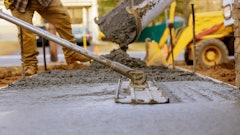
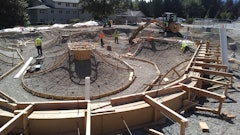
Concrete and Green Building
There is no "one right way" to build green, and LEED recognizes the wide variety of strategies that can be used to create more sustainable structures. The important thing to ensure that a building's structure, systems and operations all work together for the greenest possible outcome is for all the key players to work together from the beginning, also known as integrated design. That can include concrete contractors.
Perhaps one of concrete's biggest contributions to green building is its recyclability. In cradle-to-cradle considerations — that is, thinking about a new building's sustainability while it's new, as it ages and whether its components can find new life when the building itself has reached the end of its life — it's important to think about how recyclable building materials are.
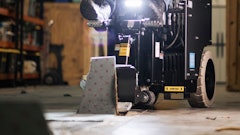
The Southern California Gas Company reused an existing building for its Energy Resource Center and found it economically beneficial, saving an estimates $3.2 million. Concrete recycling was among the materials that resulted in those savings: The company estimates recycled concrete represented a 49 percent savings. Concrete recycling typically is in the form of crushed concrete, which can be used in other building projects for such uses as fill.
Concrete itself can be made of reused materials. One of the most-common recycled components used in concrete is fly ash, a residue created in the combustion of coal. Fly ash is a pollutant when released into the environment, but when captured in chimneys at power-generation facilities, it can be used as part of cement mixtures.
While concrete can be an important part of durable, sustainable buildings, it can also contribute to wastefulness through energy-intensive production and carelessness in the way waste is managed. That's why it is important for concrete contractors, just like any other professional seeking to be part of the greening of the building industry, to educate themselves on green building best practices and to work as part of a dedicated LEED team.
Doug Smeath is the Consumer Website Marketing Manager at the U.S. Green Building Council, overseeing the websites www.greenhomeguide.org and www.buildgreenschools.org.