Scott Prewett
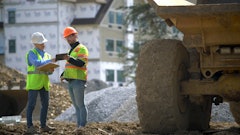
Terry Porter is worried about "windshield time." That's the term he uses to describe the time he spends traveling from jobsite to jobsite checking up on his crews.
Porter, an electrical contractor in Jenks, Okla., says he'd rather be behind his desk than behind the wheel. "From a business standpoint, you're better served back at the office drumming up new business instead of driving around checking up on existing business," he says.
And with gas at well over four dollars a gallon, Porter adds that windshield time is now taking a bite out of his company's bottom line. "Ideally, I'd like to run all my jobsites without leaving the office," he says. "I'm just not sure how that's possible."
What Porter is talking about is what industry insiders have coined Remote Project Management - the ability to manage several jobsites from a central location. And the good news is, two emerging technologies - broadband for cell phones and GPS - are making remote project management both possible and practical for business owners like Porter.
3G brings broadband to your cell phone
There's been a lot of buzz about third generation (3G) services for mobile phones, and with good reason. 3G technology brings broadband wireless capabilities to your cell phone. With speeds that rival DSL connections, 3G networks have the potential to allow you to view streaming video, videoconference with colleagues, send and receive large files, and blaze through Web pages.
Imagine being connected to each of your jobsites via live streaming video. Your foreman points his cell phone at a flaw in a foundation and, with the speed and ease of sending a text message, transmits video footage of that image to you live over the Internet. Imagine being able to evaluate the problem and formulate a solution - all without leaving your desk.
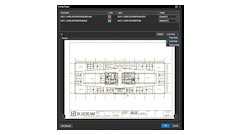
And that's just video. Consider all the other types of valuable information that can be sent to and from broadband-enhanced cell phones and PDAs: blueprint details, schematics, and even attendance records, to name a few.
Not surprisingly, cell phone manufacturers are scrambling to produce devices that leverage the power of 3G - the newest of the high speed wireless services. Ever wonder why picture phones take such shoddy pictures? Or why video captured on your old cell phone looks so bad? Technology that supports higher resolution images and video has been around for a while. But what's the point of manufacturing a cell phone with a high-resolution camera if you can't get that image back to the office? Before 3G, there was no point. Now you can expect to see advanced mobile devices with cameras in the 3- to 5-megapixel range and with high-resolution video capabilities.
Looking even further into the future, there's already talk of a 3.5G standard that promises speeds up to 14.4 mbps. That's almost five times faster than a cable modem!
Track workers and assets with GPS
You've heard of it, but maybe you're not so clear on the ways this powerful technology is being used, and, more importantly, how it can benefit your business.
GPS stands for Global Positioning System. It consists of 24 satellites that circle the earth twice a day transmitting signal information. GPS receivers on the ground are able to take this information and determine a user's or asset's exact location.
GPS is relatively cheap. In fact, it's free. Back in 1983, President Reagan made the system free for civilian use as a common good. And in 1999,
President Clinton ordered that Selective Availability - a feature that intentionally introduced errors to GPS signals - be turned off. Since then, GPS accuracy has improved dramatically, and recent advances in technologies that employ GPS will make it an integral tool in tracking workers and assets.
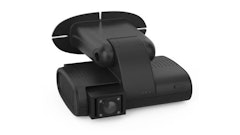
GPS is widely used in fleet management. And many systems now feature "active" GPS, which uses wireless networks to track assets in real time. Active GPS devices leave a "breadcrumb" trail of position markers that the system plots on a map, enabling companies to view vehicle and asset movement as it happens from a web browser. Many systems also offer an array of reports and alerts highlighting suspicious or prohibited activity. Some systems are even integrating two-way messaging into their packages, making it easy for drivers and dispatchers to share important information.
But asset management isn't the only area where GPS is making waves. Soon, it will play an equally important role in tracking labor.
Are you still using handwritten timecards to track time and attendance? Before you know it, they'll go the way of the typewriter, replaced by portable electronic timekeeping systems with integrated GPS.
These systems can tell you not only when your workers clocked in and out, but also exactly where. Your foreman can transmit those attendance and location records over the Internet from his phone or PDA to the office. There, you'll have a bird's-eye view of all your employee and jobsite information - either in the form of easy-to-read reports or overlaid on a regional map.
This isn't some lofty vision of the future. GPS-enhanced time and attendance systems are being widely used today.
"We're just four weeks into it, but it's already making a huge difference in the way I run my business," says Paul Mitchell, owner of Paul Mitchell Logging in Tupper Lake, N.Y.
Mitchell is using PocketClock/GPS from Exaktime, Inc. to track the location and attendance of his crews. This software runs on a Windows Mobile PDA, transforming it into a portable time clock that records the exact location of his workers when they clock in and out.
"With PocketClock/GPS, I can run things from the home office knowing that my guys are where they're supposed to be," he says.
Of course, the only thing that's free about GPS is the incoming signal. To actually do something useful with that signal requires hardware, software and, in many cases, a subscription fee. Most asset tracking packages start at about $500 per asset. Time and location tracking systems like PocketClock/GPS will run you $700 per device. So clearly, cost is a factor when considering which assets and/or work crews to monitor with GPS.
One more thing: GPS is typically accurate to within about 50 feet. So if you're looking for pinpoint accuracy, you may want to ratchet down your expectations to about a stone's throw. On the plus side, the latest advances in signal calculation will whittle the error margin down to about 7 feet in the not-too-distant future.
Terry Porter is impressed with these advances - and not just because they promise to reduce his "windshield time." He recognizes that in managing their businesses remotely, business owners are actually bridging the gap between themselves and their employees and assets. From a central location, they'll soon be able to:
- Receive real-time updates from each jobsite
- Address problems as they occur
- Know who's at each site any time of the day
- Reallocate labor as needed throughout the day
And Porter is ready to jump onboard. "These technologies will save me more than just a trip to my jobsites," he says. "They'll save my company time and money by giving me a better handle on all aspects of the business."
For eight years, Scott Prewett has been the Chief Technology Officer for Exaktime, Inc., designing time and attendance systems for use by the construction trades. He consults businesses regarding labor and payroll compliance and speaks regularly on emerging technologies, candidate interviewing, managing/motivating the construction workforce and strategies for reducing workers' compensation premiums.