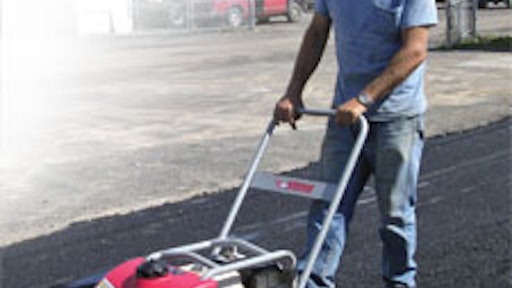
One piece of equipment you can find with virtually every paving or patching crew is the plate compactor, which is ideal for working on small patches and hard-to-reach areas. And many contractors have added rammers to their arsenal for added impact on base and subbase construction.
The demands contractors place on these pieces of equipment are tough, as they are constantly in contact with dirt, gravel, or asphalt mix. The constant vibration adds additional wear and tear on the equipment, and the dirt and dust the vibration and impacts kick up make the environment for these tools arguably the most difficult to work in.
So it's essential that contractors monitor the maintenance of their plates and rammers to make sure they not only will work effectively through the season, but also for many seasons to come. Contractors who perform routine maintenance on their compaction equipment can expect more reliable equipment, less downtime, reduced repair costs, and a longer service life.
"If you do your routine maintenance, the machine will last you for years," says Jonathan Cuppett, compaction equipment product manager with Multiquip. "We have people who have run them for 10 years plus, and then there are the people who can only run them one or two years because they don't keep up with the maintenance on them and an engine that is not properly maintained engine eventually will fail."
While some of these maintenance steps are similar for plates and rammers, each type of equipment requires unique maintenance steps.
Maintaining rammers
Jay Baudhuin, compaction product manager, Wacker Group, says the main problem contractors face with rammers is engine failures, so he recommend contractors check their fuel levels and engine oil regularly.
"If the fuel is dirty, or if they haven't changed the engine oil, there can be problems with premature wear on the cylinders," Baudhuin says. "Oil breaks down after a while, and oil's purpose it to lubricate the engine components, otherwise you've got metal on metal. If you don't change your oil, you'll have wear on your metal parts."
Cuppett says that the biggest problem with rammers is scarring of the cylinder walls.
"When that scarring happens the equipment starts to lose compression, and then after a while your engine won't run anymore," Cuppett says.
He says scarring happens in two ways, both of which are easily prevented. The first way cylinder walls are scarred is when particles in the fuel pass into the carburetor and are ignited with the fuel by the spark plug. These ignited particles fly into the cylinder wall, and over time the wall begins to scar.
Cuppett says the easy solution to this scarring is to change fuel filters regularly and to always use clean fuel. He recommends a strainer at the opening of the fuel tank to strain fuel as it's initially added, plus at least one additional fuel filter within the fuel line.
The second way to prevent scarring in the cylinders is to clean and/or change air filters regularly.
"If you're not changing them regularly or cleaning them out like you should, those really fine particles will build up and pass through your air filters and get into your carburetor," Cuppett says. "Then they get into your cylinders and cause scarring."
"On our rammers there are typically four filters," Cuppett says. "Contractors should pull each filter out and then check both sides of the filter. If they're really bad you're going to want to change them out, but if they're not bad you could take some high pressure air and push it through the filter."
After cleaning the filters with high-pressure air Cuppett recommends using WD-40 or a similar oil to lightly coat the filter itself.
"That helps trap some of the finer particles that are in the air, especially with a rammer because you're hitting the ground so often and so fast that you start to build up a cloud of dust," he says. "And the first thing a rammer will do is suck that dusty air in and it will go through the filter system and on down to the cylinders."
Wacker uses a three-stage air filtration system.
"The first stage consists of a built-in cyclonic pre-cleaner which removes the big particles and most of the dust before it gets to the second stage," Baudhuin says.
"By removing the big particles you will have a longer filter life. The big particles are collected in a catch with a rubber grommet on the bottom of the filter box which contractors can remove and empty. The second stage consists of a secondary foam pre-filter, and the final stage is a self-cleaning pleated main filter. The ramming action helps shake dust out of the main filter."
Cuppett says that's why filtration on rammers and plate compactors is so important.
"Because you're pounding the ground and all that dust gets thrown up into the air and you're sucking it in at the same time and it gets down into your cylinders, so filtration is one of the key issues. The majority of the failures I see out there are because people don't change out their filters or their fuel lines."
In addition, contractors should make regular, scheduled maintenance checks to keep rammers in optimum working condition. Check your owner's manual and follow the suggested maintenance and schedule for your particular piece of equipment.
Daily. Make routine visual checks to make sure everything is sound and in place. Check fuel levels, engine oil levels, and check fuel lines and fittings for any leaks or cracks.
"You'll want to pull off your air filters and fuel filters before you start your visual inspection," Cuppett says. "If you find something that needs to be fixed, you can fix it at that time."
Baudhuin says Wacker's rammers have a sight glass for checking ramming system oil level and an air filter indicator to indicate a dirty air filter. "On our 2-cycles we have an air filter indicator, so you want to make sure that's not tripped," Baudhuin says. "If it's tripped, it's telling the operator that their air cleaner is dirty and they need to put in a new air filter. The less often the air filter is open the better for the longevity of the engine. Opening up the air filter box and checking the condition of the filter increases the risk of dust particles getting into the engine."
Weekly. Baudhuin says these checks should be made every week or every 25 working hours:
- Tighten all hardware, including ramming shoe hardware, engine cylinder screws, and any external hardware.
- Clean air cleaner cover.
- Clean out engine cooling fins with an air compressor.
- Clean and check spark plug gap.
- Clean all filters.
Monthly (or 100 hours of use)
- Replace the spark plugs. As always it's important to follow each manufacturer's recommendations for scheduled maintenance as some equipment requires more than others. Baudhuin says, for example, that on Wacker's 4-cycle rammers engine oil needs to be changed every 100 hours.
"But on our 2-cycle rammer they don't need to do that because it's an oil-injected machine," he says. "So they don't have to change oil, but they do need to add oil in their separate tank for oil. On a 2-cycle they have a low-oil shutdown. That's one of the key benefits of the 2-cycle rammer from a maintenance standpoint."
3 months (200-300 hours).
- Clean the recoil starter
- Change ramming system oil
- Clean engine muffler, exhaust port
- Inspect lifting cable for wear, damage, or abuse.
Annually.
- Inspect the fuel filter.
- Check fuel line and oil line for any damage and replace if necessary.
- Replace fuel and oil lines every two years regardless of visible wear.
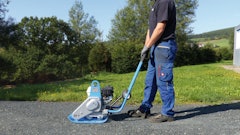
Care of plate compactors
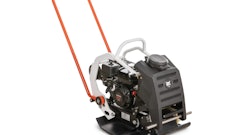
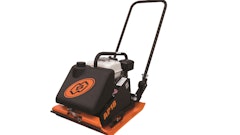
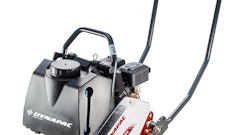
Baudhuin says the primary maintenance on plate compactors involves the engine, so any standard engine maintenance should be followed.
"For plate compactors, the maintenance will be pretty much the same — change your filters, make sure you put clean gas in the unit," Cuppett says. "But in addition, oil should be in your exciter, which is an eccentric weight that's rotating inside the unit, which causes it to vibrate."
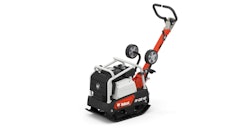
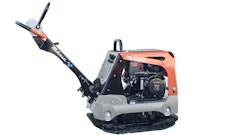
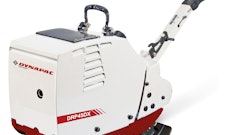
Baudhuin says maintenance for forward and reversible plates is the same except for the mechanism for the reversible function. The difference is in the hydraulic control, so add monthly hydraulic oil checks to the maintenance schedule.
Daily. The same as for rammers (see above), plus:
- Check starter
- Clean equipment but do not use flammable or aggressive cleaners.
- Check for loosened or lost screws and nuts. When tightening screws pay attention to torques. Cuppett says it is unlikely the plate's nuts and bolts will loosen, because they've got their standard torque, and then they use a lock tight which is a glue they put on the threads, so they shouldn't pop out.
- Examine equipment for damage, 2 weeks (or 50 hours). Check and if needed adjust the drive belt. Also inspect shock mounts for damage.
Monthly. (100 hours):
- Check vibrator oil 2 months (200 hours).
- Check the V-belt (clutch); Multiquip notes that loose or worn V-belts reduce power transmission efficiency, resulting in weak compaction and even reducing the life of the belt itself. Correct V-belt tension should be 10-15 mm when belt is depressed. Some manufacturers recommend changing the V-belt every 200 hours of use.
- Check the clutch for wear. As long as you're removing the V-belt eyeball theouter drum of the clutch for seizure and wear and tear on the V groove; clean the V groove if necessary. Wear of the lining or shoe also should be checked because if the shoe is worn, power transmission becomes deficient and slipping will result.
- Change vibrator oil
Care of the plate
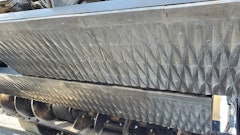
Because much of the work of a plate is on surface course asphalt it's important that the plate bottom be free of nicks and scratches and asphalt buildup.
"On some plates, if you get a little rock or other debris in there, it could jam up or do damage to the plate," he says.
Cuppett says the rocks and other debris kicked up by the vibration can damage the plate and its operation, so it's important the action of the plate remove those pieces. He says that on Multiquip's plates small rocks and debris can go into the bottom portion of the plate and bounce out the other side or will just go back where they came from.
He adds that hot mix asphalt will stick to the plate if it's not removed fast enough. "If you have a good wire brush you can just rub it off, but typically most contractors will take a high-pressure water hose and just hose it off," he says.







![Weber Mt Action Cf 2 A 5 2019 (quer)[1]](https://img.forconstructionpros.com/files/base/acbm/fcp/image/2019/12/weber_mt_Action_CF_2_A__5_2019___quer__1_.5de809a517450.png?auto=format%2Ccompress&fit=crop&h=135&q=70&rect=0%2C228%2C1920%2C1080&w=240)
![Weber Cfr 90 (4 2019 Hoch)[1]](https://img.forconstructionpros.com/files/base/acbm/fcp/image/2019/11/Weber_CFR_90__4_2019___hoch__1_.5dc0a0e49e533.png?auto=format%2Ccompress&fit=crop&h=135&q=70&rect=0%2C47%2C1772%2C1772&w=240)
