Never one to back away from new technology, Grace Pacific Corp. is undertaking the State of Hawaii's first Stone Matrix Asphalt Pavement (SMA) project. The Moanalua Freeway project is being done simultaneously with the Interstate H-1 rehabilitation project. Hawaiian Dredging and Construction Co. is the general contractor of the $14.6-million project, with Grace Pacific serving as the paving subcontractor.
The asphalt contractor's $5.2-million portion of the project involves milling 3 1/2 inches off 23 lane miles of the existing road where the two-inch SMA mat is placed, milling 16 lane miles where the 1 1/2-inch State IV Mix mat is placed, and milling off 15 lane miles where the two-inch Superpave mat is placed.
The Hawaii DOT is using the 5-mile construction project to compare the performance characteristics of SMA and Superpave mixes on designated portion of the four-lane roadways. One of the unique features of these two projects is that the Moanalua Freeway is federally funded, while the H-1 project is 100-percent state financed.
Moanalua Freeway was built in the late 1960s, and was one of the main corridors to Honolulu from the outlying areas to the west. The area is filled with Hawaiian history because it was one of the most populated areas during the monarchy period, and it holds a wealth of cultural significance for native Hawaiians.
A question many ask is "How can you have an interstate highway on an island?" The answer is that the Interstate Highway System is actually a system of interstate and defense-access highways, and H-1 qualifies as such, since it linked the Army's Schofield Facility to Pearl Harbor, where the Arizona Memorial is located, and also now the USS Missouri.
Scope of work
The project includes installation of SMA and Superpave asphalt concrete pavement on both the inbound and outbound lanes of Moanalua Freeway; installation of Ultra Thin White topping (two inches of Portland cement concrete) at Ramp B, resurfacing pavement; and reconstructing weakened pavement areas.
Three miles of the four-mile Moanalua portion of the project calls for SMA produced with a PG 70-22S AC binder, and the remaining one mile, as well as the H-1 portion, being constructed of a Superpave mix calling for a PG 64-16 AC binder. Approximately 42,000 tons of HMA will be produced for the project.
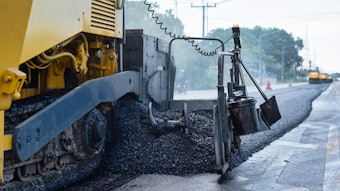
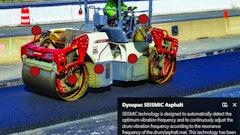
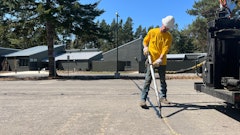
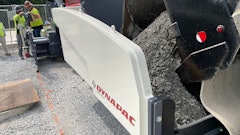
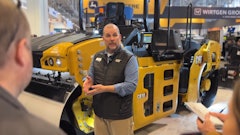
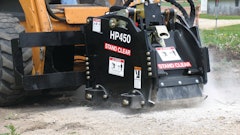
The project is being done at night approximately five miles in length. The cold planning and resurfacing work will be utilizing three Roadtec RX-60C cold planers, two with the standard 7.25-foot cutting head, and one with a 12-foot cutting head. The cold planers will be followed by a paving train consisting of a 2500 Roadtec Shuttle Buggy, feeding a new Roadtec RP-190 rubber tire paver with an E-10B electric heated screed. Two C-784 high frequency vibratory Hypac tandem rollers with the vibratory frequency set at 4,000 vpms, and a 13-ton vibratory roller in the static mode will do the compacting.
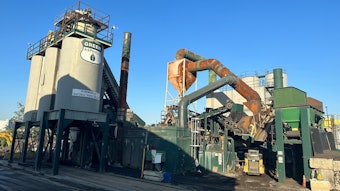
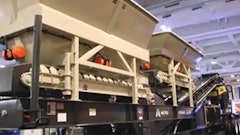
To produce the mixes, Grace Pacific will be using either an Astec eight-foot double-barrel plant purchased in 1992, or the company's newest plant facility that houses an Astec seven-foot double-barrel equipped with a CEI asphalt mixing and storage tank.
To produce the binder, Grace Pacific partnered with Wright Asphalt from Texas, who shipped the polymer concentrate in special hot oil heated bulk containers from their facility in Portland. Grace Pacific also incorporated an automated feeder that introduces fiber to the mix.
Working with SMA
On June 10 the asphalt contractor ran its first SMA test strip for the project using the paving train that was mentioned earlier, and achieved compaction results of 94 percent. At first, the mix was sticky to work with and the temperature was inconsistent.
The rolling technique employed on the test strip used one Hypac C-784 high frequency roller set at 4,000 vpms, with a 10-ton vibratory roller operating in a static mode following the Hypac. The paving crew and plant operators also recognized the mix used for the test strip was not as hot as it needed to be for proper compaction. This was due primarily to the limited production (100 to 200 tons) required for the test strip, but was easily remedied once the plant was up to full-production.
Achieving the proper temperature of the SMA at the plant and maintaining the mix temperature when it's trucked to the project is much easier to do when the plant is geared up to produce 300 to 400 tons per hour. Plant operators changed the proportions of aggregate sizes, and some adjustments were made on the asphalt cement to hold the desired temperatures during placement. The paving crew also added another Hypac C-784 to achieve a tandem rolling pattern for improved compaction.
After adjusting its rolling techniques and making a few changes at the plant, Grace Pacific was on its way into a new era of HMA in Hawaii. The company was fortunate to have pioneers from the HMA industry to oversee mix production at the plant, and also monitor compaction efforts out in the field. Chuck Deahl, national accounts manager for Bomag and Compaction America, and Dennis Niedziela of Bomag provided assistance in helping Grace Pacific gain an understanding of how to produce and compact SMA mixes.
Both felt confident the mix design looked as good as any other SMA mix they experienced on other projects and felt proper placement would produce similar results to other high-profile SMA projects, like I-75 in Atlanta or the three million tons of SMA that has been placed in Maryland.
Grace Pacific is fortunate that Hawaii's DOT is giving the company the opportunity to expand its offering of quality products with durability and smoothness for asphalt pavement. From what the contractor has laid down thus far, Grace Pacific is confident SMA will be a reliable mix and another option in meeting the demands from the public and government agencies.
Always improving
Constantly updating its equipment fleet, as well as improving mix designs and techniques allows Grace Pacific to continue to be the largest asphalt pavement company in Hawaii, with services to most of the Hawaiian Islands.
The company's managers are always traveling, visiting different states to learn more about new equipment and purchasing state-of-the-art equipment. Smoothness incentives are always compelling for the asphalt contractor to deliver quality work.
Grace Pacific is always interested in new products that will provide taxpayers with the best results for their investment. Training is key to maximizing the company's investment in equipment, products and techniques required to efficiently and effectively deliver what's required to complete a project.
All Grace Pacific associates working in the field receive ongoing training when new equipment and paving techniques are added, and equipment dealers are encouraged to provide training of new equipment on actual projects the company is building throughout the Hawaiian Islands.