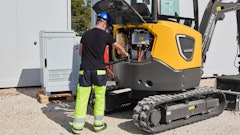
Officials from the Environmental Protection Agency (EPA) recently heard information outlining how the transformation to clean diesel technology over the past decade has significantly reduced particulate emissions - "soot" - both in California and throughout the United States.
Tom Fulks, a representative of the Diesel Technology Forum, highlighted the advancements in clean diesel technology in his statement at a hearing in Sacramento on proposed changes to EPA's air quality regulations - the National Ambient Air Quality Standards for Fine Particulate Matter (PM).
Diesel Emissions Are Now a Smaller and Declining Contributor of Soot "Over the last decade in particular, the diesel industry has invested billions of dollars in development of cleaner diesel fuels, advanced engines, and emissions control technology," Fulks noted in his statement. "The results of these investments can be seen in the tremendous progress made in clean air today. "
Fulks said according to the most recent public EPA emissions inventory data, diesel engines of all kinds make up less than six percent of the national PM emissions inventory. In California, more current and detailed inventory data is available and in the latest year in which data are available (2008), the California Air Resources Board (CARB) identified the top-10 contributors to PM 2.5. Diesel engines and equipment rank as the 8(th) and 9(th) highest contributors, Fulks said.
California's Top 10 PM Contributors
1. Wildfires 2.5.011 t/d
2. Residential fuel combustion 109.322
3. Managed burning & disposal 100.166
4. Paved road dust 59.343
5. Unpaved road dust 47.818
6. Fugitive windblown dust 45.165
7. Farming operations 39.585
8. Heavy-heavy duty diesel trucks 29.910
9. Off-road equipment 27.121
10. Mineral processes 24.841
As California's Soot Levels Increase, Diesel PM Emissions Are Decreasing Fulks added according to the ARB, diesel particulate emissions from on-road heavy-duty trucks have declined from 7.5 percent in 1990 to 3.8 percent in 2008, with future projections in 2020 for the category to account for only 1.6 percent of all emissions.
"According to the ARB, from 2008 to 2020, here in California, emissions of all sources of particulate emissions are expected to increase, while emissions from diesel engines and equipment are decreasing," Fulks said. "The projected total PM inventory increase from 2008 to 2020 is a 3.2 percent increase. However the eight categories of diesel-powered equipment noted above are reducing their PM 2.5 by 58 percent during the same timeframe."
New Clean Diesel Trucks Have 98% Reduction in Soot and NOx Emissions
"These last 10 years truly are the decade of clean diesel and the results are visible today," Fulks said. "New highway diesel truck engines have near zero emissions of particulate matter and oxides of nitrogen (NOx) - a remarkable 98 percent less than 1988 models. It is also noteworthy that truck and engine manufacturers are not only producing near-zero level emissions, but these vehicles are also consuming on average of five percent less fuel.
"Just how significant is this accomplishment? Consider that it now takes 60 of today's clean diesel heavy-duty trucks to equal the emissions of one 1988 truck - a 60 to 1 ratio.
"Similar reductions in emissions of particulates and oxides of nitrogen are well underway and will be completed by 2014 for the wide range of off-road engines found in everything from small construction equipment and farm machinery to freight locomotives, marine vessels, work boats and very large off-road machines and mining equipment. These are known as Tier 4 emissions level machines in off-road applications.
"The new generation of clean diesel technology is not only meeting its emissions reduction targets but is also exceeding them," Fulks said.
New Generation of Clean Diesel Technology Is At Near Zero Levels of Particulate Emissions
"Diesel engines provide a unique and unmatched value and are the workhorse of our economy for today, tomorrow and the foreseeable future," Fulks said
"The new generation of clean diesel technology - using cleaner fuel as well as advanced engines and emissions control systems - is now at near zero levels of particulate emissions. Every category of stationary and mobile diesel engines - with the exception of ocean going container vessels - is now on a regulatory path to cleaner diesel fuel and low emissions diesel engine technology.
"Clean diesel technology is making substantial contributions toward meeting clean air goals as clearly identified in the dramatic reductions in the emissions inventory here in California and on a nationwide basis. Further contributions will come as more new technology engines and equipment are put into service in the years ahead," Fulks concluded.
Additional Information on Clean Diesel Technology
Diesel Vital To U.S. Economy: Because of its unmatched combination of power, performance and energy efficiency, diesel technology is the workhorse of the U.S. and the global economy, powering more than 90 percent of commercial trucks, more than three-fourths of all transit buses, 100 percent of freight locomotives and marine work boats, and more than two-thirds of all farm and construction equipment. Diesel engines are also found in back-up emergency electrical generators, stationary pumps and other industrial equipment. Finally, the new generation of fuel-efficient clean diesel cars is making up a growing percentage of new passenger vehicles in all 50 states.
Clean Diesel Reducing California PM Inventory: On-road diesel's portion of the PM inventory in California is expected to drop over the next 12 years by 57%, which follows a drop of 53% during the previous 18 years - or a 30-year drop of 80%. No other category is making this kind of contribution to reducing PM 2.5 emissions.
About the Diesel Technology Forum
The Diesel Technology Forum is a non-profit national organization dedicated to raising awareness about the importance of diesel engines, fuel and technology. Forum members are leaders in clean diesel technology and represent the three key elements of the modern clean-diesel system: advanced engines, vehicles and equipment, cleaner diesel fuel and emissions-control systems. For more information visit www.dieselforum.org.
![Img 1707[56]](https://img.forconstructionpros.com/files/base/acbm/fcp/image/2023/04/IMG_1707_56_.6437076c97961.png?auto=format%2Ccompress&fit=crop&h=191&q=70&rect=0%2C462%2C1920%2C1080&w=340)











![Glp Porsche 072723 465 64ee42287c29e[1]](https://img.forconstructionpros.com/files/base/acbm/fcp/image/2024/03/GLP_PORSCHE_072723_465.64ee42287c29e_1_.65e88b8589b9c.png?auto=format%2Ccompress&fit=crop&h=135&q=70&rect=0%2C520%2C2250%2C1266&w=240)