
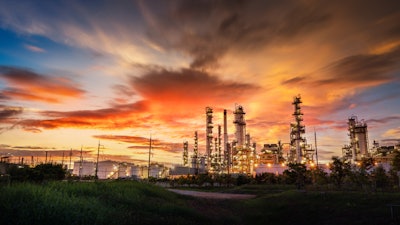
California is on track to lose another major refinery just months after Phillips 66 fully shuttered its Los Angeles-area operations at the end of 2025. Valero’s Benicia plant is now set to end refining by April 2026. Together those two closures wipe out roughly 309,000 barrels per day of capacity, about 18% of the state’s refining base.
If you’ve heard about the Benicia closure, odds are it was tied to gasoline prices in the most expensive state in the nation. For asphalt contractors, that’s only half the story. Benicia also supplies close to 45% of the paving asphalt and binder used in Northern California.
The last couple of years have already been brutal on costs predictability. Politics, the economy, tariffs, labor shortages, and interest rates can move the goalposts between bid day and paving day. Losing a major refinery just piles on another layer of chaos. As of December 2025, diesel in California averages about $4.92 per gallon (31% above the national average of $3.76), so every extra penny at the pump or the terminal hits the bottom line hard.
Benicia Refinery History and Closure Drivers
Built in 1968 on the Carquinez Strait northeast of San Francisco as an Exxon refinery (originally 100,000 bpd), Benicia changed hands several times (Tosco, Ultramar Diamond Shamrock) before Valero acquired it in 2002 and expanded it to its current 145,000 bpd. For decades it was a West Coast workhorse, converting heavy sour crude into high yields of clean diesel and paving-grade asphalt.
California’s very strict low-carbon fuel standards, skyrocketing carbon-credit costs, and hundreds of millions in required emissions upgrades made continued operation unprofitable. Valero’s own filings state the plant is no longer viable past 2026. In April 2025 the company notified the California Energy Commission it intends to idle, restructure, or cease refining by April 2026 and recorded major impairment charges. In other words: the plant will close.
When those barrels stop, Northern California loses its primary binder source and a sizable share of local diesel. Contractors will face both: higher and more volatile binder costs, plus a tighter diesel market that drives up fuel prices for every loader, paver, roller, and haul truck on the job. Ryan Clark
Supply Chain Shifts at the Hot Plant
When a plant that has leaned on Benicia for decades suddenly has to find new supply, three things happen fast:
- New binder sources have to be qualified, often from out of state or overseas.
- Terminals scramble to handle bigger volumes from farther away.
- On public jobs, Caltrans labs frequently demand new JMF verification even when the PG grade stays the same.
You won’t see the lab work or the logistics scramble, but you’ll feel it. Price holds get shorter, lead times stretch, and there’s less slack when something goes sideways.
Binder Volatility and Escalation Strategies
Binder is only 5–6% of the mix by weight, yet it often accounts for half the raw-material cost. When supply tightens and distances grow, binder gets volatile, and producers get nervous about long price holds. That volatility spills over to diesel, too, making traditional 60 or 90 day bid windows risky.
There are two simple ways to protect yourself:
- Shorten bid validity to match what the plant will actually hold (15–30 days is the new normal).
- Use index-based escalation clauses for binder and, when owners allow it, for diesel too. A simple EIA diesel index clause can save margins on a six-month overlay.
Diesel Cost Impacts on the Bottom Line
Fuel consumption on an asphalt paving project is substantial. A large cold planer, such as a Wirtgen W 190 operating at full load, can consume 20 to 40 gallons of diesel per hour. Track loaders in the Caterpillar 953–963 size class typically use 10 to 15 gallons per hour, while a standard asphalt paver requires 5 to 10 gallons per hour during placement. When haul trucks are added—often several hundred gallons over the course of a single project—fuel routinely accounts for 10 to 20% of total production and placement costs.
At California’s current average diesel price of $4.92 per gallon, a busy crew can easily burn $4,900 to $5,500 per day in equipment fuel alone. A forecasted 30-cent increase adds $300 to $400 daily, or $6,000 to $8,000 over a typical three-week overlay. On a $2 million contract with a 10% target margin, that swing can wipe out 30-40% of expected profit.
Most public agency contracts still don’t include diesel price escalation provisions. As a result, any increase in fuel price is absorbed entirely by the contractor, directly reducing profit margins. Although some private owners are open to fuel-adjustment clauses, fixed-price public work leaves contractors—particularly smaller firms without access to bulk-purchase agreements or hedging options—fully exposed to these cost fluctuations. A single refinery reduction or regulatory change can transform a competitive bid into a financial loss.
Contractor Playbook for 2026 and Beyond
You can’t stop a refinery from closing, but you can stop it from blindsiding you. Here’s a six-step playbook:
- Talk to your plants every year about binder and fuel supply changes.
- Match bid validity to what suppliers will actually honor.
- Push escalation clauses for asphalt and diesel on every job that will let you.
- Build extra time into schedules for possible JMF delays.
- Give owners a short, clear explanation when you tighten terms. Context turns pushback into understanding.
- Track diesel prices weekly (EIA or AAA) and look at on-site tanks, route optimization, or locked-in bulk purchases when prices dip.
When Your Local Refinery Is Next
California’s situation feels extreme, but the underlying pattern plays out in pockets all across the country. From the Gulf Coast to the Midwest to the Pacific Northwest, many regions still lean on one or two aging refineries for the lion’s share of their paving-grade asphalt and diesel. A single plant going offline, converting to renewables, or simply cutting asphalt production can trigger the same chain reaction we’re about to live through in California.
Think about the Marathon refinery in Martinez (shut in 2020) or the Husky plant in Superior, Wisconsin (idled in 2022). Each time, contractors hundreds of miles away suddenly saw binder shipped in by rail, price holds shrink to weeks instead of months, and diesel surcharges appear on every aggregate ticket. In Louisiana and East Texas, where refineries like Citgo Lake Charles and ExxonMobil Beaumont dominate local supply, a single turnaround or unplanned outage can push diesel 30–50 cents higher overnight and keep it there for months.
The warning signs are usually public long before the gates close: big impairment charges, delayed maintenance, whispers of renewable-diesel conversions, or state regulators floating new low-carbon rules. Smart contractors outside California are already treating those signals the same way we’re treating Benicia:
· Mapping exactly which refinery supplies most of their binder and diesel.
· Asking plants every winter, “What if that plant cuts asphalt next year?”
· Building escalation language for both binder and fuel into every bid they can.
· Locking in bulk diesel or hedging when prices dip, because the next spike is rarely far behind.
The playbook works anywhere: talk early, bid tight, protect your margins with clauses, and never assume the refinery down the road will be there forever.
Stay sharp out there.