
Commercial contractors are prioritizing profit margins and cash flow as rising costs put pressure on their businesses, according to ServiceTitan's 2026 Commercial Service Market Report.
The report, based on a survey of 1,020 commercial business owners, executives and general managers, found that 44% of contractors grew revenue in the first half of 2026 compared with the same period in 2025, while 33% reported declines. Despite mixed results, 53% remain optimistic about the market.
Tariffs are a growing concern, with 73% of respondents reporting a material impact on their businesses. Additionally, 75% expect material and equipment prices to rise over the next 12 months.
Cash Flow and Profitability Top Priorities
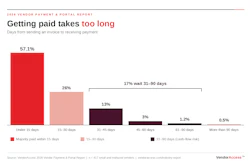
Improving net profit margins ranked as the top business goal, cited by 42% of respondents, followed by improving cash flow at 40%. However, collecting payments remains a challenge: 96% of contractors wait at least 15 days to receive payment, and 30% wait more than 30 days.
Customer retention was the leading sales priority, cited by 63% of respondents. Meanwhile, 46% reported that more than half of their commercial customers have service or maintenance agreements.
AI Adoption Grows
The report found that 62% of commercial service firms have piloted or deployed artificial intelligence, while 33% actively use AI or have integrated it across their businesses. Among contractors using AI, 59% reported a positive impact, but just 15% reported a significant positive impact with clear return on investment. Cost and uncertainty about ROI were the most commonly cited barriers to expanding adoption.
Contractors expect AI to have the greatest impact on scheduling and dispatch, predictive maintenance, estimating and proposals over the next two years.